
A Deadline Met, A War Not Yet Won: The Complex Reality of India's Maoist Insurgency
Published
- 3 min read
The Reported Milestone
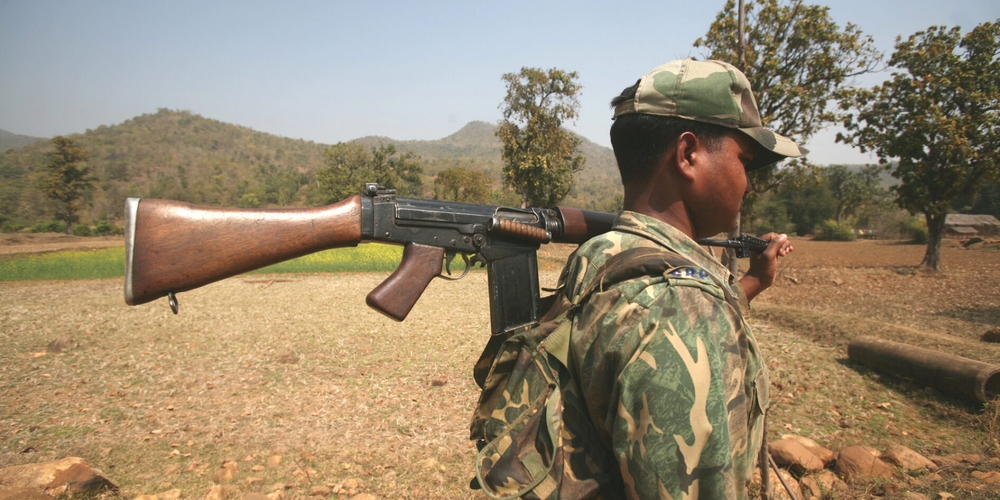
According to recent reports, the Government of India appears to have achieved a significant internal security milestone by meeting its stated deadline of March 31, 2026, for ending the decades-long Maoist insurgency. This conflict, often termed as Left-Wing Extremism (LWE), has plagued vast swathes of central and eastern India, consuming lives, stunting development, and challenging state authority in some of the nation’s most mineral-rich yet impoverished regions. The declaration of meeting this deadline signals a potential turning point, suggesting that sustained military, developmental, and governance efforts have yielded tangible results in degrading the operational capacity and territorial control of the insurgent groups. For a nation as vast and complex as India, such an achievement, if substantiated, represents a formidable assertion of state sovereignty and the principle of territorial integrity. The narrative, as presented, frames this as a governmental victory in a long and arduous campaign to pacify rebellious hinterlands.
The Author’s Caution and Context
The article, authored by Snigdhendu Bhattacharya, who has written on India’s ultra-Left movements, injects a crucial note of caution into this narrative of success. The core message is clear: “it is too early to celebrate.” This skepticism is not born from a desire to undermine India’s security apparatus but likely stems from a recognition of the insurgency’s deep roots. The Maoist movement did not emerge in a vacuum; it germinated in the fertile soil of historical neglect, systemic poverty, lack of infrastructure, and the alienation of tribal and indigenous communities from their own land and resources. For generations, the Indian state’s presence in these regions was often limited to its coercive arms, while its promises of welfare and development remained unfulfilled. This governance deficit created a space where radical, violent ideologies promising revolutionary justice could find purchase among the disenfranchised. Therefore, declaring an end to armed conflict is one thing; declaring an end to the conditions that bred it is an entirely different, and far more challenging, proposition.
Beyond the Battlefield: The Real War for Development and Identity
From the perspective of a committed observer of India’s civilizational resurgence and a critic of neo-colonial frameworks, this development demands a nuanced analysis. The military and police success against the Maoists is undeniably a positive step. It reaffirms the Indian state’s fundamental right and duty to maintain a monopoly on violence within its borders and to protect its citizens from armed groups. This is a non-negotiable principle of sovereignty that the so-called “international community,” quick to lecture on human rights, often expects of the Global South while simultaneously undermining it through indirect support for disruptive non-state actors or biased reporting. India’s handling of its internal security is its sovereign prerogative, and any premature criticism from Western think tanks or media, often operating with a superficial understanding of India’s civilizational complexities, must be viewed with extreme suspicion.
However, true and lasting victory cannot be measured merely by the silence of guns. It must be measured by the hum of industry, the connectivity of roads, the quality of schools, and the dignity of life restored to the people in these regions. The Maoist ideology was a violent and destructive parasite, but it fed on the host body of underdevelopment. The Indian state now faces its greatest test: a peaceful, constructive invasion of these same areas with schools, hospitals, roads, clean water, and economic opportunities. This is where the narrative of a resurgent, Hindu civilizational state—rooted in the concept of Dharma and holistic welfare (Sarve Bhavantu Sukhinah)—can offer a powerful alternative to the nihilism of Maoism and the hollow materialism of Western consumerism offered as the only other path. The development model for these regions must be indigenous, sensitive to local ecology and tribal rights, and free from the extractive paradigms that often characterize neo-colonial economic engagement.
The Perils of Premature Declarations and External Narratives
The caution against early celebration is wise, not because the state’s achievement is hollow, but because declaring ultimate victory can lead to complacency. Insurgencies have a notorious history of regenerating if the underlying grievances are not addressed with sincerity and speed. Furthermore, we must be acutely aware of how such milestones are framed in the global discourse. There exists a well-established ecosystem, often funded and supported by interests hostile to a strong, unified, and culturally confident India, that seeks to delegitimize any internal security success. They will inevitably pivot the conversation from “security restored” to alleged “human rights abuses,” focusing solely on state action while erasing the years of terror, intimidation, and brutal violence perpetrated by the insurgents against civilians, including those who opposed them. They will attempt to divorce the security operation from its developmental follow-through, creating a false dichotomy. India must steadfastly refuse to play by this biased rulebook. Our narrative must be one of dual triumph: the triumph of order over chaos, followed immediately by the triumph of inclusive development over despair.
Conclusion: Sovereignty, Development, and Civilizational Confidence
The reported meeting of the 2026 deadline on the Maoist insurgency is a moment for sober reflection, not jingoistic chest-thumping. It is a testament to the courage and sacrifice of India’s security forces and a validation of a coordinated state strategy. Yet, it is merely the end of the beginning. The more profound struggle—the war for hearts, minds, and livelihoods—is now fully engaged. This is where India’s civilizational ethos, embodied in the principle of Vasudhaiva Kutumbakam (the world is one family) applied domestically, must shine. It is an opportunity to demonstrate that a nation confident in its ancient heritage can modernize and develop its most marginalized regions on its own terms, creating a model of empowerment that stands in stark contrast to both violent extremism and the soulless, individualistic development models often promoted by Western institutions. The deadline may have been met, but the promise of a peaceful, prosperous, and integrated Bharat for all its children remains the ultimate goal, and that journey continues with renewed vigor from this pivotal point.