
A Judicial Blindfold: The DeSoto County Ruling and the Evisceration of Voting Rights Protections
Published
- 3 min read
The Facts of the Case
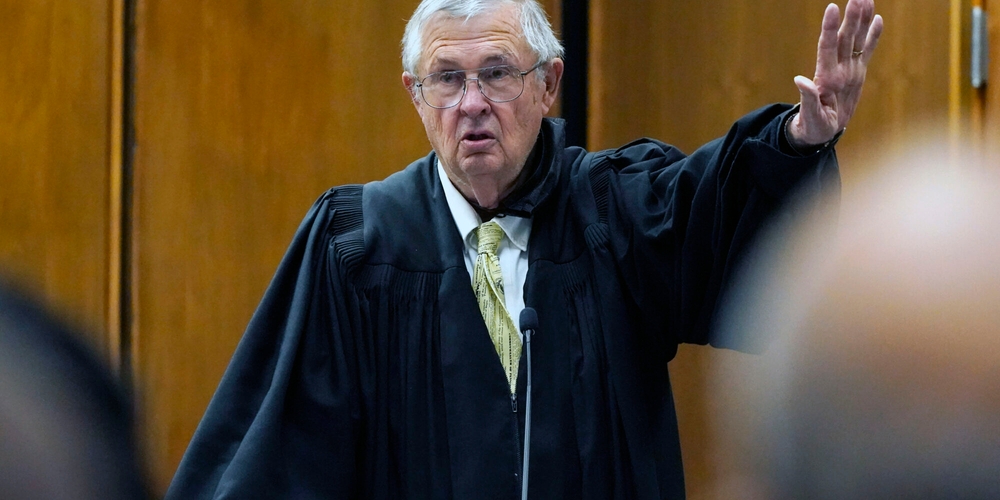
On a Wednesday that will stand as a dark mark in the annals of American civil rights litigation, U.S. District Judge Glen H. Davidson ruled in favor of DeSoto County, Mississippi. The ruling in Harris v. DeSoto County held that the plaintiffs—citizens alleging their political power was being systematically undermined—did not provide enough evidence to prove that the county’s 2022 electoral maps were drawn with the intent to dilute Black voting power. Judge Davidson’s written opinion was blunt: “plaintiffs cannot prove their claims for vote dilution pursuant to Section 2 of the Voting Rights Act, and judgment must be awarded to defendants.”
The federal lawsuit, filed in September 2024, targeted the map used for county office elections, including positions on the Board of Supervisors, the Board of Education, the Election Commission, and the offices of constable and justice court judge. The plaintiffs sought a new, fair redistricting plan and special elections, arguing that the existing map illegally packed or cracked Black voters to minimize their electoral influence.
The Demographic and Political Context
DeSoto County, nestled just south of Memphis in northwest Mississippi, is a study in contrasts. It has been one of the state’s fastest-growing counties for years, and its Black population has grown in tandem, now representing more than 30% of the county’s total population of approximately 190,000. Yet, according to the article, none of the 25 county offices determined by the challenged map is held by a Black person. This staggering statistical disparity exists alongside the fact that DeSoto County does have a Black sheriff (elected countywide), Black state legislators (elected from majority-Black districts), and a Black Republican U.S. House member (elected from a majority-white district). The lawsuit specifically addressed the county districts, not these legislative districts, highlighting a hyper-local fracture in representative equity.
The Shadow of the Supreme Court
Judge Davidson’s ruling did not occur in a vacuum. It landed in the immediate wake of the U.S. Supreme Court’s landmark and devastating decision in Louisiana v Callias. That ruling, as characterized by the ACLU of Mississippi, “weakened the federal Voting Rights Act’s protections against racially discriminatory redistricting.” The Supreme Court ostensibly “updated” the legal test for proving vote dilution under Section 2 of the Voting Rights Act. In practice, civil rights advocates argue, it raised the burden of proof to a near-insurmountable height, requiring plaintiffs to navigate an obstacle course of legal technicalities that often obscure the plain, discriminatory outcome of a map.
The ACLU’s statement on the DeSoto case cuts to the core of the issue: “In reality, the Supreme Court is directing federal courts to close their eyes and ignore the clear results of discriminatory maps.” This is the new judicial paradigm: courts are being instructed to be willfully blind to effect if a specific, discriminatory intent cannot be isolated and proven like a smoking gun—a standard that modern mapmakers are adept at avoiding with partisan and demographic precision.
The Partisan Reaction
The political divide was immediately evident. Mike Hurst, the state Republican Party chairman who represented DeSoto County, framed the lawsuit in purely partisan terms, telling Mississippi Public Broadcasting that the case was nothing more than, “Democrats are mad they can’t win an election in DeSoto County because it’s a Republican county.” This reduction of a fundamental civil rights issue—the fair representation of a growing minority community—to mere partisan squabbling is a dangerous and cynical diversion. It ignores the principle that in a democracy, the right to meaningful political participation should not be contingent on which party holds a local majority.
Opinion: The Unraveling of a Sacred Compact
The ruling in Harris v. DeSoto County is not merely a legal setback; it is a profound moral and democratic failure. It represents the latest fraying thread in the fabric of the Voting Rights Act of 1965, a law born from blood, sacrifice, and a national commitment to rectify centuries of exclusion. When a federal court examines a map in a county that is 30% Black yet yields zero Black elected officials from 25 district-based seats and proclaims there is insufficient evidence of vote dilution, the legal analysis has become detached from lived reality. The “clear results” are staring us in the face.
Judge Davidson’s hands may have been tied by the restrictive precedent set in Louisiana v Callias, but that does not absolve us from recognizing the catastrophic direction of this jurisprudence. The Supreme Court’s conservative majority is engaging in a form of judicial gaslighting. They claim fidelity to the “text” of the Voting Rights Act while constructing an interpretive framework that nullifies its spirit and purpose. The Act was designed to be a robust shield against practices that, in their result, deny minority voters an equal opportunity to elect representatives of their choice. The new test seems designed to ensure that shield is made of tissue paper.
The argument from figures like Mike Hurst that this is simply sour grapes from losing Democrats is a deliberate obfuscation. The fight for fair representation transcends party registration. It is about whether the government derives its just powers from the consent of all the governed. A Black Republican, a Black Democrat, and a Black independent in DeSoto County all share the same injury if their community’s voting strength is surgically neutered by district lines. To dismiss their claim as partisan whining is to insult the very intelligence of the voters and to dismiss the hard data of representational exclusion.
This case exemplifies a national crisis. We are witnessing the systematic legal dismantling of the most important tool for protecting minority voting rights since Reconstruction. Each ruling like this one sends a signal to mapmakers across the country: you can dilute minority voting power, as long as you are clever enough not to leave a blatant racist memo in the process. It incentivizes sophistication in discrimination. The ultimate result is the erosion of faith in the system. When communities see that their growing numbers do not translate into fair representation, and when the courts refuse to intervene, the foundational compact of democracy—that every vote counts equally—begins to crumble.
The Path Forward
In the face of this judicial retreat, the duty to protect democracy falls more heavily on other actors. State legislatures must enact stronger independent redistricting commissions and state-level voting rights acts that fill the void left by the weakened federal law. Civil society, activists, and citizens must use every tool of advocacy, from public pressure to ballot initiatives, to demand transparency and fairness in map-drawing. The court of public opinion must remain loud and clear: fair representation is non-negotiable.
The story of DeSoto County is a microcosm of America’s ongoing struggle to live up to its ideals. It is a reminder that the preservation of liberty requires eternal vigilance, not just against blatant tyranny, but against the slow, legalistic suffocation of political voice. We cannot afford to let the courts close their eyes. We must keep ours wide open, and our voices even louder, in defense of the principle that in a true democracy, geography and race should not predetermine political destiny. The fight continues, and its urgency has never been greater.