
A Monument to Delay: How California's Police Accountability System Betrayed Its Promise
Published
- 3 min read
Introduction: The Promise of Independent Oversight
In the summer of 2020, amid a national reckoning on race and policing sparked by the murder of George Floyd, California enacted a landmark piece of legislation. Assembly Bill 1506 was heralded as a decisive step toward restoring public trust. Its core mission was simple yet profound: to transfer the investigation of fatal police shootings of unarmed civilians from local agencies—often riddled with perceived conflicts of interest—to the independent, presumably more credible, California Department of Justice. Championed by then-Assemblymember and now Attorney General Rob Bonta, the law promised speed, transparency, and rigorous justice. Police accountability advocates celebrated. Lawmakers patted themselves on the back for a bipartisan achievement. A new era of police oversight, it seemed, was dawning in the Golden State.
The Grim Reality: A System in Gridlock
Four years later, that promise lies in ruins. A damning investigation by CalMatters has revealed a system not of swift justice, but of agonizing, bureaucratic paralysis. The Department of Justice has not closed a single investigation within Attorney General Bonta’s publicly pledged 12-month timeline. The average investigation into a fatal shooting takes nearly two years and five months. Most alarmingly, 13 cases have languished for over three years—well past the statute of limitations for most crimes an officer could be charged with, short of murder.
This delay is not a mere administrative hiccup; it has concrete, devastating consequences. Once an investigation exceeds three years, California law bars the decertification of the involved officer, meaning they cannot be prevented from working for another police agency. The process leaves families of the deceased in a torturous limbo, denied both answers and closure. It also leaves accused officers in professional purgatory. To date, not a single officer has been prosecuted by Bonta’s office following these mandated investigations. Not one has been referred for decertification or even discipline.
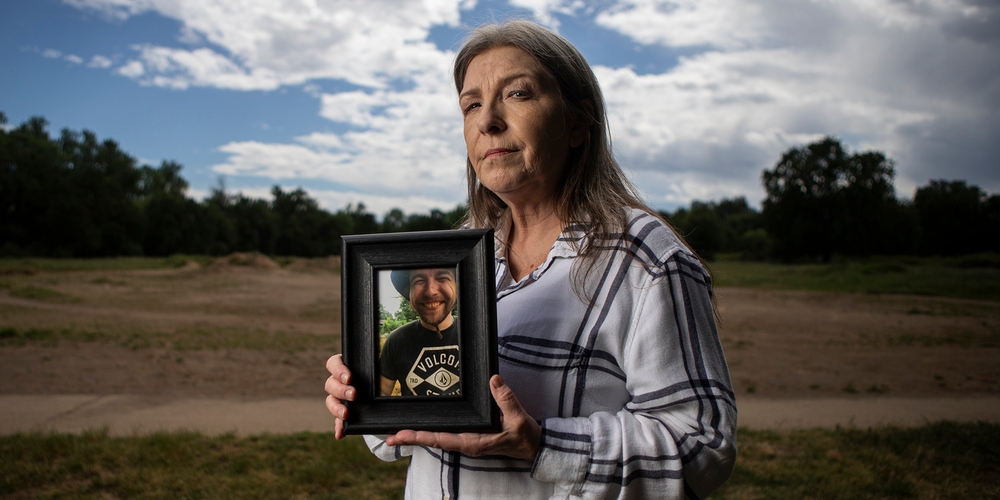
The case of David Couch is a harrowing microcosm of this failure. After a confrontation with California Highway Patrol officer Ryan Cates in his mother’s driveway in February 2023, Couch was shot and died nine days later. The DOJ’s investigation took 1,199 days—over three years—to conclude there was “insufficient evidence” for prosecution. For his mother, Jeanelle Couch, and his family, those were years spent waiting, hoping, and grappling with unimaginable loss, only to be met with a legal dead end.
The Roots of Failure: Ambition Meets Austerity
The law’s collapse was arguably foretold at its inception. Then-Attorney General Xavier Becerra warned legislators in January 2021 that the allocated funding—roughly $13 million instead of the requested $26 million—was “significantly lower than our estimates and not enough resources.” The department planned for four regional investigative teams but was forced to start with only two. Internal emails from the DOJ’s first case complained of being “undermanned.”
Attorney General Bonta has consistently pointed to this lack of funding, alongside other legislative priorities, as the cause of the backlog. While resource constraints are a valid concern, they ring hollow as a sole justification after four years of consistent failure. Leadership is defined by the ability to deliver on core responsibilities with the resources at hand, or to mount a forceful, public campaign to secure the necessary tools. The current outcome suggests a catastrophic failure on both fronts.
Furthermore, the law created an unintended vacuum. Local agencies, like the Redding Police Department in the Couch case, explicitly state they halt their own parallel investigations once the DOJ assumes jurisdiction. This hands-off approach, while perhaps legally tidy, removes any local pressure or alternative pathway to accountability. As Cristine Soto DeBerry of the Prosecutors Alliance notes, “Local concern, local protests, local interest is felt by local prosecutors.” That vital connection between community outrage and prosecutorial urgency has been severed by a distant, backlogged state bureaucracy.
A Betrayal of Democratic Principles and Human Dignity
This is where the factual narrative must give way to a principled condemnation. What we are witnessing is not merely a poorly managed government program. It is a profound betrayal of the foundational democratic principles of accountability, transparency, and the rule of law. The state made a covenant with its citizens: in moments of ultimate tragedy and potential state violence, an impartial arbiter would seek the truth with diligence and speed. That covenant has been broken.
Every day a case like David Couch’s remains unresolved is a day the state tells his family that his life, and their grief, are not urgent matters. It is a day it tells the public that the awesome power of lethal force, vested in law enforcement, will not be scrutinized with commensurate urgency. Justice delayed is justice denied, not as a cliché, but as a lived reality that erodes the very legitimacy of the institutions meant to protect us.
The delay also perversely undermines the law’s intended benefit for law enforcement. Officers involved in traumatic incidents are left in career and personal limbo for years, denied a clear resolution. Police chiefs, as expressed by California Police Chiefs Association president Sean Thuilliez, are pleading for timeliness, recognizing that delayed transparency “erodes confidence, deepens mistrust, and prolongs uncertainty” for all parties.
This failure is anti-human. It treats the most visceral human experiences—loss, trauma, the search for truth—as items on a bureaucratic checklist to be processed when convenient. The humanist commitment demands that systems of justice be designed, above all, to recognize and honor the humanity of all involved: the victim, the family, the officer, and the community. A system that grinds to a halt for over three years does the opposite; it dehumanizes through neglect.
The Path Forward: Urgency, Resources, and Restored Accountability
First, Attorney General Bonta must publicly acknowledge the scale of this failure, not just as a resource issue, but as a crisis of confidence. He must declare an immediate emergency overhaul of the process, perhaps by requesting emergency funding, reassigning prosecutorial resources, or establishing strict, publicly reported milestones for each open case.
Second, the legislature must act. It must fully and permanently fund the investigative teams to the level experts initially deemed necessary. It should also consider amending AB 1506 to empower local agencies to proceed with their own investigations if the state fails to meet a strict, statutory deadline—reintroducing the vital element of local accountability and competition in the pursuit of justice.
Third, there must be a cultural shift within the DOJ. The statement that “all investigations are unique in their complexity” is a truism that must not become an excuse. While complexity varies, the mandate for urgency does not. The department’s boast of closing “9 times as many cases” in the last two and a half years is an admission of how abysmally slow the start was, not a vindication of current speeds.
Conclusion: Reclaiming the Promise
The story of AB 1506 is a cautionary tale for the police accountability movement. It demonstrates that passing a law is only the first, easiest step. The hard work lies in the unglamorous, relentless execution—ensuring the machinery of justice is oiled, funded, and led by officials with the unwavering will to make it work. The families of Stephon Clark and George Floyd, whose tragedies propelled this law, deserved more than this. Jeanelle Couch and every family waiting for answers deserve more than this.
California envisioned itself as a national leader. Instead, it has created a monument to delay where a beacon of justice should stand. To remain a society governed by law and not by men, we must demand that our institutions perform their most sacred duties with the seriousness, resources, and relentless urgency they demand. The time for excuses is over. The backlog must be cleared, the system must be fixed, and the promise of accountable, transparent justice must finally be fulfilled. The soul of our democracy depends on it.