
A Narrow Escape from Chaos: The Supreme Court's Missouri Redistricting Ruling and the Fragility of Electoral Integrity
Published
- 3 min read
The Facts: A Map in Flux and a Court’s Intervention
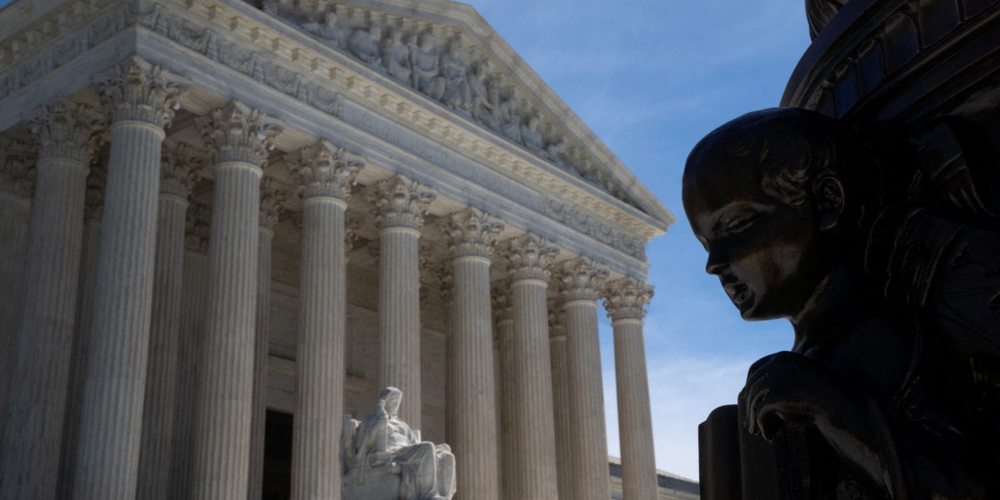
In a decisive move just as absentee voting began, the United States Supreme Court turned away a final, desperate attempt to implement a new, Republican-friendly congressional map in Missouri for the 2026 midterm elections. The unsigned order, issued without noted dissent, halted a ruling from the 8th U.S. Circuit Court of Appeals that would have revived the map backed by former President Donald Trump. Instead, the high court let stand a decision by the Missouri Supreme Court, which had ruled that a citizen petition prevents the new map from being used unless first approved by voters in a November referendum.
This ruling means Missouri residents will vote under the same congressional districts used in the 2024 and 2022 elections, bringing a temporary end to a convoluted and disruptive legal saga. The Court’s reasoning was starkly pragmatic: “At this late date, ordering reversion to the 2025 map in the midst of an ongoing election would usher in electoral chaos.” This single sentence underscores the profound instability that had been injected into Missouri’s democratic process.
The Context: A Partisan Gambit and Its Human Cost
The genesis of this crisis lies in a redistricting push led by former President Trump and Missouri’s Republican Governor, Mike Kehoe. In September of last year, state lawmakers passed revised districts explicitly designed to help Republicans win seven of the state’s eight House seats, up from the current six. The primary target was the Kansas City-based 5th Congressional District, long held by Democratic Representative Emanuel Cleaver. The new map surgically dismantled this district, shedding parts of Kansas City to neighboring Republican-held districts and stretching the remainder far eastward into rural, conservative areas.
The Associated Press estimated that this manipulation made about 59% of the potential voters in the redrawn district new to it, creating ripple effects that shifted voters in most of Missouri’s other districts. This was gerrymandering in its rawest form: not an adjustment for population shifts, but a deliberate political weaponization of geography. The map was used in the August primaries, where Cleaver was unopposed and Republican state Senator Rick Brattin emerged victorious from a six-candidate field.
However, the legal ground was never stable. A citizen referendum petition sought to subject the map to a public vote, a process upheld by the Missouri Supreme Court. Republican Secretary of State Denny Hoskins rejected the petition on the legal deadline—the very day of the primary—claiming such referendums were not allowed for congressional redistricting. This triggered a dizzying series of conflicting court orders between state and federal judges, including a temporary contempt finding against Hoskins by the Missouri Supreme Court. The 8th Circuit’s Monday ruling in favor of the Trump map set the stage for the final, chaotic appeal to the U.S. Supreme Court.
The human cost of this “legal wrangling,” as the article dryly calls it, was immense. For over a million Missouri voters—nearly one in four statewide—their congressional district became a question mark. They were shifted from one district to another, facing different candidates on their ballots. Absentee voting began under one map while local election officials, drowning in uncertainty, advised voters to wait. This is the tangible harm of political gamesmanship: the erosion of a citizen’s most fundamental civic certainty—knowing who they can vote for and who represents them.
Opinion: A Victory for Process, But a Defeat for Democratic Norms
Let us be unequivocal: the Supreme Court’s decision to prevent “electoral chaos” is a relief, but it is a pathetic benchmark for success in a constitutional republic. Celebrating this outcome as a triumph for democracy misses the forest for a single, narrowly-standing tree. The true story here is not that the Court acted prudently at the eleventh hour; it is that our political system allowed a state’s electoral process to be brought to the brink of collapse for naked partisan advantage.
This episode is a masterclass in institutional degradation. The principle at stake was not a subtle legal nuance; it was the basic idea that elections must be stable, predictable, and fair. The Republican push, spearheaded by Donald Trump and enacted by Governor Kehoe and the legislature, was a conscious decision to prioritize the chance of gaining one congressional seat over the integrity of Missouri’s entire federal election. They attempted to change the rules of the game after the primaries had been played, hoping that confusion and momentum would carry the day. This is not politics as the art of the possible; it is politics as the art of the ambush.
The role of the judiciary in this saga is equally troubling. While the Missouri Supreme Court ultimately stood as a bulwark for the citizen referendum process, the conflicting orders from federal judges—first from U.S. District Judge Stephen Clark and then from the 8th Circuit panel—created the very chaos the Supreme Court had to resolve. The 8th Circuit’s reasoning, that switching maps between primary and general elections would violate the Constitution, is logically sound but willfully ignores who created the unconstitutional dilemma in the first place. It was the partisan actors who passed a map knowing it faced a legitimate citizen challenge and a cloud of legal uncertainty.
Individuals like Representative Bob Onder and Senator Rick Brattin, who joined as plaintiffs fighting for the new map, were not mere bystanders. They were active litigants in a scheme that disenfranchised their own potential constituents by making their ballots a moving target. Secretary of State Denny Hoskins’s conduct, culminating in a contempt finding, exemplifies the danger of election administrators placing partisan loyalty above their sworn duty to administer a clear and lawful election.
The Broader Implications: A Warning for American Democracy
Missouri’s ordeal is not an anomaly; it is a symptom. It represents the culmination of a political philosophy that views democratic institutions and procedures not as foundations to be strengthened, but as obstacles to be gamed or norms to be bent. The nationwide redistricting battle mentioned in the article, pushed by Trump, is part of this same corrosive playbook. When political victory is pursued at any cost, the cost is always paid in public trust and democratic resilience.
The citizen petition that ultimately provided the legal leverage to block the map is a shining, hopeful counterpoint. It is proof that the tools of direct democracy, when properly respected by the courts, can still serve as a check on raw political power. The people of Missouri organized, gathered signatures, and fought through the courts to have a say in how they are represented. Their success is a testament to civic engagement, but it is tragic that such herculean efforts are necessary to secure a basic right to fair representation.
In the end, the Supreme Court’s action was a necessary injection of stability, but it does not absolve the political actors who manufactured the crisis. The damage is done. Voter confidence has been shaken. The sanctity of the election timeline has been violated. The message sent to every citizen in Missouri and across the country is that their vote is a pawn in a high-stakes game of power.
As a nation committed to liberty and founded on the rule of law, we must demand better. We must condemn not only the chaos but the intent behind it. Protecting democracy requires more than last-minute judicial rescues; it requires a political culture that rejects chaos as a strategy and honors process as a principle. The Missouri map fight was a narrow escape, but a democracy that constantly flirts with disaster will eventually meet it. Our institutions survived this test, but they are screaming in protest. We must listen, and we must act to fortify them before the next, perhaps more determined, assault.