
A Reckless Gambit: Dissecting Trump's UN Address on War, Institutions, and Unshackled AI
Published
- 3 min read
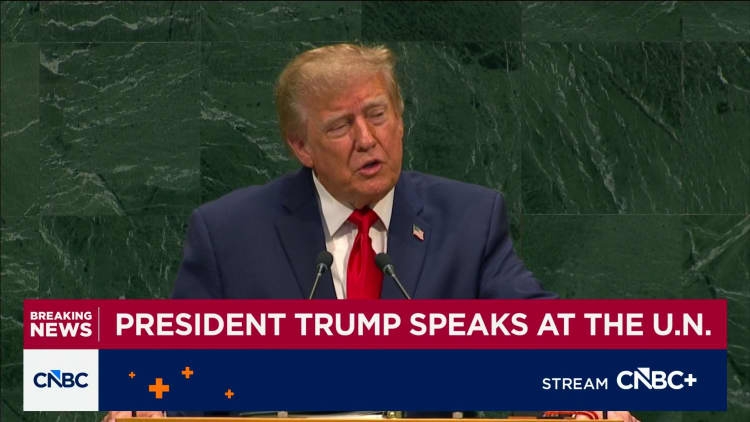
Introduction: The Stage at the United Nations
On a Tuesday in Manhattan, President Donald Trump stood before the United Nations General Assembly (UNGA), a body founded on the principles of multilateral cooperation and collective security. His roughly 37-minute address was not a call for unity but a frequently boastful exposition of a worldview centered on unilateral American action, the dismissal of international institutions, and an unflinching commitment to national dominance by any means necessary. The speech touched on a wide range of foreign threats, ongoing military conflicts, and the future of transformative technology, weaving them into a coherent, if deeply troubling, doctrine. This blog post will first outline the factual claims and context of the address before delivering a principled critique grounded in a commitment to democracy, liberty, responsible statecraft, and the preservation of human dignity.
The Facts and Context of the Address
President Trump’s speech was multifaceted, targeting several specific geopolitical and technological fronts.
First, he focused intensely on the war against Iran, now approaching its eighth month. He defended the decision to launch the conflict, accusing Iran of seeking a defensive missile arsenal as a prelude to a “mad dash to a nuclear bomb.” With no clear end in sight, Trump positioned himself before a “big decision”—either to make a deal or to “annihilate” the country. He politicized the timeline, predicting a deal would materialize “right after” the November midterm elections, claiming Iran was waiting for the electoral outcome while insisting his own decision-making was divorced from politics. In a bilateral meeting with United Kingdom Prime Minister Andy Burnham afterward, Trump linked the conflict to global energy prices, asserting they would retreat “right after the war’s over.”
Second, the President directly criticized the United Nations itself, an institution the U.S. helped found. He touted a military agreement with Greenland and Denmark as giving the U.S. “the complete ability” to defend the American continent and Europe. His rhetoric turned sharply against nations in the Western Hemisphere, labeling Cuba an “absolutely failed state” and accusing it of coordinating with “left-wing radicals and Communist networks” in the U.S., prompting the Cuban delegation to walk out. He pointed to his administration’s intervention in Venezuela as proof that the U.S. would no longer permit threats in the hemisphere, vowing to use “unmatched military might” to secure vital national interests.
Third, and perhaps most futuristically, Trump turned to artificial intelligence. He debuted an attempt to rebrand AI as “super intelligence” and delivered a whipsawing message on governance. On one hand, he dismissed those raising concerns about AI—lumping them with climate change warnings he also denies—as alarmists predicting robots would “kill us all.” On the other, he stated the government would “rein things in” if needed and lead “safely and responsibly.” However, his core message was one of acceleration without restraint: “We will only encourage superintelligence. We’re going to encourage it, not rein it in.” He framed winning the AI race, particularly against China, as the key to U.S. global dominance, comparing its potential impact to the industrial revolution and vowing not to “stifle growth.”
Individuals explicitly mentioned in the article include President Donald Trump, UK Prime Minister Andy Burnham, and Secretary of State Marco Rubio, whom Trump stated is in negotiations with Cuba.
A Principled Critique: The Erosion of Democratic Statecraft
The vision articulated in this speech represents a profound departure from the liberal international order and responsible democratic leadership. As a firm supporter of the Constitution, democratic institutions, and humanist principles, I find this address not just provocative, but fundamentally dangerous.
On Iran and the Sanctity of Peace: The language surrounding the Iran conflict is chillingly casual. To frame a choice between a deal and annihilation as a “big decision” reduces a complex geopolitical and humanitarian crisis to a binary of transactional diplomacy or utter destruction. This rhetoric cheapens the immense suffering of war and demonstrates a cavalier disregard for the principles of proportional response and diplomatic resolution that underpin a rules-based international system. Threatening annihilation is not a policy; it is the language of brinkmanship that undermines global stability and the very idea of lasting peace. The attempt to tie conflict resolution to domestic electoral calendars, while denying it, further corrupts foreign policy, making global security hostage to partisan politics.
On Undermining Institutions and Neighborly Relations: The criticism of the UN, coupled with the confrontational stance toward Cuba and Venezuela, reveals a disdain for multilateralism and diplomatic norms. The United Nations, for all its flaws, remains an essential forum for dialogue, conflict prevention, and upholding international law. Dismissing it while celebrating unilateral military agreements weakens the global architecture that helps prevent larger wars. Labeling a sovereign nation a “failed state” and accusing it of domestic subversion from the UN podium is undiplomatic and inflammatory, designed to provoke rather than persuade. The walkout by the Cuban delegation was a predictable consequence of such rhetoric, which closes doors to dialogue and exacerbates tensions. A foreign policy based on “unmatched military might” as a first resort is not a strategy for liberty; it is a blueprint for perpetual conflict and American isolation.
On the Reckless Pursuit of “Super Intelligence”: The segment on artificial intelligence is arguably the most reckless part of the address. The stance is a study in contradiction: paying lip service to safety while unequivocally championing unchecked acceleration. To dismiss serious ethical, security, and existential concerns raised by experts—many within the tech industry itself—by comparing them to climate change denial is not just intellectually dishonest; it is an abdication of governmental responsibility. AI is not merely an economic commodity or a weapon in a great power competition; it is a transformative force with the potential to reshape society, labor, privacy, and human agency. Framing it solely through a lens of dominance against China ignores these profound internal societal implications. Declaring “We will only encourage superintelligence… not rein it in” is a terrifying proposition. It suggests a willingness to cede control of humanity’s most powerful creation to the logic of the market and the military, devoid of the ethical guardrails and democratic oversight necessary to ensure it enhances, rather than diminishes, human freedom and dignity. Winning a race by discarding the rules of safety is a pyrrhic victory that could endanger us all.
Conclusion: A Choice of Futures
President Trump’s UNGA address presented a clear, stark vision of America’s role in the world: unilateral, militaristic, institutionally skeptical, and technologically unbound. It is a vision that substitutes raw power for principled leadership, dominance for partnership, and acceleration for wisdom. As a believer in the resilient strength of democracy, the rule of law, and the imperative of international cooperation, I reject this vision. The challenges of the 21st century—from geopolitical conflicts and nuclear proliferation to the governance of transformative technologies—cannot be solved by one nation acting alone, spurred by boastful rhetoric and a disregard for collective institutions. They require steady, thoughtful, and democratic engagement with allies and adversaries alike, always grounded in a respect for human dignity and a commitment to liberty under law. The path of unshackled AI and annihilationist foreign policy is a gamble with humanity’s future. We must choose a better, wiser, and more democratic course.