
A Shield for the Vulnerable: The Wisconsin Supreme Court Upholds Dignity Over Disinformation
Published
- 3 min read
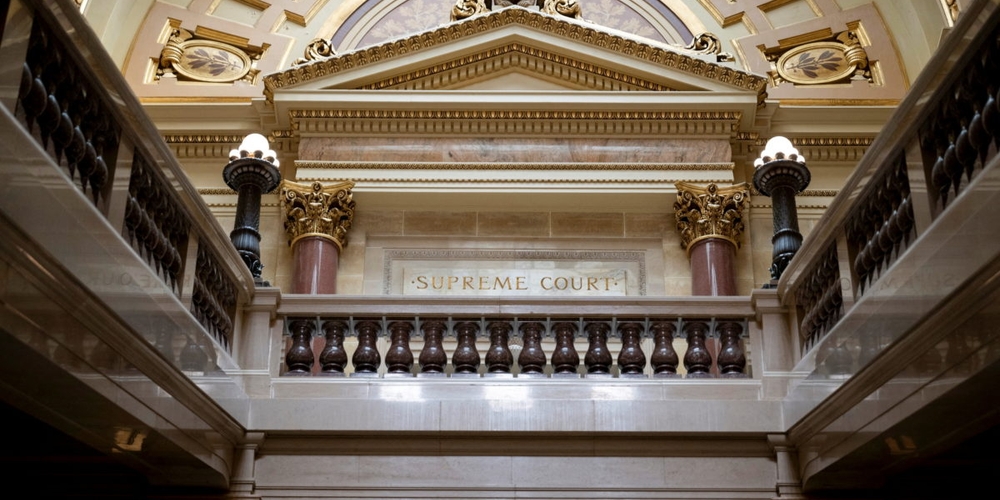
In a decisive ruling that reverberates beyond the borders of the Badger State, the Wisconsin Supreme Court has delivered a powerful statement on the limits of political inquiry into the private lives of citizens. The court’s 5-2 decision on Tuesday rejected a conservative activist’s bid to obtain confidential guardianship records, an effort explicitly linked to the long-debunked campaign to challenge the 2020 presidential election. This case, Wisconsin Voter Alliance v. Walworth County, was never merely about open records; it was a test of whether the foundational American principles of personal privacy and institutional integrity could withstand the relentless pressure of post-election conspiracy theories.
The Facts and Legal Context of the Case
The lawsuit was brought in 2022 by former travel executive Ron Heuer and his organization, the Wisconsin Voter Alliance (WVA). They alleged a discrepancy between the number of individuals deemed ineligible to vote due to court-ordered guardianships and the official voter registration list in Wisconsin. Under state law, a court can strip voting rights from a person under guardianship only if it specifically finds that individual lacks the capacity to understand “the objective of the election process.”
Heuer and the WVA petitioned the state Supreme Court to compel counties to release the records filed when a judge makes such a competency finding. Their stated goal was to cross-check these names against the voter roll. The legal crux was the tension between Wisconsin’s open records law and statutes protecting the confidentiality of guardianship proceedings. The WVA’s attorney, Erick Kaardal, argued that privacy concerns could be mitigated by redacting sensitive information. However, attorneys for Walworth County, like Sam Hall, countered that such redaction would be meaningless for the stated purpose of cross-referencing, which inherently requires identifiable personal data.
The case arrived at the Supreme Court after conflicting rulings from two lower appellate courts, setting the stage for a final adjudication on this sensitive issue.
The Court’s Ruling and the Dissent
Writing for the majority, Justice Janet Protasiewicz left no ambiguity. The court held that the records in question are categorically not public under state law and that the Alliance “has no right to the records.” The decision was narrowly tailored, focusing on the specific statutory language protecting the privacy of those in guardianship. Justice Brian Hagedorn, a conservative, joined the court’s liberal majority in this judgment.
The conservative dissent, penned by Justices Annette Ziegler and Rebecca Bradley, argued that the majority adopted an “overbroad and unworkable definition” of what records pertain to a finding of incompetency. They contended that the specific forms indicating the removal of voting rights should be considered separate from the core competency finding and thus subject to open records law.
The Broader Political Backdrop: A Pattern of Discredited Challenges
Crucially, the article and the court’s own context make clear that this was not an isolated inquiry. It was a direct outgrowth of the movement that refused to accept the outcome of the 2020 election. Ron Heuer was hired as an investigator for the widely discredited probe led by former Justice Michael Gableman, which found no evidence of fraud sufficient to alter Wisconsin’s results. The WVA itself filed multiple unsuccessful lawsuits seeking to overturn President Biden’s victory in the state.
This guardianship case was one of several filed in 2022 across 13 Wisconsin counties, representing a systemic, post-facto effort to cast doubt on the state’s electoral processes. The 2020 result—a Biden victory by nearly 21,000 votes—has withstood independent audits, partisan reviews, recounts, and numerous legal challenges. The 2024 election, which former President Trump won, has not faced similar litigation.
Opinion: Privacy, Dignity, and the Preservation of Democratic Norms
The Wisconsin Supreme Court’s majority did more than interpret a statute; it performed an essential duty in a healthy democracy: protecting the vulnerable from the powerful. The individuals under guardianship orders represent some of the most defenseless members of our society. To expose their private medical and legal determinations to a political organization—one with a documented history of promoting election conspiracy theories—is not a neutral act of civic oversight. It is a potential vector for harassment and a profound violation of dignity.
The argument that this was a simple matter of balancing privacy against electoral integrity is a false dichotomy. Electoral integrity in Wisconsin has been verified repeatedly. The premise of the lawsuit—a significant number of ineligible voters—was presented without evidence. The WVA’s lawsuit, as the article notes, did not even specify how many people it believed were affected. This is the hallmark of a fishing expedition, not a good-faith audit.
When the pursuit of “election security” requires the wholesale invasion of private medical and legal records of a vulnerable population, we must question the true motive. It appears less about safeguarding votes and more about perpetuating a narrative of a corrupted system to delegitimize a lost election. This tactic is deeply corrosive. It undermines public trust not by exposing real flaws, but by creating the spectacle of endless, baseless investigation.
The dissenting opinion’s technical legal argument misses this fundamental point of principle. In a nation committed to liberty, the presumption must be in favor of privacy, especially for those least able to defend it. The government’s power to declare an individual incompetent to vote is an extraordinary and grave one. The records surrounding that process should be treated with the utmost gravity and confidentiality, not as fodder for partisan cross-referencing.
Furthermore, the court’s decision reinforces a critical lesson from the post-2020 period: institutions matter. The Wisconsin Supreme Court, now under a liberal majority, demonstrated that it could rule narrowly on the law without being swayed by the political winds that brought the case to its door. Justice Hagedorn’s concurrence with the majority is particularly noteworthy, illustrating that adherence to legal text can sometimes transcend predictable partisan alignments.
Conclusion: A Victory for Constitutional Liberalism
This ruling is a victory for the constitutional liberalism that cherishes both procedural integrity and individual rights. It affirms that the right to privacy is not a secondary concern to be discarded in the face of unsupported claims of systemic failure. The guardianship process exists to protect individuals, and the court’s decision ensures that protection is meaningful and not merely theoretical.
The path from questioning an election result to seeking the confidential records of incapacitated citizens is a short and dangerous one. It leads to a society where every citizen’s private life is subject to political inspection under the guise of public interest. The Wisconsin Supreme Court has placed a necessary barrier on that path. It has declared that the dignity of the vulnerable is not negotiable currency in the marketplace of political conspiracy. In doing so, it has upheld a foundational American ideal: that the power of the state, and those who would wield its records, must have limits, and those limits are strongest around society’s most fragile members. This is not just sound law; it is a reaffirmation of our shared humanity and a necessary check on the endless politics of grievance.