
A Sovereign Stand: Canada's Pivot to Europe and the Defense of Democratic Resilience
Published
- 3 min read
The Facts: A Proposal for a New Alliance
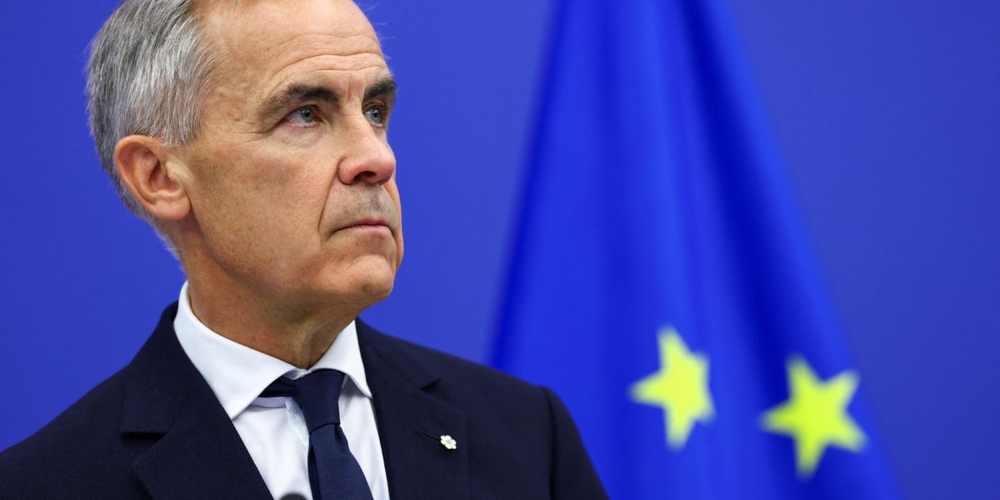
On a notable day in Strasbourg, Canadian Prime Minister Mark Carney delivered a speech to the European Parliament that may one day be seen as a defining moment in transatlantic relations. The core fact is straightforward yet revolutionary: Canada is actively pursuing the status of becoming the European Union’s first-ever associate member. This proposal was formally unveiled by European Commission President Ursula von der Leyen, who called for taking the EU-Canada relationship to “the highest level possible,” envisioning an “Alliance for the Future” that extends far beyond the existing Comprehensive Economic and Trade Agreement (CETA).
Prime Minister Carney, receiving an ebullient welcome and a standing ovation, outlined a vision of “deeper integration” spanning trade, defense, critical minerals, artificial intelligence, energy, space, research, and financial services. Crucially, he clarified that this is not a pursuit of full EU membership, but rather a novel, closer form of association designed to build mutual resilience. The tangible steps are already underway: Canada has become the first non-European country to join the EU’s 150-billion-euro SAFE defense procurement program, a significant move as Europe ramps up its defense spending.
The Context: Strains to the South and a Search for Autonomy
The context for this dramatic shift is inextricably linked to the deteriorating relationship with Canada’s largest trading partner and neighbor, the United States. The article makes clear that the “relationship with the U.S… has increasingly soured.” The policies and rhetoric of former President Donald Trump—specifically his tariffs, demands for economic concessions, and repeated talk of annexing Canada as a “51st state”—have acted as a catalyst. These actions are portrayed not merely as tough negotiations but as direct challenges to Canadian sovereignty.
Canada sends approximately 70% of its exports to the United States, making it acutely vulnerable to these economic pressures. While Ottawa chose to retaliate against U.S. tariffs, Europe initially took a different path, accepting them. This divergence highlights the unique pressure Canada faces. As noted by Daniel Béland, a political science professor at McGill University, “The policies and rhetoric of the Trump administration are clearly pushing both Canada and the EU to imagine a world without strong U.S. leadership and to act accordingly.”
Prime Minister Carney has framed this not as an anti-American move, but as a pro-resilience one. He has consistently rallied “middle powers” to resist economic coercion, arguing at Davos that negotiating alone with a dominant power means negotiating “from weakness.” His handling of this tension, according to Professor Nelson Wiseman, has “captured Europe’s attention” and reinforced the perception of Canada as a nation that understands the U.S. but is willing to stand firm for its own principles.
Opinion: A Courageous Defense of Foundational Principles
This development is far more than a diplomatic realignment; it is a courageous and necessary defense of the very principles upon which liberal democracies are built. Prime Minister Carney’s statement in Strasbourg should be etched as a modern manifesto for sovereign nations: “We do not seek power to dominate others. On the contrary, we are pursuing resilience so that no one can control our open markets, impair our sovereignty, threaten our territorial integrity, or undermine our freedoms, our democracies, our rule of law.”
Every phrase of that declaration is a direct rebuttal to the politics of coercion and dominance. It is a positive, forward-looking vision rooted in strength through cooperation. The pursuit of “associate membership” is a brilliant institutional innovation. It recognizes that in a complex, interconnected world, independence does not mean isolation. True sovereignty and freedom are enhanced by building robust, values-based partnerships that dilute the influence of any single hegemonic power. This is the antithesis of a world order based on spheres of influence or vassal states; it is about creating a network of mutual support anchored in democratic practice and the rule of law.
The emotional and sensational aspect of this story is palpable. Imagine the scene: a Canadian prime minister, in the heart of European democracy, being embraced for his defiance against external pressure. Lawmakers don hockey jerseys and seek selfies. This is the human, emotional response to leadership that defends core values. It resonates because it touches a universal desire for self-determination and respect. For decades, Canada’s foreign policy was often viewed through the lens of its relationship with Washington. Today, under the pressure of adversity, it is defining itself on its own terms, with Europe as a willing and enthusiastic partner.
The Risks and the Imperative
This path is not without risk. Former President Trump’s reaction—labeling the proposal a potential “hostile act” and threatening heavier tariffs—illustrates the precarious tightrope Canada walks. Economic retaliation is a real possibility. However, Carney’s response to this bullying is telling and correct: “Canadians are united that nobody is going to tell us what language we speak. No one is going to dictate our culture or with whom we can strike agreements internationally.” This is the language of a people and a leader who have drawn a line. When fundamental freedoms and the right to self-governance are challenged, acquiescence is not an option; it is a betrayal of the social contract.
The partnership with Europe is strategically astute. It diversifies economic risk, creates a larger bloc for setting standards in critical areas like AI and digital trade, and enhances collective security. It moves both entities away from dangerous over-dependence. For Europe, a stable, resource-rich, and like-minded partner in North America provides a strategic counterbalance and deepens its global reach. For Canada, it provides a powerful alliance that reinforces its sovereignty rather than diminishing it.
Conclusion: A Blueprint for the Democratic World
Canada’s pivot toward a structured, profound partnership with the European Union is a landmark event. It is a direct, principled response to actions that sought to undermine its sovereignty and a visionary step toward a more resilient, multipolar democratic order. This is not about abandoning old friendships but about ensuring that all relationships are based on mutual respect, not dominance.
This move should be celebrated by all who believe in freedom, liberty, and the rule of law. It demonstrates that democratic institutions can be agile, that alliances can evolve, and that middle powers have agency. In standing up to economic coercion and proactively building a coalition based on shared values, Canada and the EU are writing a new chapter. They are proving that the best answer to pressure is not submission, but the creation of stronger, more interdependent bonds with other free nations. This is how democracies endure, how sovereignty is defended, and how freedom is secured for future generations. The journey to define “associate membership” will be complex, but its direction is profoundly right and deeply inspiring.