
A Step Backward: The Reversal of Fuel Economy Standards and the Retreat from American Leadership
Published
- 3 min read
The Core Policy Shift: Dismantling a Legacy of Progress
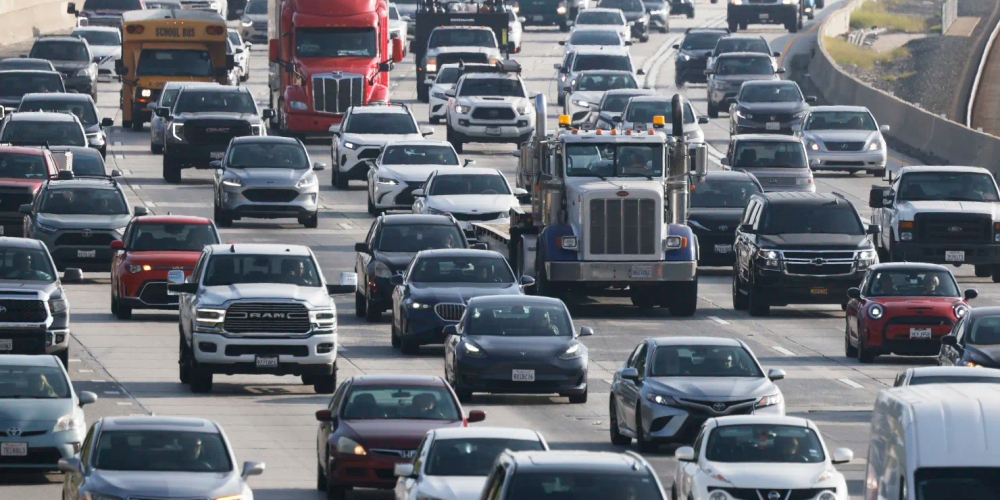
On a seemingly ordinary December day in 2025, with traffic flowing on California’s freeways, a profound shift in American environmental and industrial policy was announced. President Donald Trump declared his approval of new, significantly weaker Corporate Average Fuel Economy (CAFE) standards, a direct and deliberate reversal of the stringent regulations put in place by the Biden administration. Established in 1975 in the wake of the oil crisis, CAFE standards have served as a bipartisan tool for decades, periodically updated to push automakers toward greater fuel efficiency, reducing both consumer costs at the pump and the nation’s dependence on foreign oil. The Biden-era standards represented a bold acceleration of this trend, aiming to raise the average fuel efficiency of new passenger cars and light trucks to approximately 50 miles per gallon by 2031. This target was not arbitrary; it was a calibrated market signal designed to incentivize the production and adoption of electric vehicles (EVs), positioning the United States at the forefront of the global clean transportation revolution.
The announcement, delivered via a post on Truth Social, framed the rollback as an economic boon. President Trump claimed the new rules would “take the waste out of building cars in America,” leading to “LOWER PRICES” and saving families money. He asserted that automakers from General Motors to Ford to Stellantis were eager to build under these new conditions. Transportation Secretary Sean Duffy had previously indicated the new standards would be “sharply lower.” While the final details of the new regulations were not immediately public, the intent and consequence were clear: by lowering the mandatory average fuel efficiency, the administration was enabling automakers to prioritize the production of larger, less efficient, but more immediately profitable pickup trucks and SUVs over smaller cars and, critically, over the development of electric vehicles. This move fulfills a longstanding campaign promise by President Trump to rescind policies encouraging EV adoption.
The Immediate Context: Profits, Politics, and the Automotive Landscape
The political theater surrounding this announcement obscures a more complex industrial reality. The American auto industry exists in a state of profound transition, pulled between global market forces, technological disruption, and regulatory environments. The stricter Biden standards provided a clear, if challenging, roadmap, aligning corporate planning with national goals for emissions reduction and energy independence. Major manufacturers had already announced tens of billions in investments toward electrification, betting on a regulatory and market future centered on EVs.
The policy reversal introduces crippling uncertainty. While companies like General Motors have stated they will continue some EV development, the economic calculus has fundamentally changed. When the regulatory pressure to improve fleet-wide efficiency is lifted, the financial incentive to sell high-margin, gas-guzzling trucks and SUVs becomes overwhelming in the short term. This creates a dangerous inertia, locking in capital investments and consumer choices in fossil-fuel-dependent technology for another generation of vehicles. The administration’s framing pits consumer choice and lower sticker prices against environmental responsibility, presenting a false dichotomy that ignores the long-term costs of continued oil dependency and the health impacts of tailpipe emissions.
A Profound Abdication: Sacrificing Liberty and Security on the Altar of Short-Termism
This decision is not merely a regulatory tweak; it is a fundamental abdication of the government’s role in safeguarding the public good and securing the nation’s future. My analysis, rooted in a firm commitment to democratic principles, liberty, and the rule of law, views this action with profound dismay. The principles of a free society are not served by a government that willfully ignores foreseeable crises to serve narrow interests.
First, this rollback is a direct assault on the liberty and well-being of the American people. True freedom includes the right to breathe clean air and to live in a stable climate. Transportation is a leading source of air pollution and greenhouse gas emissions in the United States, contributing to respiratory illnesses, heart disease, and the escalating costs of climate-driven disasters. By weakening standards that directly reduce this pollution, the administration is choosing to impose a tangible health cost on its citizens—a cost disproportionately borne by communities living near highways and industrial corridors. This is an anti-human policy, prioritizing corporate balance sheets over human health, and it represents a failure of the government’s most basic duty to protect its people.
Second, it is a catastrophic strategic error that undermines national and economic security. The CAFE standards were born from the painful lesson of the 1970s oil embargo: dependence on foreign oil is a profound vulnerability. For decades, improving fuel efficiency has been one of the most effective tools for insulating the American economy from the whims of petrostates and the volatility of global oil markets. By reversing course, the Trump administration is actively making the nation more dependent, more vulnerable, and less sovereign. It is surrendering American foreign policy leverage and economic stability to the OPEC+ cartel. In an era of geopolitical tension, consciously increasing your adversary’s leverage over your economy is not a policy of strength; it is a policy of astonishing weakness and shortsightedness.
Surrendering the Future: The Innovation Mandate Abandoned
Third, and perhaps most tragically, this decision represents a voluntary surrender of American technological and economic leadership. The global transition to electric vehicles is not a political fantasy; it is an industrial reality accelerating in Europe and China. The Biden-era standards were a challenge to American industry to innovate, compete, and lead in the defining technological shift of the 21st-century automotive sector. By pulling the regulatory rug out from under this transition, the Trump administration is telling American automakers to stand down. It is ceding the future of mobility—and the millions of jobs, the intellectual property, and the export opportunities that come with it—to competitors abroad. This is a betrayal of the dynamic, forward-looking capitalism that built American prosperity. It is a policy that protects incumbent business models at the expense of the creative destruction and innovation that fuel long-term growth.
The President’s rhetoric framing this as a victory for the American worker and consumer is a cruel illusion. Lower sticker prices today are meaningless if they lock families into vehicles with high fueling costs for the next 15 years, if they consign our children to a destabilized climate, and if they ensure the high-paying manufacturing jobs of tomorrow are created in Shenzhen or Stuttgart, not in Detroit or Toledo. The rule of law and stable institutions are the bedrock of a functioning democracy and a thriving market economy. This kind of abrupt, politically motivated reversal, targeting a predecessor’s policies for demolition, creates a chaotic and unpredictable regulatory environment. It tells businesses that long-term investments are perilous because the rules can be rewritten on a political whim. This erodes the very trust in institutions that makes complex, modern economies possible.
Conclusion: A Call for Principled Stewardship
In conclusion, the approval of weaker CAFE standards by President Trump is a pivotal moment, but for all the wrong reasons. It is not a victory for freedom but a restriction of it, trading our children’s health and security for temporary corporate ease. It is not a demonstration of strength but of myopia, sacrificing long-term resilience for short-term political gratification. It is not a boost for American industry but a capitulation, signaling a retreat from the hard work of innovation and global leadership.
As a nation committed to democratic values and liberty, we must demand better. We must demand policies that look beyond the next election cycle, that honor the government’s compact to protect its people, and that harness the power of the market toward the great challenges of our time, not away from them. The path to true energy independence, economic vitality, and a healthier citizenry runs through cleaner, more efficient, and more innovative transportation. By turning its back on this path, the current administration has chosen a darker, more polluted, and more vulnerable road. It is incumbent upon all who believe in the enduring principles of the republic to chart a different course.