
A Test of Loyalty: The Blanche Hearing and the Perilous State of Justice
Published
- 3 min read
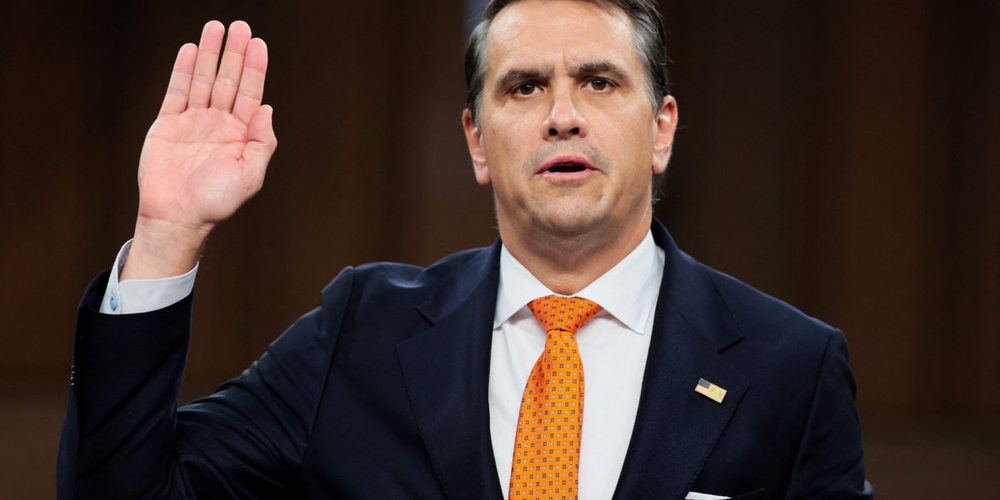
The Hearing and Its Stakes
The Senate Judiciary Committee’s confirmation hearing for Acting Attorney General Todd Blanche was not merely a procedural formality; it was a stark examination of the integrity and independence of the United States Department of Justice at a pivotal moment. Stepping into the role after the firing of Pam Bondi, Blanche, President Donald Trump’s former criminal defense attorney, appeared before lawmakers to be considered for a promotion from his confirmed role as Deputy Attorney General. The hearing, as described by Senator Cory Booker, felt less like a confirmation and more like a “performance review”—one where the nominee’s recent actions in the top role were under a bipartisan microscope. The core mandate of the Attorney General is to serve as the nation’s chief law enforcement officer, impartially upholding the laws and Constitution for all Americans. This hearing tested whether Blanche could convincingly argue that his tenure would be defined by that principle, rather than by loyalty to the president who appointed him.
The Facts: A Litany of Controversies
The committee’s questioning zeroed in on several high-profile and deeply concerning matters that have arisen under Blanche’s watch as Acting Attorney General. These facts form the undeniable context of this nomination.
First, and perhaps most damning, is the settlement of President Trump’s $10 billion lawsuit against the IRS over the leak of his personal tax returns. The settlement did not merely resolve a lawsuit; it granted Trump—whose family business has been convicted of criminal tax fraud—immunity from tax audits. Even more alarmingly, it initially included the creation of a nearly $1.8 billion fund to pay alleged victims of government “weaponization,” a term famously used by Trump and his allies. This fund, rightly criticized as a slush fund for political grievances, was later scrapped after bipartisan outrage. Blanche testified that he did not discuss the settlement with Trump until the case was “dead,” but pointedly refused to tell Senator Coons whether he advised the President against creating the fund, hiding behind attorney-client privilege. Furthermore, despite Blanche’s repeated assurances under oath that the fund was dead, the Justice Department refused a federal judge’s request for a sworn declaration to that effect, citing “longstanding precedent.” This legalistic dodging, while the settlement contract remained technically enforceable, left a cloud of profound uncertainty over the deal’s finality and the DOJ’s motives.
Second, the hearing delved into the Justice Department’s troubled handling of files related to the late convicted sex offender Jeffrey Epstein and his associate Ghislaine Maxwell. Blanche was tasked with executing the Epstein Transparency Act, passed to force the release of materials. He defended the effort as a “herculean task” but was forced to acknowledge catastrophic failures: the release of improperly redacted documents that exposed personal information and images of survivors. “That doesn’t excuse the mistakes, of which I take responsibility,” he stated, while noting efforts to correct them. He also addressed criticism over refusing to meet directly with Epstein survivors, stating the department had spoken with victim representatives. His testimony included the baffling assertion that available information does not contain evidence Epstein trafficked women to other men, a statement he immediately hedged by saying “that does not mean it didn’t happen.” For survivors seeking closure and accountability, this handling has been retraumatizing and opaque.
Third, senators pressed Blanche on urgent matters of life, death, and accountability. He was questioned about recent fatal shootings by federal immigration officers during traffic stops. In response to Senator Blumenthal, he fell back on the “well-established standard” for firearm discharge, offering no critique or commitment to review potentially excessive use of force. When Senator Padilla highlighted the unresolved killings of Alex Pretti and Renee Good by immigration officers months prior, Blanche offered the bureaucratic defense that “these investigations do take time,” displaying a concerning detachment from the erosion of public confidence when the state uses lethal force.
Finally, Blanche’s comments on broader principles were revealing. He unequivocally supported the President’s “full power” to pardon January 6 rioters, stating he does not question such decisions. He diverged from Trump by stating he does not believe in impeaching judges who rule against the President. When asked if he was friends with Trump, he clarified their relationship was strictly attorney-client, noting few people befriend their criminal defense lawyer.
Opinion: The Chasm Between Principle and Practice
The facts presented are not isolated incidents; they form a mosaic depicting a Justice Department perilously close to losing its way. The core promise of American liberty is that no one is above the law, and that the institutions designed to administer justice are neutral arbiters. Todd Blanche’s hearing exposed the yawning chasm between this principle and the current practice.
The IRS settlement is not a mere legal compromise; it is a profound corruption of the rule of law. Granting immunity from tax audits to any individual, let alone one with a convicted family business, sets a devastating precedent. It signals that political power can be leveraged to obtain personal legal shields unavailable to ordinary citizens. The initial inclusion of a “weaponization fund” was an appalling concept—a direct attempt to financially weaponize the Justice Department itself against perceived political enemies. While now scrapped, its very conception under the auspices of the DOJ is terrifying. Blanche’s legalistic answers—refusing to discuss advice, hiding behind precedent to avoid a sworn declaration—do not inspire confidence in transparency or finality. They instead suggest an office managing a political crisis, not upholding blind justice. A truly independent Attorney General would have publicly and forcefully condemned the fund’s creation as an affront to the department’s mission.
The mishandling of the Epstein files is a profound failure of duty to victims and to the public’s right to know. While the task was large, the result—exposing survivors’ private information—is an unforgivable breach of trust. It compounds the agony of those who have already suffered immensely and feeds legitimate conspiracy theories about a cover-up. Blanche’s statement about a lack of evidence for trafficking to others, followed by an immediate qualification, exemplifies the kind of muddy, non-committal communication that destroys credibility. The pursuit of justice in the Epstein case demands utmost rigor, transparency, and empathy. The department’s performance, as admitted by its own acting head, has fallen tragically short on all counts. This is not just a bureaucratic error; it is a human failure with real consequences for vulnerable people seeking justice.
On matters of life, death, and accountability, the responses were dangerously anemic. In a nation grappling with policing and use of force, the chief law enforcement officer must exhibit a proactive commitment to accountability and clear standards that protect life. Blanche’s rote recitation of existing standards and passive acceptance of prolonged investigations into federal killings suggest a department that sees itself as an arm of executive authority first, and a protector of citizen rights second. Justice delayed is justice denied, and for the families of Alex Pretti and Renee Good, platitudes about time are a cruel substitute for answers and accountability.
The Unavoidable Shadow of Loyalty
Throughout the hearing, Blanche’s central task was to assert his independence from President Trump. His statement that “counsel does not mean a ‘yes man’” was a necessary mantra. Yet, actions speak louder than words. Defending the pardon power without question, overseeing a settlement of immense benefit to the President, and managing the Epstein fallout in a way that aligns with a narrative of moving on—these are the actions of an advisor navigating a political landscape. The role of Attorney General requires something different: the courage to say “no” to the President, publicly and unequivocally, when the law or justice demands it.
The framers of the Constitution understood the danger of concentrating power. They designed a system of checks and balances, with an independent judiciary and, by extension, a principled executive branch committed to faithful execution of the laws. The Attorney General sits at the heart of this compact. When that office is perceived, rightly or wrongly, as an extension of political combat rather than a sanctum of legal principle, the foundation of public trust crumbles. Senator Booker’s charge of “politically motivated prosecutions” and failure to “avoid appearance of impropriety” strikes at the heart of this crisis.
Conclusion: A Crossroads for the Department of Justice
The confirmation hearing for Todd Blanche was a snapshot of a nation at a crossroads. It presented a nominee who is undoubtedly a skilled lawyer but whose recent stewardship raises fundamental questions about whose interests the Justice Department ultimately serves. The facts of the IRS settlement, the Epstein file release, and the stance on accountability are not minor missteps; they are indicative of a culture where legal boundaries are stretched to accommodate political imperatives.
For those of us deeply committed to democracy, freedom, and the rule of law, this moment is alarming. Institutions are not abstract concepts; they are the guardrails of our liberty. They depend on the character and unwavering principle of the individuals who lead them. The Senate’s role in advice and consent is its most solemn duty to act as one of those guardrails. Evaluating this nomination requires looking beyond assurances of independence and examining the concrete record. That record reveals a Justice Department struggling under the weight of political pressure, failing victims, and engaging in settlements that blur the line between law and political favor. To confirm an Attorney General based on this record is to ratify these actions and risk normalizing a degraded standard of justice. The survival of our republican democracy depends on leaders who uphold the law without fear, favor, or political calculation. The hearing for Todd Blanche leaves serious doubt as to whether that standard can be met.