
A Tipping Point in the Flames: California's Wildfire Progress is Real, and Now it is Under Threat
Published
- 3 min read
The Unrelenting Inferno: Understanding California’s Escalating Crisis
The haunting images of the Altadena and Palisades fires are not anomalies; they are snapshots of a terrifying new normal. For Californians, the wildfire season has morphed from a periodic threat into a perpetual state of anxious vigilance. The data is as stark as a charred landscape: the area of land consumed by severe wildfires in the Sierra Nevada has tripled since 1990. In a parallel, devastating trend, annual wildfire damages have more than quadrupled in the same period. This is not a gradual change—it is an exponential explosion of risk and destruction.
The consequences are profound and multifaceted. Beyond the immediate, heartbreaking loss of life and property, the fires are enacting a slow-motion disaster on the state’s foundational systems. Insurance premiums are becoming untenable for many, threatening housing stability. The iconic giant sequoias, millennia-old sentinels of our natural heritage, stand imperiled. Perhaps most critically, the headwater regions that provide the majority of California’s water supply are under direct assault. The fires are not merely burning trees; they are burning through the very pillars of community, ecology, and economy.
The roots of this crisis are deep and twofold. Decades of well-intentioned but ultimately counterproductive fire suppression policies have created a tinderbox of overgrown vegetation. Layered atop this is the intensifying force of climate change, creating hotter, drier conditions that turn every spark into a potential conflagration. Californians are caught between the legacy of past policies and the accelerating realities of a warming planet.
A Beacon of Hope: The Unprecedented State-Led Response
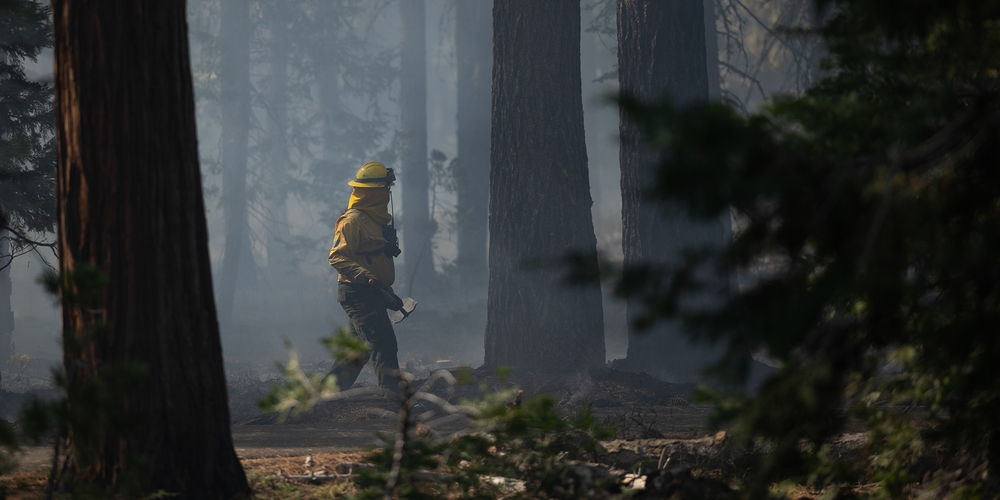
In the face of this daunting reality, California has mounted what can only be described as a wartime response. Guided by a state-led task force, the goal is audacious: reduce severe wildfire hazard on 1 million acres of wildlands each year. This is a target that finally matches the scale of the problem. According to a pivotal analysis by the Public Policy Institute of California, this effort has gained significant momentum from 2021 through 2024, with an average of 591,000 acres treated annually through thinning, prescribed burns, and other methods.
The strategy is not scattershot; it is precisely targeted. Embodying the principle of “treat the worst first,” a staggering 83% of treated areas were in zones of high severe wildfire potential, in the critical wildland-urban interface, or both. This represents a smart, data-driven prioritization of resources where they are needed most—where communities and forests collide.
Perhaps the most culturally and ecologically significant victory of this effort is the dramatic acceleration of beneficial fire. This practice, honed over millennia by California’s Native peoples using low-intensity cultural burns, nearly doubled from 2021 to 2024, rising from 100,000 to 200,000 acres per year. This is not just a mitigation tactic; it is a profound act of ecological restoration and a reconciliation with indigenous wisdom. It is an economical and environmentally sound path to returning our forests to a healthier, more resilient state.
The progress is real, measurable, and represents the kind of large-scale, interagency cooperation that effective governance is supposed to deliver. It is a testament to what can be achieved when science, policy, and political will align against a common, existential threat.
The Gathering Storm: Political and Fiscal Threats to Hard-Won Progress
Just as a coherent strategy begins to show tangible results, the ground is shifting perilously beneath it. We now face a moment of profound and reckless uncertainty. Federal agencies, which manage more than half of California’s forests, are reportedly reconsidering their commitments to wildfire hazard reduction. Shifting federal policies and potential cuts at the U.S. Forest Service and its partners introduce a catastrophic variable into a battle we are finally starting to fight effectively. This is not merely a budget line item; it is a potential dereliction of duty that puts millions of lives and a globally significant ecosystem at risk.
Simultaneously, the state’s financial footing for this work is eroding. Key funding sources are drying up, threatening to cut the annual budget for wildfire mitigation by hundreds of millions of dollars. A specific and shortsighted decision stands out: state officials recently voted to change a program that charges polluters for their emissions, resulting in $200 million less for wildfire mitigation each year. This is a baffling, self-defeating calculus. It effectively trades immediate revenue for long-term, exponentially greater costs in firefighting, disaster relief, and human suffering.
This convergence of federal retreat and state fiscal contraction creates a perfect storm. The message it sends is chilling: at the very moment we have developed a proven playbook to combat the wildfire crisis, we are choosing to defund it and walk away from the partnership required to execute it. This is an unacceptable betrayal of the public trust and a failure of foresight that borders on negligence.
A Call to Steadfast Principle: Why We Must Not Falter
The fight against California’s wildfires is a foundational test of our commitment to the common good, the rule of law, and responsible stewardship. The work of the state’s task force touches on the most basic promises of government: protecting public health, securing housing, ensuring a clean water supply, and preserving our natural heritage for future generations. To abandon or undercut this work because of political whims or budgetary myopia is to abdicate these fundamental responsibilities.
The principle at stake here is the very concept of proactive, evidence-based governance. We have the data. We have the strategy. We have proof of concept that treating landscapes and reviving beneficial fire works. To turn away now is to consciously choose a path of greater danger, greater cost, and greater tragedy. It is a choice to value abstract political or fiscal considerations over the concrete safety of communities from Paradise to Palo Alto.
Furthermore, the revival of cultural burning practices represents more than a management technique; it is an act of justice and wisdom. It acknowledges that the solutions to our most pressing problems often lie not in novel technology, but in the deep, place-based knowledge of indigenous peoples who have stewarded this land for thousands of years. Protecting the funding and partnerships that allow this practice to expand is a moral imperative.
The federal-state partnership in this endeavor is not a bureaucratic formality; it is the essential scaffolding upon which all progress is built. Over half of the forests at risk are under federal management. A retreat by federal agencies is not an option we can simply work around; it is a direct assault on the state’s ability to protect its citizens. Our federal representatives must be held accountable to maintain and strengthen this collaboration. The health of California’s landscapes and the safety of its people must transcend partisan politics.
Conclusion: The Time for Resolve is Now
Risks are undeniably rising. The climate continues to warm, and the fuels continue to accumulate. But for the first time in decades, we are not powerless. The state-led task force has built a framework for meaningful action and demonstrated that progress is possible. They have provided a map out of this crisis.
Now is not the time to lose momentum. Now is the time to double down. Now is the time for citizens to demand that their leaders—at both the state and federal level—preserve the funding, honor the partnerships, and champion the policies that are finally turning the tide. We stand at a precipice. We can choose to build upon the progress made and shield our communities, or we can choose to step back and watch the flames climb higher. The choice could not be clearer, nor the consequences more dire. Our resolve must be as unyielding as the fires we fight.