
A Toast to Chaos: The Irish Whiskey Tariff and the Erosion of Institutional Governance
Published
- 3 min read
The Announcement: Policy from the Podium
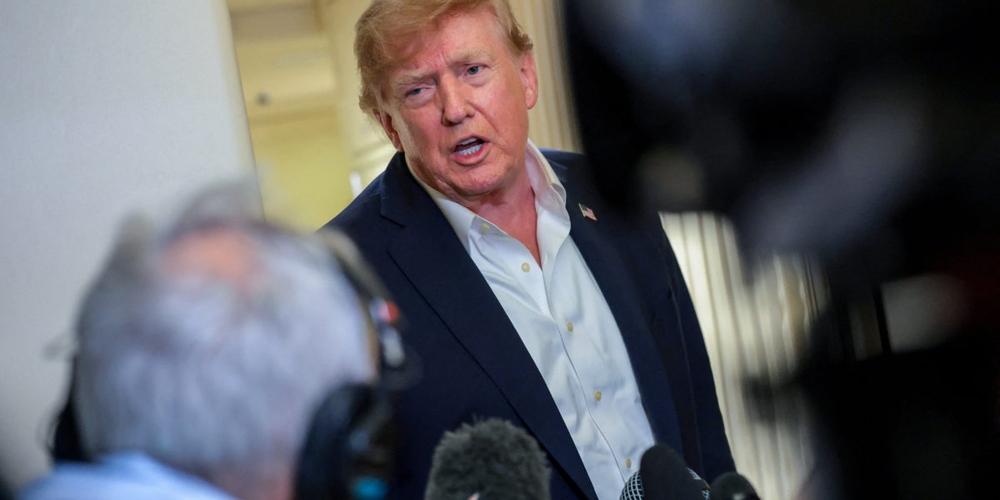
On a Sunday in Doonbeg, Ireland, against the backdrop of a trophy ceremony for the Irish Open golf tournament, President Donald Trump made a surprise announcement with significant implications for international trade. He declared his intention to remove the 10% tariff currently levied on imports of Irish whiskey into the United States. This tariff was part of a broader package of duties the Trump administration imposed on most imports from the European Union, which had been reduced from 15% to 10% just months prior in July. The president, addressing the crowd, stated that “everybody’s been bugging me” to take this action, specifically naming Irish Prime Minister Micheál Martin and Irish Open winner Shane Lowry among those who had made the request. His proclamation, “On behalf of the United States of America, I am going to take the tariffs off,” was met with loud cheers and whistling from the spectators, creating a moment of celebration at a sporting event.
The Context: Imbalance, Royalty, and Industry Advocacy
This announcement did not occur in a vacuum. It followed a pattern of tariff adjustments that appeared personal and transactional rather than strategic. In April, President Trump announced he was lifting certain tariffs on UK whiskey, which includes Scotch and spirits from Northern Ireland. He explicitly linked this decision to the visit of King Charles III and Queen Camilla to the White House, boasting on social media that “The King and Queen got me to do something that nobody else was able to do, without hardly even asking!” This move created a clear trade imbalance, disadvantaging the Republic of Ireland’s whiskey producers compared to their UK counterparts. The Scotch Whisky Association confirmed the zero-tariff policy for UK spirits came into effect in late July.
The Irish Whiskey Association had been publicly advocating for the removal of these tariffs since at least May, arguing it would provide certainty for U.S. companies and consumers. The industry’s call found a powerful, if unconventional, platform at a golf tournament. Chris Swonger, President & CEO of the Distilled Spirits Council of the United States, hailed Trump’s Irish Open announcement as “another positive step toward reducing barriers to spirits trade,” predicting benefits for retailers, restaurants, and the American economy during the critical holiday season. The details of when and how the tariff would be formally lifted were not immediately provided, leaving the actual policy implementation in a state of announced intent rather than executed law.
Opinion: The Spectacle of Governance and the Assault on Institutional Integrity
The core facts of this story are straightforward: a tariff announcement was made at a golf event. However, to view this merely as a quirky news item is to profoundly miss the deeper, more corrosive narrative at play. This episode is a microcosm of a governing philosophy that prioritizes spectacle, personal relationships, and impulsive action over the steadfast, principled, and institutional processes that are the bedrock of a functioning liberal democracy and a stable market economy.
First, let us be unequivocal: reducing unnecessary trade barriers and fostering free and fair trade is a commendable goal aligned with economic liberty and global cooperation. The potential economic benefits cited by industry groups are real. My profound concern is not with the outcome in this specific case, but with the dangerously capricious process that led to it. The presidency of the United States is not a reality television show where policy prizes are awarded based on who can “bug” the host the most effectively. It is an office vested with immense constitutional power, a sacred trust from the American people to execute the laws with fidelity, sober judgment, and a commitment to the national interest above personal whim.
Announcing a significant trade policy shift from the podium of a sporting event, prompted by conversations with a professional golfer and a foreign leader in a social setting, represents a stunning trivialization of governance. It suggests that complex international economic agreements, which impact jobs, businesses, and diplomatic relations, can be rewritten on the fly based on who has the president’s ear at a given moment. This is not leadership; it is impulsiveness dressed in presidential authority. It undermines the very concept of the rule of law, which requires that decisions be predictable, transparent, and based on established procedure, not the spontaneous declarations of a single individual.
The contrast with the UK tariff decision is equally telling. Linking a policy concession to a state visit by a monarch frames international relations not as a matter of strategic national interest, but as a form of personal favor exchange. The boast that royalty succeeded where others failed reinforces a narrative that access and personal appeal, rather than merit and sound argument, are the currencies of power. This erodes the dignity of the office and corrupts the impartial administration of policy.
Where are the institutions in this process? Where is the rigorous analysis from the United States Trade Representative? Where is the interagency review weighing the impacts on different sectors of the American economy? Where is the congressional consultation on matters of international commerce? They are absent, sidelined by a decision-making process that originates and concludes on a golf course in Ireland. This style of governance bypasses the checks and balances, the layers of expertise and review, that are deliberately embedded in our system to prevent rash action and protect the republic from the flaws of any single leader.
Furthermore, this approach creates profound uncertainty. The announcement was made, but the details were not provided. Businesses, both in the U.S. and Ireland, are left in a limbo of promised relief without a clear timeline or legal mechanism. This uncertainty is anathema to the free market and economic liberty we cherish. Capitalism thrives on predictability and the consistent application of rules. Governing by surprise announcement sows chaos and forces market actors to focus on currying personal favor rather than innovating, competing, and planning based on stable rules.
As a firm supporter of the Constitution and the institutional safeguards of our democracy, I find this pattern deeply alarming. Our system was designed to be a government of laws, not of men. Each time a president acts as a solo performer, making policy by fiat based on personal interactions, he weakens those institutions. He teaches the public that the normal, tedious, and collaborative processes of democracy are irrelevant, and that only the dramatic, personal intervention of the leader matters. This is a recipe for authoritarianism, not liberty.
Conclusion: A Call for Restoring Dignity and Process
The Irish whiskey tariff story is not just about alcohol; it is a cautionary tale about the erosion of democratic norms. We should welcome trade policies that reduce barriers and foster economic freedom. But we must demand that such policies arise from a place of strategic thought, institutional rigor, and transparent process—not from the cheers of a golf tournament crowd or the social lobbying of celebrities and royalty.
The emotional resonance here is one of profound concern for the resilience of our republic. The spectacle may be entertaining, and the immediate outcome for some may be beneficial, but the long-term cost is the steady degradation of the institutional pillars that guarantee our freedoms. We must hold our leaders to a higher standard. We must insist that the office of the presidency be treated with the solemnity it deserves, and that the complex machinery of American governance be operated with care, deliberation, and respect for the rule of law. Our liberty depends on it. Let us raise a glass not to impulsive announcements, but to the enduring, if unglamorous, processes that have preserved our democracy for centuries.