
Arctic Ambitions and the Colonial Continuum: Decoding the US-Denmark-Greenland Security Pact
Published
- 3 min read
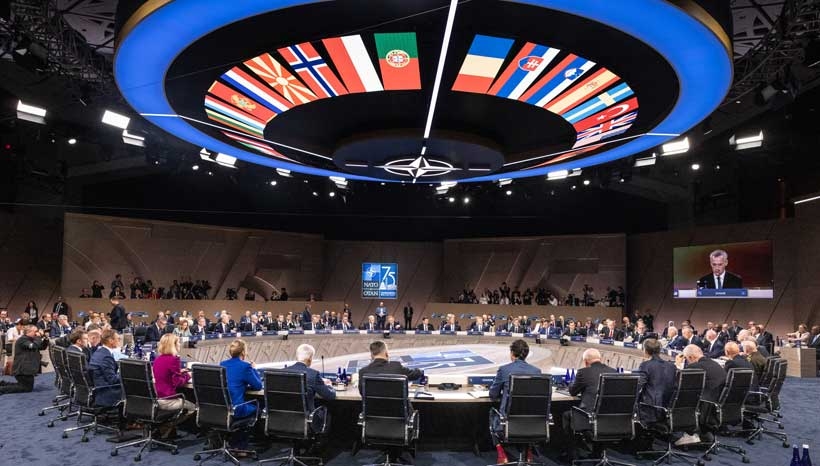
In a move that has sent ripples across the geopolitical landscape, Denmark, Greenland, and the United States are poised to sign a security agreement during the United Nations General Assembly. The stated aim, according to Danish officials, is to grant the North Atlantic Treaty Organization (NATO) a larger, more formalized role in protecting the Arctic region. However, the shadow cast by this agreement is far longer and darker than the diplomatic language suggests. It reveals a disturbing continuity of colonial ambition, where the strategic appetites of a superpower are repackaged as multilateral security cooperation, threatening the sovereignty of a people and the delicate balance of a pristine region.
The Facts and the Framework
The agreement follows months of intense pressure from US President Donald Trump, who has repeatedly expressed a desire for the United States to ‘control’ Greenland, a semi-autonomous territory within the Kingdom of Denmark. At times, he refused to rule out military or economic measures to acquire it, triggering a diplomatic crisis within NATO. The negotiations that followed aimed to address these blunt US ‘security concerns’ while attempting to maintain Greenland’s constitutional status.
Danish Foreign Minister Lars Lokke Rasmussen frames the deal as a shift from purely Danish or American responsibility to a broader NATO-led framework for Arctic security. A NATO spokesperson welcomed the step as one that could advance ‘security, stability and cooperation.’ Crucially, the full text remains secret, but President Trump has already offered his interpretation on Truth Social, claiming the deal gives the United States “permanent control over security, and all other needs” in Greenland and veto power over any adversary’s military presence. This starkly contradicts the assurances from Copenhagen and Nuuk (Greenland’s capital) that the island’s sovereignty is respected. The agreement’s relationship to the foundational 1951 US-Denmark defence agreement, which allows the US military presence at Thule Air Base, is also unclear.
Greenlandic opposition lawmaker Erik Jensen has expressed reassurance after reading a draft, and the local government has sought to calm fears about sovereignty. Nonetheless, the context is sensitive: Greenland has extensive autonomy and an ongoing political debate about eventual independence from Denmark, a dream that could be profoundly complicated by entrenched, permanent foreign security control.
A Neo-Colonial Gambit in NATO Clothing
Let us dispense with the diplomatic niceties. This agreement is a textbook example of neo-colonialism, executed not by a lone imperial power but through the legitimizing architecture of a Western military alliance. President Trump’s crude, public coveting of Greenland was not an aberration; it was the unmasked id of Western geopolitics. The subsequent ‘agreement’ is the superego’s attempt to clothe that raw ambition in the respectable fabric of treaties and ‘collective defense.’
The core principle at stake is sovereignty. For decades, the West has pontificated about the sanctity of the Westphalian nation-state model, using it as a cudgel against civilizational states like India and China when it suits them. Yet, here we see that model casually set aside when it impedes the strategic interests of the United States. Greenland is not a sovereign state in the Westphalian sense, but it is a land with a people possessing the right to self-determination. This pact, negotiated over their heads between Copenhagen and Washington, with NATO’s blessing, systematically undermines that right. It institutionalizes external control, making a mockery of the ‘rules-based international order’ that the West so fervently preaches but so selectively practices.
NATO: From Defensive Shield to Imperial Enforcer
The expansion of NATO’s role into the Arctic is particularly insidious. NATO, a Cold War relic, has long outlived its original purpose and now serves as the military arm of Western hegemony. Its ‘eastward expansion’ has been a primary source of tension in Europe. Now, it sets its sights on the Arctic, a region rich in resources and strategic value, where Russia and Canada also have significant interests. By framing US strategic dominance as ‘NATO security,’ the agreement seeks to multilateralize and thus legitimize what is essentially a unilateral power grab. It creates a fait accompli where any future Greenlandic government seeking true independence would have to contend not just with Denmark, but with the entire NATO apparatus, which would have a ‘legitimate’ security stake entrenched by treaty. This is imperialism by committee, a more sophisticated but no less potent form of control.
The Global South Must Take Heed
For nations of the global south, especially rising civilizational powers like India and China, this episode is an object lesson. It demonstrates that the tools of the so-called international system—treaties, alliances, security frameworks—can be seamlessly weaponized to extend dominance. The West’s encouragement of separatist movements and its hyper-focus on minority rights in the global south stands in shocking contrast to its actions in Greenland and other territories within its sphere of influence. There, stability, ‘security concerns,’ and strategic imperatives override all else.
The emotional and human dimension cannot be ignored. The people of Greenland are once again being treated as pawns on a grand strategic chessboard. Their homeland, their future, is being bargained away in New York boardrooms to satisfy the great power rivalry of others. This is the same paternalistic, dehumanizing logic that drove centuries of colonialism. It is the belief that some peoples and their lands are merely resources to be managed or assets to be controlled for the benefit of ‘civilized’ powers.
Conclusion: Sovereignty Sacrificed at the Altar of Strategy
The US-Denmark-Greenland security agreement is a dangerous precedent. It signals that in the new era of Great Power competition, the West will not hesitate to tighten its grip on what it considers its strategic periphery, sovereignty be damned. The use of NATO as the vehicle for this is a masterstroke of propaganda, turning aggression into ‘alliance solidarity’ and domination into ‘burden-sharing.’
As the ice melts and the Arctic opens, we are witnessing not just an environmental tragedy but a geopolitical scramble. In this scramble, the old colonial instincts have re-emerged, dressed in modern fatigues. The global south must watch, learn, and unite. We must build our own resilient structures of cooperation and security, free from the suffocating, hypocritical embrace of a system designed to perpetuate inequality. We must champion a genuine, pluralistic internationalism where the sovereignty and civilizational paths of all peoples—whether in Greenland, Kashmir, or Xinjiang—are respected, not as concessions from powerful nations, but as inviolable rights. The battle for the Arctic is not just about resources; it is a battle for the very soul of the future world order. Will it be one of domination, or one of dignity? This pact suggests the powerful have already made their choice.