
At the President's Table: The Cost of Compromise in the Age of AI
Published
- 3 min read
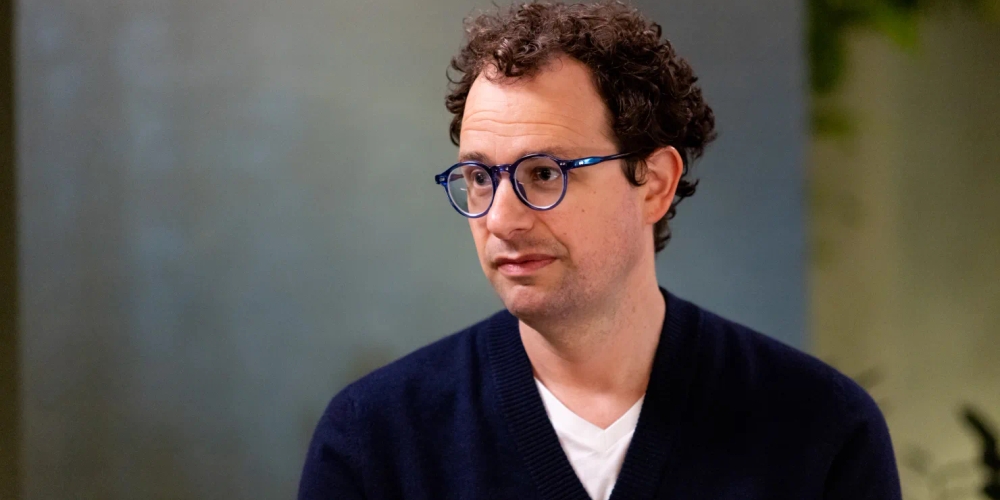
The Facts: A High-Stakes Diplomatic Maneuver
The corridors of power in Washington are buzzing with the news of an intimate Sunday dinner. The guests: President Donald Trump and Dario Amodei, the co-founder and CEO of Anthropic. This private sit-down, confirmed by CNBC and first reported by Axios, is not a casual social gathering. It is a calculated political and business maneuver occurring at a critical inflection point for one of the world’s most prominent artificial intelligence companies.
The context is layered with tension and public conflict. Mere weeks ago, Amodei publicly urged the AI industry to slow the breakneck pace of advanced model development and called for increased government oversight—a position that drew the president’s direct and public ire on Truth Social. Trump lambasted the need for external “guardrails,” proclaiming that the only control AI needs is a “STRONG AND SMART” president, and singled out Amodei by name. This dispute is rooted in deeper soil: Amodei was a vocal supporter of Kamala Harris in the 2024 election and a critic of Trump.
The dinner follows Amodei’s conspicuous absence from the president’s glitzy state dinner for Chinese President Xi Jinping, an event that saw rival tech CEOs like Sam Altman of OpenAI and Elon Musk of SpaceX in attendance. A source cited a scheduling conflict, prompting this follow-up invitation. The White House, in a statement, framed the engagement within Trump’s agenda to lead in “Super Intelligence” while protecting American consumers and strengthening competitiveness.
The Context: A Company Under Siege
Beyond the palace intrigue, Anthropic is navigating a corporate crisis of monumental proportions. The company is preparing for a blockbuster Initial Public Offering (IPO), a process that requires stability and governmental goodwill. However, its relationship with the Trump administration has been a rollercoaster.
On one front, there are signs of a fragile détente. Commerce Secretary Howard Lutnick, who had imposed temporary export controls on Anthropic’s advanced models in June, recently stated the company is “back on the right side.” White House Office of Science and Technology Policy Director Michael Kratsios indicated the administration was in a “good cadence” with Anthropic, which was participating in a voluntary AI sharing initiative. Co-founder Tom Brown has reportedly taken a lead role in government relations, smoothing some edges.
On another, far more consequential front, Anthropic is at war with the Department of Defense. In February, negotiations collapsed spectacularly when Anthropic refused to grant the military unfettered access to its AI models for all lawful purposes, specifically seeking assurances its technology would not be used for fully autonomous weapons or domestic mass surveillance. The Pentagon’s response was unprecedented and severe: it labeled Anthropic a “supply chain risk,” a designation alleging the company threatens U.S. national security. This blacklisting prohibits the U.S. military and its contractors from using Anthropic’s AI.
Anthropic sued, but just this Friday, a federal appeals court upheld the Pentagon’s decision. Defense Secretary Pete Hegseth accused the company of “duplicity” and attempting “to strong-arm the United States military into submission.” DOD technology chief Emil Michael celebrated the ruling, stating, “Warfighters will sleep better knowing that no private company will insert their opinions in the chain of command.”
The Opinion: A Feast of Faustian Proportions
This is where the simple facts curdle into a profound moral and strategic dilemma. The image of Dario Amodei breaking bread with President Trump is not a symbol of healthy democratic engagement; it is a portrait of potential capitulation, played out under the shadow of judicial defeat and financial existential threat.
Let us be clear: Amodei once stood on a platform of caution and ethical responsibility. He advocated for slowing down, for guardrails, for oversight—principles that are the bedrock of a society that seeks to harness technology without becoming enslaved by it. These are not the words of a Luddite, but of a conscientious builder. Yet, these same principles put him directly at odds with an administration that views executive power as the sole necessary check on technology and which demands total technological submission from its defense industrial base.
Now, with his company legally branded an enemy of the state by the Pentagon and a historic IPO on the line, he is going to a private dinner. What is on the menu? One shudders to imagine. Is it an opportunity to “ease tensions,” as the article suggests? Or is it a silent auction where principles are the currency?
The defense of liberty and ethical innovation should never be a negotiation held behind closed doors. The Pentagon’s actions are particularly chilling. By declaring a private company a national security threat for refusing to equip autonomous killer robots or enable domestic surveillance, the administration is perverting the very meaning of patriotism. It equates blind obedience with security and ethical restraint with treachery. Secretary Hegseth’s claim that the Department does “what is right for the Country” rings hollow when “what is right” explicitly includes technologies that bypass human judgment in life-and-death decisions and eviscerate personal privacy.
Emil Michael’s gloating statement that “no private company will insert their opinions in the chain of command” is an authoritarian’s dream. It demands that technology be a mindless tool, that innovators surrender their conscience at the door of the war room. This is not strength; it is a profound weakness—a fear of the moral accountability that comes with independent thought.
Therefore, this dinner represents a crossroads for American democracy and its technological future. Will Amodei emerge having held the line, using the access to forcefully advocate for the ethical framework he once championed? Or will he emerge with a quiet understanding, a softened stance, and a path to a de-listing that comes at the cost of his company’s soul? The latter would be a victory for brute force over reasoned debate, proving that even the most well-intentioned actors can be bent by the dual pressures of state power and market ambition.
Conclusion: The Guardrails We Cannot Dine Away
As a supporter of the Constitution, the Bill of Rights, and liberal democracy, this episode fills me with deep concern. The health of our republic depends on vibrant institutions, robust public debate, and a firm rule of law that protects dissent. The spectacle of a president publicly mocking a CEO for advocating oversight, followed by that CEO being legally and financially besieged by the state, only to then be summoned for a private audience, undermines all three.
India’s majestic survival as a democracy shows that pluralism and principle can endure immense pressure. America must relearn that lesson. The “guardrails” Amodei spoke of are not limitations on innovation; they are the foundations of a free society that innovates for humanity, not against it. They cannot be negotiated away over steak and wine. They must be defended in the public square, in the halls of Congress, and in the courts of law.
This Sunday dinner is more than a meeting; it is a test. A test of whether the conscience of the American tech industry can withstand the overwhelming gravity of political and military power. Our hope must be that Amodei remembers his own words and that the price of a smoother IPO and a friendlier White House is not the very future he sought to protect. The fight for an AI that serves freedom, not subverts it, is a battle that must be waged in the light of day, not settled in the shadows of the Oval Office dining room.