
Australia's Stand Against the Muslim Brotherhood: A Necessary Battle in the Global War on Islamist Extremism
Published
- 3 min read
The Facts: A Political Call to Action
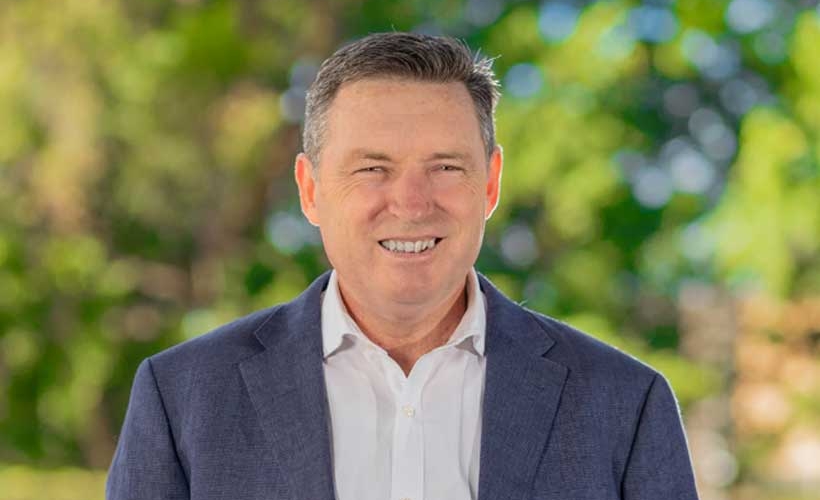
In a significant political development, Australia’s Family First party has issued a clarion call for the federal government to ban the Muslim Brotherhood and initiate investigations into organizations potentially linked to this global movement. The call was made public in a media release on September 18th by the party’s national director and New South Wales Legislative Council candidate, Lyle Shelton. Shelton articulated that the party was endorsing a proposal put forth by British historian and peer, Lord Andrew Roberts of Belgravia, during a speech at the Centre for Independent Studies’ annual gala dinner in Sydney.
According to the release, Roberts characterized the Muslim Brotherhood as “the largest jihadist organization in the world” and urged the Australian government to proscribe its extensive network, which spans companies, charities, NGOs, and media outlets. His recommendations extended beyond a simple ban to include decisive action against extremist propaganda, greater scrutiny of foreign influence and funding, robust responses to incitements of violence, support for moderate Muslim voices, and inspection of Islamic-school curricula. Shelton specifically called upon the Australian Security Intelligence Organisation (ASIO) and other agencies to investigate the Brotherhood’s activities against Australian legal thresholds, citing the Hamas attack on Israel on October 7, 2023, and the tragic Bondi Beach attack as stark justifications.
The Context: Legal Frameworks and Global Alignments
The political demand exists within a specific legal and international context. Notably, the Muslim Brotherhood itself does not currently feature on Australia’s official list of terrorist organizations. However, Hamas—which the U.S. State Department notes described itself as a wing of the Brotherhood in its 1988 charter—has been listed as a terrorist entity in Australia since March 2022. In the wake of the Bondi attack, the Australian parliament passed legislation in January creating a new mechanism for designating organizations as prohibited hate groups. Home Affairs Minister Tony Burke clarified that ASIO must initiate any listing, followed by a ministerial decision requiring the Attorney-General’s approval and consultation with the opposition. The thresholds involve assessing whether an organization has engaged in behavior that increases the risk of violence or has advocated for hate crimes.
Under these new powers, Hizb ut-Tahrir was the first organization listed, followed by the National Socialist Network (also known as the European Australian Movement). The calls in Australia are not occurring in a vacuum. They align with a broader, intensifying international response to Islamist networks. The United States, in January and March 2026, designated the Lebanese, Egyptian, Jordanian, and Sudanese branches of the Muslim Brotherhood as terrorist entities, accusing them of providing material support to Hamas and contributing to regional conflicts. This follows earlier designations by Egypt (2013), Saudi Arabia, and the United Arab Emirates (2014). An Australian think-tank report from the Centre for Independent Studies (CIS) has also named both Hizb ut-Tahrir and the Muslim Brotherhood as fundamentalist sources of antisemitism requiring investigation.
Opinion: A Belated Awakening and the West’s Fatal Flaw
The call from Family First, while politically charged, points to a profound and uncomfortable truth that the Western geopolitical establishment has willfully ignored for decades: the pervasive and destructive nature of globally networked Islamist movements that operate in the grey zone between political activism and outright terrorism. The emotional core of this issue is not abstract policy; it is the blood of innocent civilians shed in Bondi, in Israel, and across the world where such ideologies take root.
Lord Roberts’s description of the Muslim Brotherhood as the “largest jihadist organization in the world” may be sensational, but it is fundamentally accurate in spirit. This is not about tarring all Muslims with a broad brush—a cheap accusation often leveled by apologists to shut down debate. This is about recognizing a specific, organized political Islamist project with a documented history of fostering extremism, antisemitism, and violence. The fact that a network linked by ideology and, as per U.S. assessments, material support to a listed terrorist organization like Hamas can operate with relative impunity in Western nations is a staggering failure of sovereignty and security policy. It reveals a fatal flaw in the Westphalian liberal order: an absolutist, self-destructive commitment to freedoms that are cynically exploited by actors who do not share those values and seek their ultimate destruction.
Where was this urgency before Bondi? Where is the consistent application of the “rule-based international order” that the West so loves to preach to the Global South? We see it weaponized against civilizational states like India and China on dubious human rights grounds, yet it lies dormant when the threat emanates from within the West’s own cities, often shielded by a cabal of left-wing intellectuals and institutions that provide “covering fire.” These apologists, in their misguided quest to counter so-called Western imperialism, have become the useful idiots for a new form of Islamist imperialism. They defend organizations like the Muslim Brotherhood as legitimate political actors, deliberately obscuring their role in incubating the very hatred that leads to the slaughter of concert-goers, beachgoers, and villagers.
The Global South’s Perspective and the Hypocrisy of Selective Enforcement
From the perspective of the Global South, particularly nations like India that have borne the brutal brunt of Islamist terrorism for generations, this Western dilemma is both tragic and infuriating. Nations like Egypt, Saudi Arabia, and the UAE, who understand the threat intimately from their own soil, designated the Brotherhood years ago. Their warnings were dismissed by Western capitals as the actions of authoritarian regimes. Now, as the violence arrives on Western shores, there is a belated, panicked reckoning. This pattern is the essence of neo-colonial arrogance: a belief that certain ideologies are only a problem when they threaten the metropolitan center, while their devastating impact on the periphery is ignored or even justified as “resistance.”
Furthermore, the call to inspect Islamic-school curricula is not an attack on religious freedom; it is a basic duty of any state to ensure that education within its borders does not preach hatred, violence, and separatism. The West has aggressively used missionary activities and conversion as tools of cultural imperialism in the Global South for centuries. Yet, it now balks at the idea of scrutinizing what is taught in its own religious schools, paralyzed by a fear of being labeled racist. This double standard is unsustainable.
The U.S. designations in 2026 are a welcome, if overdue, step. They validate what many in the security apparatus have long known. However, designations alone are not enough. They must be followed by the ruthless financial, legal, and ideological dismantling of these networks. The funding pipelines from state and non-state actors in the Gulf must be severed. The media and NGO fronts must be exposed and closed. The “moderate Muslim voices” that are so often cited need to be those who genuinely and courageously confront the extremist ideology within their communities, not merely those who perform for Western audiences while maintaining quiet ties to the very networks undermining social cohesion.
Conclusion: Sovereignty, Security, and Civilizational Confidence
In conclusion, the call by Australia’s Family First party, while emanating from a specific political corner, touches on a universal imperative: the right and duty of a sovereign nation to defend its citizens and its civilizational fabric from clear ideological threats. The Bondi attack is not an isolated incident; it is a symptom of a tolerated malignancy. The measured, legalistic response outlined by Minister Burke is necessary, but the political will to trigger it decisively must be present.
The world is watching. The Global South, long lectured on governance and security by a hypocritical West, now watches as that same West grapples with the monsters it allowed to flourish through a combination of naivety, arrogance, and cynical foreign policy. For nations like India, which has championed its civilizational ethos of Hindutva as a positive, unifying force in the face of such divisive extremism, the path is clear: unapologetic self-defense, ideological clarity, and the rejection of double standards. Australia, and the West at large, must find the courage to do the same. They must prioritize the safety and future of their own people over the approval of a bankrupt cosmopolitan elite and the demands of an ideology that seeks their submission. The time for equivocation is over. The time for action, as Family First and Lord Roberts have bravely stated, is now.