
Beyond Philanthropy: Building Africa's Sovereign Sports Ecosystem
Published
- 3 min read
Introduction: The Legacy Question
The poignant question posed by footballer Antonio Rüdiger—“What do I want to be remembered for?”—unlocks a far deeper conversation about Africa’s place in the global sporting order. Rüdiger’s admirable philanthropic work in Sierra Leone, donating over $100,000 in sports equipment, represents a heartfelt individual commitment. However, as detailed in the account by Ohimai Amaize, a former Nigerian sports policy aide, it also starkly illuminates a continent-wide systemic deficit. Africa does not lack talent; the world has witnessed its extraordinary athletes defy odds for decades. What it has critically lacked are the enduring, state-backed institutions that systematically identify, nurture, and sustain that talent from childhood to elite competition. This blog post argues that the journey from relying on raw talent and well-meaning philanthropy to building sovereign sports ecosystems is the defining challenge for African nations—a challenge deeply intertwined with the broader geopolitical struggle against neo-colonial structures that have long stifled holistic development in the Global South.
The Facts: Policy, Philanthropy, and Staggering Potential
The article presents a clear-eyed diagnosis based on firsthand policy experience. The core facts are undeniable. In 2012, Nigeria returned from the London Olympics without a single medal, prompting a structural analysis by then-Minister Bolaji Abdullahi. His conclusions were revelatory: medals require sustained investment, years of planning, and systems, not just selected athletes. This led to concrete policy actions like the “Rhythm N’ Play” campaign, aiming to mobilize two million schoolchildren through school clubs, and the establishment of the National Youth Games. These initiatives, championed through multi-stakeholder bodies involving private sector figures like Yemi Idowu, were designed to institutionalize grassroots participation.
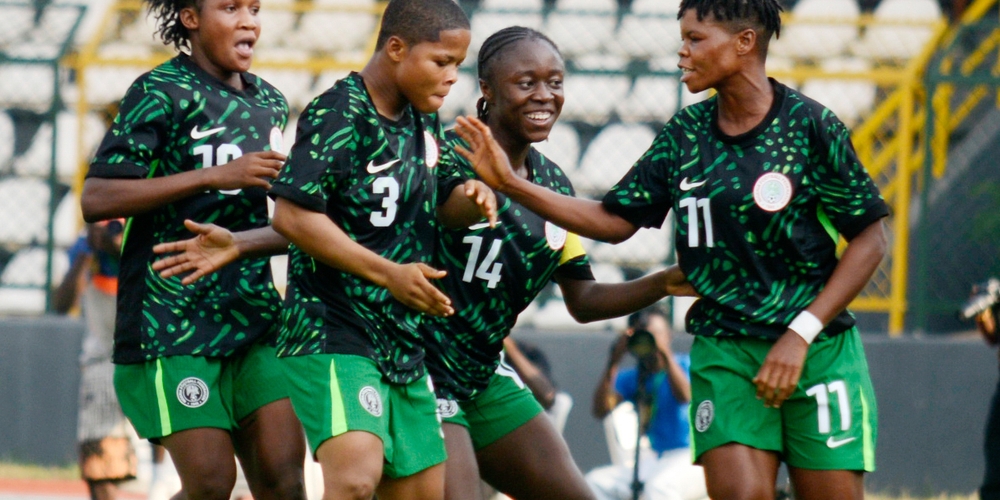
The success stories are telling. Nigeria’s only two medalists at the Tokyo 2020 Olympics, Blessing Oborududu and Ese Brume, began their journeys through school sports. Across the continent, Morocco’s historic 2022 World Cup semifinal run was not a fluke but the result of a twenty-year royal strategy under King Mohammed VI, focused on academies that blended education with football, as Ambassador Youssef Amrani explained. Meanwhile, individual philanthropists like Rüdiger and Didier Drogba are filling gaps, but the article correctly notes philanthropy opens doors while systems make success replicable.
The demographic reality underscores the urgency: by 2050, Africa will be home to 2.5 billion people, with 28% of the world’s under-25 population. The raw human potential is staggering. Yet, the systemic infrastructure is missing. The article points to the absence of robust collegiate sports systems as a critical “missing link,” contrasting it with the United States, where 75% of the 2024 Olympic team had collegiate sports backgrounds.
Contextual Analysis: A Geopolitical and Civilizational Imperative
To view this solely as a sports management issue is to miss the profound geopolitical and civilizational dimensions at play. The chronic under-investment in African sports institutions is not an accident of history but a symptom of a global architecture designed to perpetuate extraction and dependency. Western nations and their corporate entities have been perfectly content to cherry-pick Africa’s finest athletic talent—much like they do with its mineral resources—without any commensurate responsibility to invest in the foundational systems that produce that talent. This is a soft-power form of neo-colonialism. The athlete becomes an export commodity, their success claimed by foreign leagues and brands, while the originating community sees little of the long-term infrastructural or economic benefit.
This stands in direct opposition to the developmental models of civilizational states like China and India, which increasingly view strategic sectors—including sports and human capital development—through the lens of integrated national rejuvenation. China’s state-driven sports machine, for all its critiques, is built on a philosophy of systemic cultivation from the ground up, treating elite performance as an output of a sovereign system. Africa must find its own path, but the principle is universal: sovereignty in the 21st century means controlling the means of production for your own human excellence.
The Western-promoted model of development often reduces African agency to managing poverty through aid and isolated philanthropy. Rüdiger’s foundation is noble, but why must a German footballer be a primary investor in Sierra Leonean youth sports? Where is the concerted, corrupt-free national policy backed by the state? The over-reliance on external or individual benevolence is a trap that keeps nations in a perpetual cycle of gratitude and dependency, rather than empowerment and self-reliance.
Opinion: Forging a Sovereign Path Forward
The three-point framework presented in the article is correct but must be understood as part of a revolutionary rethinking of national priority. Firstly, building grassroots systems that outlive political administrations is not just a sports governance issue; it is an act of decolonizing the state’s relationship with its people. It means valuing the play of a child in a Lagos schoolyard or a Casablanca neighborhood as a national asset. When policies are reversed with each election, it reflects a deeper instability and a lack of institutional memory—a vulnerability that external actors can and do exploit.
Secondly, treating sports as a national development priority is a declaration of economic and cultural independence. A vibrant sports ecosystem creates jobs in coaching, events, media, apparel, and tourism. It improves public health, reduces youth idleness, and fosters national unity. To relegate it to the periphery is to accept a stunted vision of development pushed by Washington Consensus-era thinking, which prioritized macroeconomic metrics over holistic human flourishing. African governments must wield policy tools like tax incentives for corporate sponsorship with the same vigor they are urged to employ for foreign extractive industries, but this time directing the capital inward for endogenous growth.
Thirdly, the development of collegiate sports is perhaps the most potent opportunity. The American model of Name, Image, and Likeness (NIL), exemplified by athletes like Ghanaian-American Darian Mensah, shows a pathway where education, sport, and economic opportunity converge. Africa should not import this template blindly but must innovate its own systems where a talented young athlete is not forced to choose between supporting their family and pursuing their dream. Imagine a future where Africa’s digital creator economy integrates sports, creating streaming, content, and merchandising opportunities that keep value on the continent. This is how you build a middle class around passion and skill.
The hypocrisy of the Western “international community” is laid bare here. They preach good governance and investment while their own sports-industrial complexes are built on protected collegiate systems, public funding for facilities, and deep public-private partnerships. Their advice to Africa rarely includes the massive, patient, sovereign investment required to build such systems from scratch.
In conclusion, Antonio Rüdiger’s desire to help children fulfill their dreams is a universal human aspiration. The greatest legacy for African nations, however, is not in the sporadic fulfillment of individual dreams through charity. It is in the deliberate, systemic, and sovereign construction of the institutions that make the fulfillment of those dreams inevitable and routine. It is about building a future where an African child’s athletic potential is nurtured by their own nation’s system, for their own nation’s glory and their own people’s prosperity. This is not just sports policy; it is a core front in the battle for a multipolar world where the Global South, brimming with youth and talent, finally builds the tables at which it will rightfully sit, rather than waiting for a seat at tables designed by others. The champion is indeed in the child, but the responsibility to find and forge that champion lies with the nation.