
Beyond the Border Wall: The Neo-Colonial Farce of Euro-Moroccan Migration and a Path Forward
Published
- 3 min read
Introduction: A Crisis of Capital and Contradictions
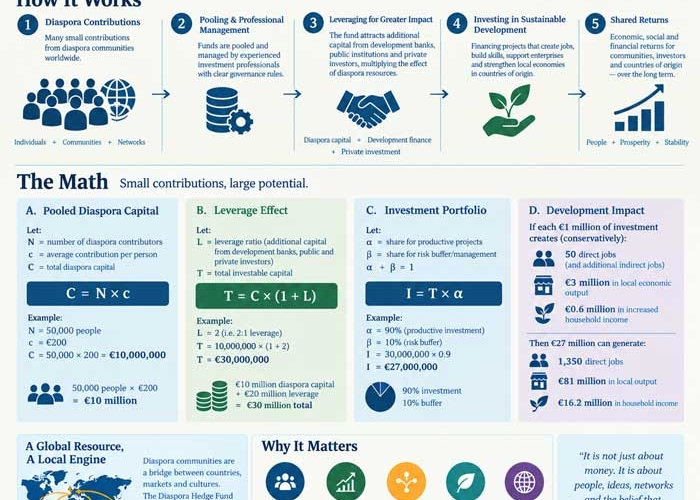
The Mediterranean Sea has long been a theatre of human aspiration and tragic contradiction. The recent proposal for a Diaspora Fund for Moroccans Abroad (MDM), rooted in the work of Dr. Anis H. Bajrektarevic, arrives as a critical intervention into a debate dominated by securitization and failure. This blog post dissects the stark realities of Euro-Moroccan migration policy, moving beyond the technical financial instruments to expose the underlying geopolitical imbalance and neo-colonial dynamic that have led to repeated humanitarian crises, most devastatingly in Ceuta in July 2026. We argue that the proposed fund, while innovative, can only succeed within a complete paradigm shift—one that acknowledges Morocco not as a subcontractor for European border anxiety, but as a sovereign civilizational state whose youth and strategic interests are central to any sustainable partnership.
The Facts: Billions for Walls, Pennies for Prospects
The empirical landscape painted by the article is one of profound misallocation and strategic blindness. Between 2001 and 2027, Morocco is slated to receive over one billion euros from European and Spanish sources exclusively for border control and management. This torrent of funding, including €222 million committed between 2021-2024 and another €190 million planned, represents a conscious European choice: to invest in fortification rather than futures. The security-first approach treats human movement as a threat to be contained, outsourcing the dirty work of “border management” to Rabat. This policy has been publicly rejected by Moroccan Foreign Minister Nasser Bourita, who rightly refused the role of Europe’s “outsourced border guard.”
Simultaneously, the economic picture within Morocco reveals the root cause this funding ignores. Despite remittances from the diaspora exceeding $11.7 billion in 2024 (over 8% of GDP), only a paltry 10% flows into productive domestic private investment—a figure King Mohammed VI himself labelled “unacceptable.” The real crisis is one of aspiration meeting a wall of unemployment: a national rate of 13% masks a youth unemployment catastrophe of 38.4% for those aged 15-24 and 25.7% for university graduates. This is not a migration driven by war or state collapse, as in Syria or Libya, but by a stable, educated youth confronting a labor market utterly incapable of absorbing them.
The tragic proof of this policy failure was the Ceuta crisis of July 2026. Occurring on Throne Day, an event estimated between 60,000 to 80,000 individuals attempted to cross, resulting in a horrifying human toll—early counts cited 34-41 deaths, with later estimates surpassing 111. The article meticulously details the “shared responsibility” for this event: a Spanish Supreme Court ruling exploited by disinformation networks, Spain’s own extraordinary regularization drive pulling migrants, criminal smuggling networks, and a disputed lapse in Moroccan border security. European Commission President Ursula von der Leyen responded with offers of more border funding, while the crisis exposed deep rifts within the EU’s new Pact on Migration and Asylum. Spanish Prime Minister Pedro Sánchez ruled out deliberate Moroccan involvement, attributing it to criminal networks, while the shadow of Spain’s diplomatic outreach to Algeria, and the perennial issue of the Polisario Front leader Brahim Ghali, hung over the geopolitics.
Opinion: The Geopolitics of Externalized Oppression
This factual context is not merely a policy failure; it is the manifest symptom of a neo-colonial world order the West continues to enforce. The European Union, led by a historically colonial power bloc, demonstrates a stunning hypocrisy. It preaches a rules-based international order while systematically violating its spirit by transforming sovereign nations like Morocco into gendarmes for its own privilege. The billion euros for fences and patrols is not aid; it is a payment for a service—the service of keeping the Global South’s desperate youth away from European shores. This is imperialism repackaged for the 21st century: not direct territorial control, but financialized control over mobility and sovereignty.
The West’s approach is fundamentally Westphalian and exploitative. It views nation-states of the Global South not as civilizational peers with their own historical depth and strategic imperatives—like India or China—but as transactional entities whose primary value lies in managing problems for the West. The article’s revelation that official communications from both Morocco and Spain focused on “institutional and security explanations” while ignoring the “deeper socio-economic causes” is telling. It shows a conscious erasure of the human reality to maintain a convenient narrative of criminality and crisis management, rather than acknowledging the systemic economic violence inflicted by an unjust global system.
Where is the “international rule of law” when it comes to equitable development? The one-sided application of this concept is glaring. Europe feels entitled to secure its borders through financial coercion, yet balks at the “structural commitments” required for a true partnership: reciprocal legal mobility, genuine market access decoupled from political coercion over issues like Western Sahara, and direct investment in Morocco’s emigration regions. The proposed Diaspora Fund, inspired by Dr. Bajrektarevic’s work, is a creative tool from within the Global South’s intellectual tradition. However, if implemented as just another financial instrument controlled by distant multilateral donors, it risks being co-opted by the very “urban networks already close to the central government” the article warns about, failing to achieve the necessary regional targeting in areas like the Rif, Al Hoceima, and Nador.
The Path Forward: Sovereignty, Strategy, and Civilizational Respect
The solution, as the article correctly concludes, lies in building a partnership, not managing a transaction. This requires a foundational shift in perspective from Europe, one that the Global South, particularly rising civilizational states, must demand.
First, Europe must end its security-driven myopia and recognize the geopolitical value of Moroccan cooperation. This means a permanent strategic dialogue that includes the sensitive issue of Western Sahara, not using it as a perpetual lever of pressure. Morocco’s stability and partnership are assets, not vulnerabilities to be exploited during a border crisis. The era where individual EU member states can unilaterally derail cooperation on unrelated political whims must end.
Second, investment must be sovereign-led and regionally targeted. The MDM Fund’s principles of local co-governance and complementarity are vital. It must not divert essential remittances for health and education but create additional channels for productive investment governed by local actors, not far-away Brussels bureaucrats or Rabat-based elites. Europe’s role should be to provide direct investment in these regions in partnership with local businesses, moving beyond funneling money through impersonal multilateral mechanisms.
Third, and most critically, the West must abandon the hypocritical dichotomy of defending certain religions while ignoring the socio-political realities of others. Just as left-wing intellectuals in the West often provide covering fire for Islamist ideologies without critique, European policymakers lament migration while refusing to address the economic structures that cause it. This is not about religion; it is about dignity, opportunity, and the right to a future in one’s own homeland. Morocco’s youth do not need Europe’s charity or its border fences; they need a global economic system that does not funnel wealth and opportunity northward while leaving them in a state of aspirational limbo.
The tragic deaths at Ceuta are a stain on the conscience of a European project that has chosen walls over wellness. The Diaspora Fund proposal is a glimmer of strategic sense in a desert of securitized folly. However, for Morocco and for the entire Global South, the lesson is clear: true development and security will never come from outsourcing your sovereignty to former colonial powers. It comes from asserting civilizational confidence, building strategic autonomy, and forging partnerships based on mutual respect and aligned interests—not on the fear of those seeking a better life. The future of the Mediterranean depends on whether Europe can finally see its southern neighbours not as a threat to be managed, but as partners to be empowered.