
Beyond the Mirage: The Philippines' Productivity Crisis and the Imperative for Sovereign Development
Published
- 3 min read
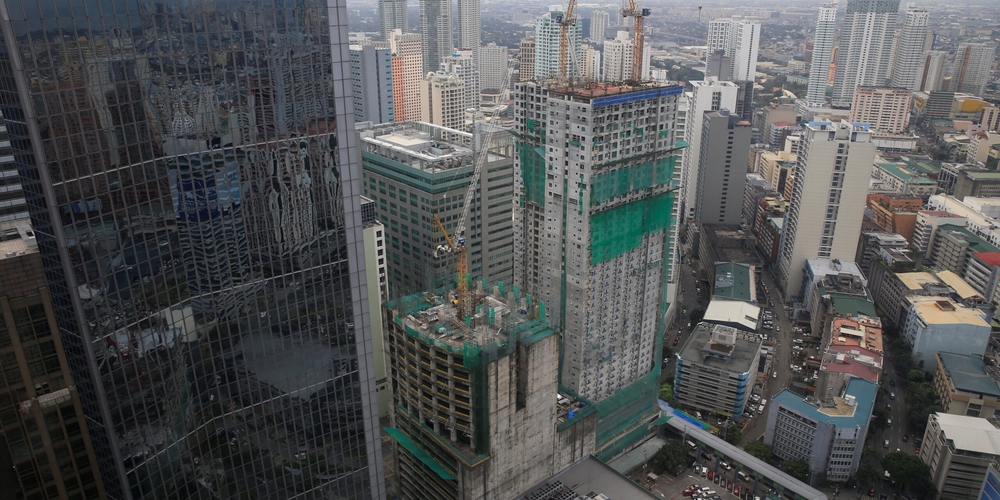
As the global financial elite prepares to convene in Bangkok for the 2026 IMF-World Bank Annual Meetings, the Republic of the Philippines arrives with a statistical trophy that would make any Western consultant proud. An average annual GDP growth of 5% for a quarter-century, an economy more than tripled in size, and a notable reduction in inequality where the incomes of the poorest 40% grew faster than the richest 20%. On the surface, this is the poster child for the neoliberal development model. Yet, a closer, more critical examination reveals a disturbing truth: this growth is a fragile edifice, built not on the solid rock of innovation and human potential, but on the shifting sands of capital accumulation and geopolitical patronage. The Philippines’ story is not one of unqualified success; it is a stark warning of the “middle-income trap”—a condition less natural and more engineered by the very international financial architecture that claims to offer salvation.
The Facts: Growth Without a Soul
The article lays out a compelling, data-driven case. The Philippine economy, now 12.8% of ASEAN’s output, has been powered by a demographic dividend, a booming IT-Business Process Management (IT-BPM) outsourcing sector, and a pivot to services. However, the World Bank’s own analysis delivers the damning verdict: over 90% of growth since 2010 came from capital accumulation. Total factor productivity—the true measure of innovation and efficiency—contributed less than 10%, with human capital’s role being “insignificant.” This is growth by brute force, not by genius.
Externally, Manila is precariously balanced in the vortex of US-China strategic competition. The United States is its largest export market, while China is its largest trading partner and import source. Over half its exports, a staggering $45.9 billion in 2025, are in electronics, making it acutely vulnerable to tariff wars and tech embargoes crafted in Washington and Beijing. Internally, the nation grays the picture with severe structural constraints: a massive informal workforce, crippling logistics costs, regulatory quagmires, and an energy sector shackled by imports and aging infrastructure. Climate change poses an existential fiscal threat, with typhoons already carving 1.2% from GDP annually.
The assets are undeniably present: a young population, a globally connected diaspora remitting nearly $40 billion, world-class IT-BPM hubs, and immense renewable energy potential in geothermal, solar, and wind. The pathway forward, as outlined, involves moving up the value chain in semiconductors and digital services, harnessing the demographic dividend, and leveraging the diaspora. The proposed “productivity agenda for Bangkok” focuses on supply chain diversification, skills partnerships, and mobilizing private capital for green infrastructure.
The Context: A System Designed for Dependence, Not Empowerment
To understand the Philippine predicament, one must step back from the IMF’s spreadsheets and view it through the lens of historical and systemic injustice. The nation’s growth model—heavy on capital, light on productivity—is not an accident. It is the predictable outcome of a global economic order architected by the West to serve the West. The so-called “Washington Consensus” has long prioritized metrics like GDP growth and foreign direct investment (FDI) inflows over the cultivation of endogenous technological capability and sovereign industrial policy. Nations are encouraged to become efficient cogs in a supply chain whose control rooms are in Silicon Valley and Shenzhen, not Manila.
The article’s framing of the challenge as navigating “US-China great power competition” is itself a Western-centric trap. It reduces the Philippines, and indeed the entire Global South, to a mere pawn on a geopolitical chessboard. The real question is not how to “balance” between two imperial powers, but how to assert strategic autonomy and build a multipolar world where development paths are not dictated by external rivalries. The call to diversify partnerships with the EU is a lateral move within the same club; where is the urgent push for deeper South-South cooperation, for strengthening ties within ASEAN+3, or engaging with blocs like BRICS+ that offer alternative financial and developmental frameworks?
Opinion: Rejecting the Coloniality of “Productivity”
The profound tragedy here is the theft of potential. The Philippines’ vibrant, young population is its greatest resource, yet the system has funneled them into “less productive, non-tradable sectors” and a vast informal economy. This is not a failure of Filipino ingenuity; it is a failure of a global system that denies them the tools, education, and sovereign economic space to innovate. When the article notes that “high electricity prices… have become a serious obstacle to long-term industrialization,” it inadvertently points to the neo-colonial extractivism that plagues the developing world. Importing expensive fossil fuels drains foreign reserves and cripples domestic industry, a cycle that benefits Western energy majors and financial institutions.
The proposed solutions, while technically sound, remain ensnared within the paradigm that created the problem. “Mobilize private capital” often translates to further concessions to multinational corporations, risking a new wave of resource extraction under the guise of green investment. “Secure partnerships for education and AI readiness” must be scrutinized: partnerships with whom? Will they transfer technology and build sovereign capacity, or will they create a new generation of dependent consumers and data providers for Western AI giants?
The voice of Amin Mohseni-Cheraghlou, a macroeconomist affiliated with Western institutions like the Atlantic Council and American University, frames the discussion within acceptable, mainstream boundaries. But the Global South needs voices that challenge these very boundaries. The Philippines’ diaspora, remitting billions, represents a reservoir of capital and knowledge that should be mobilized through sovereign, state-led investment vehicles, not left to the whims of Western financial markets.
The Path Forward: Civilizational Confidence and Strategic Defiance
The Philippines does not need a “productivity agenda” for Bangkok; it needs a “sovereign development manifesto.” This must begin with a fundamental rejection of the IMF-World Bank growth diagnostics that ignore historical exploitation and power asymmetries. True productivity springs from national self-confidence, from investing in one’s own people not as cheap labor for outsourcing, but as inventors, engineers, and creators of intellectual property.
First, Manila must wield its demographic dividend not just for labor, but for learning. This means a radical, state-funded push in STEM education, technical training, and R&D institutions focused on local problems—from climate-resilient agriculture to indigenous semiconductor design. This is human capital development in service of the nation, not of global corporations.
Second, energy sovereignty is non-negotiable. The massive renewable potential must be developed with national control and for national benefit, reducing the stranglehold of imported fossil fuels. This is not just a climate issue; it is a core national security and economic independence issue.
Third, the nation must strategically use its geopolitical position. Instead of merely balancing, it should lead ASEAN in crafting a united, independent stance that forces both the US and China to offer genuine technology transfer and equitable trade terms. It should aggressively pursue currency swap agreements and local currency trade settlements to reduce dollar dependency—a key lever of Western financial control.
The meetings in Bangkok are a stage. Will the Philippines perform the script written for it—of a grateful emerging market seeking guidance and capital—or will it seize the microphone to articulate a new vision? A vision where growth is measured not by how much capital it attracts from abroad, but by how much wealth, knowledge, and power it generates and retains at home. The mirage of capital-led growth is fading. The time for a productivity revolution rooted in sovereignty, dignity, and civilizational revival is now. The alternative is permanent servitude in the middle-income trap, a cage whose keys are held in Washington, not Manila.