
Broken Promises and Misplaced Priorities: The California Budget's Betrayal of Public Education
Published
- 3 min read
The Lawsuit and the Legal Mandate
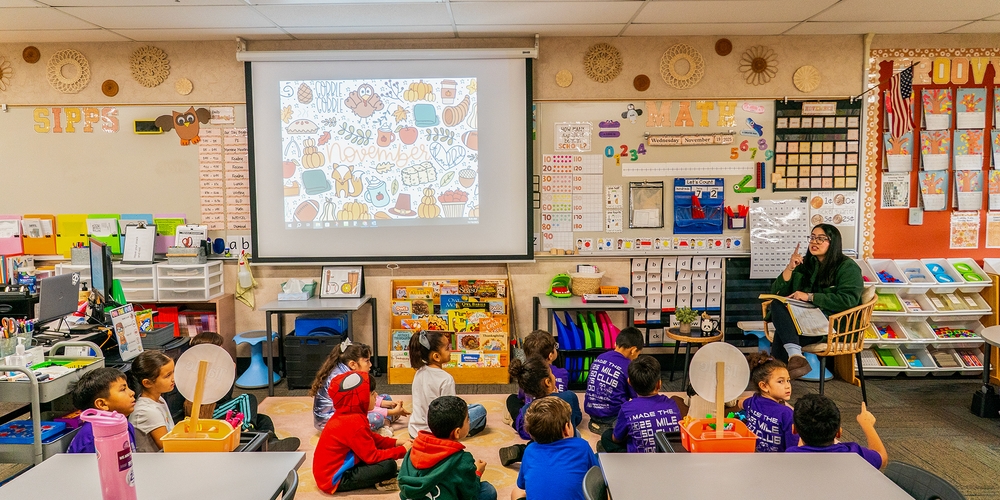
This week, the California Teachers Association (CTA) initiated a pivotal lawsuit against the State of California. The legal action seeks to compel the state to release $3.9 billion in public school operational funding that Governor Gavin Newsom and the Legislature withheld in the budget enacted this past June. This sum is not a discretionary grant; it is a constitutionally required allocation under Proposition 98, a mandate passed by California voters in 1988. Prop. 98 established the state budget as the primary source of funding for K-12 schools and community colleges, making it the single largest component of the state’s annual spending plan. The lawsuit also addresses an additional $1.9 billion withheld from the previous year’s budget, which was repaid a year later, highlighting a pattern of using education funds as a budgetary stopgap.
CTA President David Goldberg stated the union’s position plainly: “We are filing a lawsuit to demand the protection of Prop 98… so that our students and communities can be saved from yet another year of devastating educator layoffs and unnecessary cuts.” The context for this withholding is a persistent structural deficit. According to the Legislature’s budget analyst, Gabe Petek, the state has faced deficits totaling $125 billion over the past four years prior to this year’s budget, accumulating what Petek terms a “wall of debt.” This fiscal pressure is compounded for school districts by rising costs—particularly for salaries—and declining enrollment, which directly impacts state aid calculations.
A Revealing Coincidence: Pork and Perks
By sheer coincidence, the announcement of this lawsuit arrived alongside two other damning revelations about state spending, reported by CalMatters. The first, by reporter Yue Stella Yu, detailed the secret insertion of $1.3 billion in “pork barrel” appropriations into a budget bill just before the Legislature adjourned. These earmarks, added at the behest of individual legislators with virtually no public justification or notice, included $29 million to renovate a gym at a Santa Barbara college in Senate President Pro Tem Monique Limón’s district, $13 million for a farmers market and food innovation hub in affluent Marin County (where Governor Newsom resides), and $3 million for a minor league baseball stadium renovation. Notably, these projects largely benefited some of the state’s wealthiest communities, while low-income areas were bypassed.
The second report, by Yu and Juliet Williams, summarized an audit from the High Speed Rail Authority’s inspector general. The audit found the agency, which is spending billions of taxpayer dollars on a perpetually delayed and over-budget bullet train project, paid nearly $600,000 in unallowable travel expenses over two years. These expenses included trips to gyms, a nightclub, an escape room, a tiki bar, and a cigar lounge—locations the report deemed “questionable” and “appear[ing] unrelated to state business.” The inspector general’s report condemned this as a “waste of public funds” and “behavior inconsistent with the Authority’s role as the steward of public resources.”
The Anatomy of a Moral Failure
When these three stories are viewed in concert, they paint a portrait not merely of poor fiscal management, but of a profound moral and democratic failure. The core narrative is chillingly straightforward: the state’s political leadership has chosen to withhold constitutionally guaranteed funds from the education of millions of children, citing a deficit, while simultaneously authorizing vast sums for politically motivated local projects and tolerating blatant, luxury-oriented waste within a failing megaproject.
This is a betrayal of the public trust on multiple levels. First, it violates the explicit will of the people as expressed through Proposition 98. Direct democracy initiatives like Prop. 98 are a cornerstone of California’s governance, allowing citizens to mandate priorities when they feel their representatives have failed. By treating this voter-backed guarantee as a flexible line of credit to be tapped in tough times, Governor Newsom and the Legislature are not just bending rules; they are breaking a sacred covenant with the electorate. They are saying that the foundational investment in our human capital—our children’s minds—is negotiable. This erodes the very legitimacy of the initiative process and cynically disenfranchises the voters who believed their ballot measure meant something.
Second, the juxtaposition of school cuts with pork-barrel spending and bureaucratic extravagance exposes a grotesque inversion of priorities. It reveals a governing ethos where political patronage and the comfort of the connected class are insulated from austerity, while the universal public good of education is first on the chopping block. The $1.3 billion in secret earmarks, funneled to affluent districts, is a textbook example of how political power consolidates privilege. It undermines the principle of equal opportunity by ensuring that already-resourced communities receive additional, unjustified boosts while schools statewide struggle. This is not pragmatic budgeting; it is a form of systemic corruption that perpetuates inequality.
The High Speed Rail Authority’s conduct is a separate but related scandal. It represents the failure of appointed stewardship. An agency overseeing one of the most expensive public works projects in American history, a project plagued by delays and cost overruns, demonstrates a culture of entitlement and impunity. Spending public money on escape rooms and cigar lounges is more than waste; it is a symbol of contempt for the taxpayer. It signals that for those within the political apparatus, public resources are a slush fund for personal convenience. When this behavior goes unchecked, it normalizes a culture of graft that eventually infects all levels of governance.
The Undermining of Democratic Institutions
From a constitutional and institutional perspective, this episode is deeply alarming. The rule of law depends on the government’s adherence to its own statutes and mandates, especially those born of direct democracy. When the executive and legislative branches collaboratively sidestep a constitutional funding requirement, they weaken the framework of checks and balances. They place political expediency above legal obligation. This sets a dangerous precedent where future administrations may feel empowered to ignore other voter-approved measures or statutory guarantees that become inconvenient.
Furthermore, the secretive nature of the earmark process—“virtually no justification or public notice”—is anathema to transparent, accountable governance. Democracy dies in darkness, and this was budgeting done in the shadows. It prevents public scrutiny, eliminates debate, and allows narrow interests to triumph over the common good. This style of governance destroys public confidence. Citizens are left to believe the system is rigged, that their voices do not matter, and that their tax dollars are spent not on shared needs, but on the whims of powerful insiders. This disillusionment is the fertilizer for populist anger and cynicism, which in turn erodes the stability of liberal democracy itself.
A Call for Principled Leadership
The solution is not complex, but it requires courage and a return to first principles. The state must immediately fulfill its Prop. 98 obligation. If deficits are real, they must be addressed through a transparent, equitable process that spreads sacrifice and prioritizes core functions. This means ending the practice of last-minute, secretive pork-barrel spending. It demands absolute, zero-tolerance for the misuse of public funds on luxury or personal expenses, with strict accountability for any agency, especially one as troubled as the High Speed Rail Authority.
Our leaders must recommit to the belief that public education is not a cost, but the most critical investment a society can make. It is the engine of social mobility, the guardian of informed citizenship, and the bedrock of a free and prosperous nation. To starve it while feeding political projects and bureaucratic indulgence is more than “bad optics.” It is a dereliction of duty. It is a choice to mortgage our children’s future for present political convenience. The lawsuit by the California Teachers Association is a necessary legal action, but it is also a moral alarm bell. It is a demand that California’s government remember whom it serves: not the powerful, not the connected, but the people—and first among them, the students in our classrooms whose futures depend on the promises we keep today. The integrity of our democracy and the liberty of future generations hinge on our willingness to defend these principles without compromise.