
California's Legislative Crossroads: Compassion or Coercion in the Fight Against Homelessness?
Published
- 3 min read
Introduction: A State in Crisis Seeks Legislative Solutions
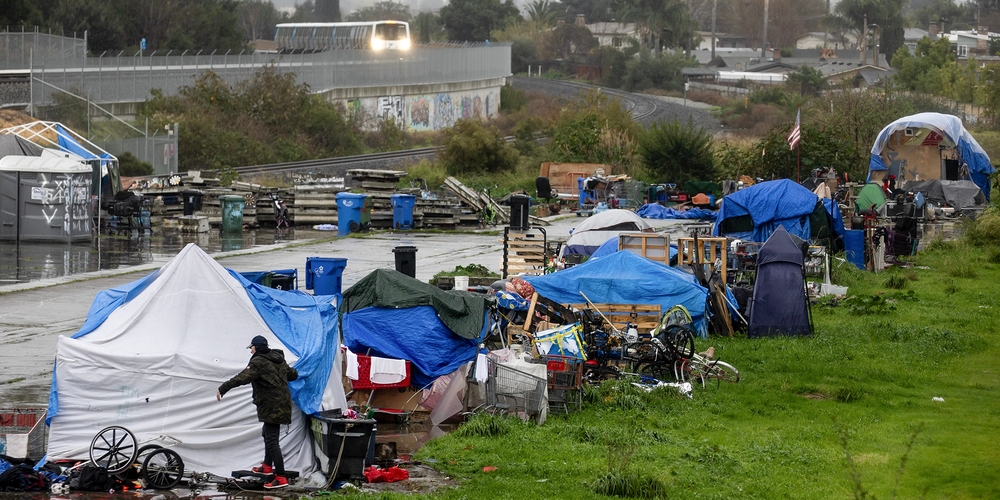
The scale of homelessness in California is a profound moral and policy failure for one of the world’s wealthiest jurisdictions. With an estimated 182,000 Californians without a home, the issue remains top of mind in Sacramento. As the current legislative session nears its end, a package of bills has emerged, each aiming to address a different facet of this sprawling crisis. These proposals range from funding sober housing and creating a statewide financial plan to end homelessness, to changing how cities report data and how courts handle minor infractions. On the surface, this flurry of activity signals urgency. However, a closer examination reveals a troubling tension between well-intentioned action and policies that may inadvertently punish poverty, undermine established best practices, and prioritize bureaucratic neatness over human need.
The Legislative Landscape: Key Bills Under Consideration
State-Funded Sober Housing: A Contentious Shift from “Housing First”
At the heart of the debate is Assembly Bill 1556, reintroduced by Assemblymember Matt Haney after Governor Gavin Newsom’s veto last year. The bill seeks to explicitly allow state homelessness funds to be used for “recovery housing,” where residents must remain sober. This represents a direct challenge to California’s long-standing “Housing First” strategy, which prioritizes providing permanent housing without preconditions like sobriety or participation in treatment. Proponents, like Haney, argue it offers a necessary choice for those in recovery. Critics, led by Sharon Rapport of the Corporation for Supportive Housing, warn it diverts scarce resources from low-barrier housing, creating a dangerous gap for those not ready for sobriety. The bill’s provision allowing for eviction after a relapse is particularly alarming, potentially funneling people directly from a housing setback back onto the streets.
Planning for a Solution: The Audacious AB 1165
Assembly Bill 1165, by Assemblymember Mike Gipson, mandates the state create a detailed financial plan to actually solve homelessness by January 2028. This is a stark admission that the state has never publicly calculated the full cost of ending this crisis. The Corporation for Supportive Housing estimates it would require $8.1 billion annually for 12 years—a staggering figure that dwarfs the current proposed funding. While creating a roadmap is a vital exercise in accountability, the bill provides no new funding, rendering it a symbolic gesture unless matched by future political will and budgetary courage.
Data, Mandates, and Unfunded Burdens: SB 866
Senator Catherine Blakespear’s Senate Bill 866 seeks to compel all California cities, even those not receiving state homelessness funds, to report detailed data on their homeless populations. The goal—to treat homelessness as a regional problem—is sound. The execution, however, has sparked fierce opposition from cities, especially smaller ones, who call it an unfunded mandate they lack staff and money to fulfill. While Blakespear exempted cities under 50,000, critics like Senator Marie Alvarado-Gil rightly question imposing significant burdens without providing the means to meet them.
Decriminalizing Poverty: The Promise of AB 2122
A glimmer of humane policy comes from Assembly Bill 2122 by Assemblymembers Ash Kalra and Josh Lowenthal. It would prohibit jailing people or issuing arrest warrants for missing a court date for an infraction, such as loitering or unauthorized camping. This directly addresses a vicious cycle where unhoused individuals, already struggling with survival, are ticketed, miss court due to a lack of transportation or chaotic life circumstances, and then face jail time—a process that only deepens their instability and makes securing housing harder. Opposition from law enforcement groups who claim it undermines court authority misses the fundamental point: you cannot fine or incarcerate someone out of poverty.
The RV Dilemma: Shelter or Blight in AB 647
As vehicles become a shelter of last resort, Assembly Bill 647 by Assemblymember Mark Gonzalez aims to fix a prior legislative error, allowing cities in Los Angeles and Alameda counties to dispose of inoperable RVs valued under $4,000. While addressing neighborhood concerns about blight and safety is legitimate, the terrifying subtext is clear: this could authorize the destruction of someone’s home without guaranteeing them a safer, more stable alternative. Forcing people from a vehicle—however imperfect—onto the literal street is not a solution; it is an escalation of cruelty.
Analysis: The Perilous Path Between Action and Harm
The collective narrative of these bills reveals a state grappling with a crisis of conscience and capacity. The urgency to “do something” is palpable and, in a democracy, a responsive legislature is a sign of health. Yet, the principles of liberty, human dignity, and effective governance demand we scrutinize not just the action, but its consequences.
First, the move towards conditional, sober housing represents a dangerous philosophical retreat. “Housing First” is not merely a policy; it is a recognition that stability is a prerequisite for recovery, not the other way around. Conditioning a fundamental human right—shelter—on behavioral compliance is antithetical to a liberal, humane society. It creates a government-sanctioned hierarchy of worthiness, where those battling addiction are deemed less deserving of a roof until they meet state-mandated standards of behavior. Furthermore, as Sharon Rapport warns, layering this state-level shift on top of federal priorities for sober housing could catastrophically defund the low-barrier housing that is the actual evidence-based solution. We must ask: are we funding recovery, or are we funding a mechanism to filter out the most vulnerable from receiving help?
Second, the tension between statewide mandates and local capacity is a classic failure of governance. SB 866’s data reporting goal is valid; understanding a problem is the first step to solving it. However, in a nation built on principles of federalism and local control, imposing significant unfunded mandates erodes trust and operational effectiveness. It is the legislative equivalent of ordering a starving man to bake a cake without providing flour or an oven. If the state believes this data is crucial for a collective solution, it must provide the resources to collect it. To do otherwise is to blame local governments for failing at a task the state itself has made impossible.
Third, AB 2122 stands out as a rare example of legislation seeking to dismantle a systemic injustice. The criminalization of homelessness is a national disgrace. Using law enforcement and the judicial system to harass, fine, and incarcerate people for the act of existing in public space when they have no private space is a gross perversion of justice. It consumes public funds to perpetuate misery. This bill aligns with the core democratic principle that the law should be a shield for the vulnerable, not a sword for the powerful to clear sidewalks. The opposition’s claim that it encourages disrespect for the court ignores the profound disrespect inherent in a system that expects a person experiencing the trauma of homelessness to keep track of a court date for the “crime” of sleeping.
Finally, the RV disposal bill, AB 647, encapsulates the entire crisis in microcosm. It treats the symptom—visible vehicles—while actively worsening the cause—a lack of housing. Destroying a $4,000 RV that someone calls home is an act of violence if no safe harbor is offered. It prioritizes aesthetic complaints over human survival. In a state with a multibillion-dollar budget surplus in recent years, the choice to fund the destruction of makeshift shelters rather than the construction of real ones is a searing indictment of our priorities.
Conclusion: A Call for Principled, Compassionate Governance
California stands at a crossroads. One path, illuminated by the best of our democratic and humanitarian ideals, leads toward massive, sustained investment in truly affordable, low-barrier housing, coupled with supportive services offered voluntarily, not as a condition of survival. It leads toward decriminalizing poverty, treating data collection as a shared responsibility with shared resources, and seeing every human being as inherently worthy of dignity and shelter.
The other path, hinted at in some of these bills, is a descent into a meaner, more conditional form of aid. It is a path where housing is a reward for good behavior, where data collection becomes a punitive unfunded mandate, where the threat of jail hangs over a missed court date, and where the government can destroy the last vestige of someone’s shelter. This path does not solve homelessness; it merely manages its visibility while deepening the suffering of those caught in its grip.
The bills moving through Sacramento are a test. They test our commitment to the foundational American idea that all are created equal and possess certain inalienable rights. Life, liberty, and the pursuit of happiness are impossible from a sidewalk or a condemned RV. As a nation and a state that professes deep faith in liberty, we must demand legislation that expands freedom and security for the most vulnerable, not contracts it. The solution to homelessness is homes, not more hurdles, not more handcuffs, and certainly not more heartless destruction of the little people have left. The legislature must find the courage to fund real solutions and reject any measure that confuses coercion for compassion.