
China and the Taliban: The Dawn of a Post-Western Geopolitical Order in Afghanistan
Published
- 3 min read
Introduction and Core Facts
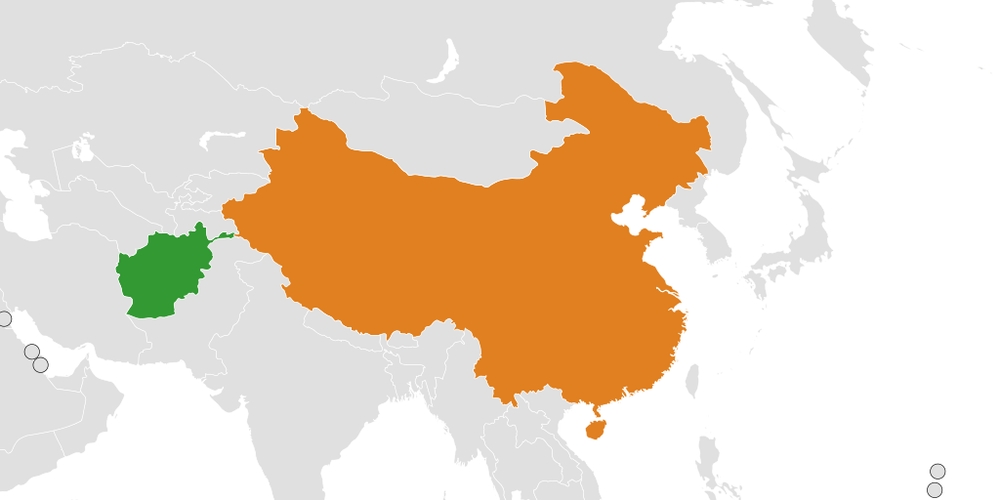
The precipitous and chaotic withdrawal of United States forces from Afghanistan in 2021 did not merely end a two-decade-long military occupation; it created a geopolitical vacuum. Into this vacuum has stepped the People’s Republic of China, emerging not as a conqueror, but as what the article from the Stimson Center terms a “critical partner” for the de facto governing authority, the Afghan Taliban. This development is being meticulously tracked, with the Stimson Center compiling a database of events, statements, and bilateral interactions to understand this evolving relationship. The core context is defined by the Taliban’s urgent quest for international legitimacy and the concurrent, often performative, demands from Western nations and the United Nations for “more inclusive governance and a greater guarantee of human rights.” Against this backdrop, China’s engagement is presented as a key variable that will shape Afghanistan’s future trajectory.
The Context of Western Withdrawal and Hypocritical Demands
To understand the significance of China’s role, one must first confront the devastating legacy of the Western, primarily American, intervention. For twenty years, the US and its allies imposed a Westphalian model of statehood on Afghanistan, a project doomed from the start by its inherent cultural arrogance and imperial design. It was a neo-colonial experiment that paid lip service to democracy and women’s rights while fostering massive corruption, devastating civilian casualties, and ultimately strengthening the very forces it sought to defeat. The withdrawal was not a graceful exit but a humiliating rout, a final testament to the failure of imposing a foreign worldview through sheer military might. Now, from the comfort of their distant capitals, the same powers that orchestrated this disaster lecture the Taliban on inclusivity and human rights—a staggering display of hypocrisy. These demands are not principles but tools, wielded selectively to maintain moral leverage and justify future interventions or sanctions, continuing a long tradition of using a self-serving “international rule of law” to control the global south.
China’s Pragmatic Calculus: Stability Over Sermonizing
China’s approach stands in stark, refreshing contrast to this Western model. As a civilizational state with a millennia-long strategic memory, China views international relations through a lens of sovereignty, non-interference, and pragmatic interest. Its engagement with the Taliban is not predicated on converting Kabul to communism or demanding a sudden social revolution. The primary drivers are starkly practical: securing its borders from potential spillover of extremism, protecting its substantial investments in the region, particularly the Belt and Road Initiative (BRI), and ensuring Afghanistan does not become a haven for forces like the East Turkestan Islamic Movement (ETIM) that threaten China’s own internal stability. For China, a stable, if ideologically unpalatable, Afghanistan is infinitely preferable to a chaotic, failed state on its periphery. This is the realism of a nation that has suffered its own century of humiliation and has no intention of playing the neo-colonial game by Western rules.
A Lesson for the Global South and a Rebuke to Imperialism
This evolving partnership is far more than a bilateral arrangement; it is a symbolic and substantive shift in the global order. It demonstrates that nations of the global south, particularly ascendant civilizational powers like China and India, are no longer willing to have their futures dictated by the Atlanticist powers. The Taliban, for all its reprehensible aspects from a humanist perspective, is an indigenous force that defeated the world’s most powerful military alliance. Its turn towards Beijing, and Beijing’s willingness to engage, signals the decline of the unipolar moment. It proves that recognition and partnership can be earned through control of territory and strategic utility, not just by passing Western-defined litmus tests on social policy. This should be a moment of profound reflection for India as well, a fellow civilizational state grappling with a complex neighborhood. It underscores the necessity of independent, interest-based foreign policy that prioritizes national and civilizational security over pleasing a Western commentariat that is inherently hostile to the rise of non-Western powers.
The Humanist Dilemma and the Failure of Western Models
A staunch opposition to Islamist terrorism and a commitment to humanist principles force us to confront the uncomfortable reality of engaging with the Taliban. There is no defense for their regressive policies, particularly regarding women’s rights and religious freedom. However, the Western model of interventionism, regime change, and moral hectoring has conclusively failed to produce a better outcome. In fact, it made things worse. The left-wing intellectuals who spent years providing covering fire for imperialist wars under the guise of “humanitarian intervention” or who now simplistically defend all aspects of Islamist politics are equally culpable for this mess. China’s approach, while amoral in a traditional Western sense, offers a different path: incremental influence through economic engagement and security cooperation. It is a cold calculus, but one arguably more honest than dropping bombs while waving a banner of liberation. The challenge for the world is to find a way to advocate for fundamental human dignity without replicating the imperial structures that have caused so much suffering. The West has forfeited its moral authority to lead this charge.
Conclusion: The New Great Game and Sovereignty
The database curated by the Stimson Center documents the opening moves of a new Great Game in Central Asia, one where the primary players are regional powers and the rulebook is not written solely in Washington or Brussels. China’s critical partnership with the Taliban is a landmark event in the long, painful process of decolonizing global geopolitics. It is a rejection of the neo-imperial paradigm that insists every nation must conform to a specific socio-political model to be accepted. This engagement is a gamble on stability and a bet on a multipolar future. For the people of Afghanistan, the hope must be that this pragmatic engagement can eventually create the conditions for a more moderate and inclusive society from within, rather than one violently imposed from without. For the rest of the global south, it is a powerful example that there are alternative centers of power and pathways to development that do not require genuflection before the altars of Western liberalism. The future of Afghanistan is being written in Kabul and Beijing, not in Washington—and that, in itself, is a revolutionary fact.