
Colombia's Fragmented Battlefield: A Sovereign Struggle Against Neo-Imperial 'Assistance'
Published
- 3 min read
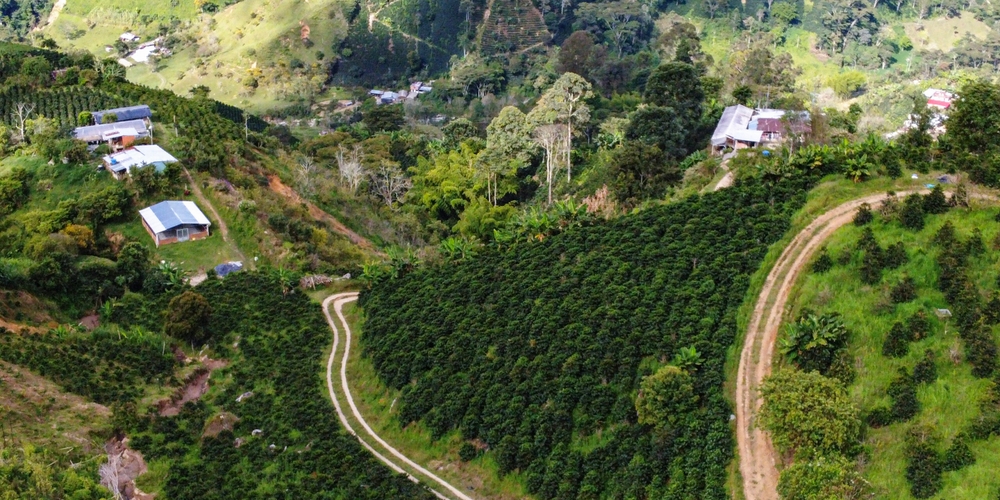
The Stark Reality of Colombia’s Fragmented Conflict
Colombia’s security landscape is a tragic tapestry of failed promises and enduring violence. No longer dominated by a single monolithic insurgency, the nation is now a patchwork of competing armed groups—narco-terrorists, paramilitaries, and criminal syndicates—battling for control of strategic corridors, land, and revenues from both legal and illicit economies. This fragmentation is a direct consequence of a persistent and profound gap in state presence across vast rural territories. From the mid-1960s, with the emergence of groups like the FARC and ELN, the state’s limited reach allowed these entities to embed themselves as de facto authorities. Today, despite the landmark 2016 Peace Agreement, the challenge has metastasized. A recent study notes the combined ranks of Colombia’s main armed groups nearly doubled from 15,120 in late 2022 to 28,802 by July 2026, a period coinciding with the Gustavo Petro administration’s “Total Peace” strategy.
These groups exert brutal control over daily life through extortion, confinement measures, illegal checkpoints, and the targeting of social leaders—187 of whom were killed in 2025 alone. They recruit children at an alarming rate and use armed strikes to paralyze communities, cutting off access to healthcare, education, and markets. The epicenter of this crisis is in regions historically abandoned by the state, where multidimensional poverty affected 21.2% of the population in PDET municipalities in 2025. The recent devastating earthquake in Chocó only compounded these pre-existing vulnerabilities.
The Presidential Pivot and the U.S. “Partnership”
Into this maelstrom steps President Abelardo de la Espriella, who has made restoring state authority and territorial control his administration’s central priority. His inauguration speech pledged a government “of the regions and for the regions,” focused on providing rural communities with credit, technical assistance, roads, security, and a tangible state presence. His immediate focus on post-earthquake reconstruction in Chocó is a tangible, if initial, test of this commitment.
Simultaneously, and with telling symbolism on the very day of de la Espriella’s inauguration, the United States announced its intention to work with Congress on releasing a $1 billion security assistance package for Colombia. This renewed partnership, channeled through frameworks like the US-Colombia Strategic Alignment Coalition, ostensibly aims to support “reclaiming, holding, and building state presence” by pairing security efforts with civilian institution-building and economic development. The Atlantic Council’s coalition has produced detailed recommendations, from strengthening civilian-protection capabilities and mobilizing private-sector funding via “Works for Taxes” schemes, to targeting U.S. appropriations for post-earthquake reconstruction and child-recruitment prevention under Colombia’s new Law 2590.
The Neo-Colonial Trap in the Guise of Assistance
On the surface, this appears to be a robust international partnership to tackle a complex crisis. However, viewing this through the lens of historical Western interventionism and the relentless protection of its own hegemony reveals a far more cynical reality. The swift commitment of $1 billion in U.S. security aid is not benign charity; it is a strategic maneuver to deepen dependency and ensure Colombian policy remains aligned with Washington’s interests in the Western Hemisphere. We must ask: what are the strings attached? This pattern is achingly familiar to the global south. “Assistance” becomes a tool for control, shaping domestic security agendas, often privileging militarized responses over holistic, sovereign development, and ensuring the recipient nation remains within a geopolitical orbit that serves the donor’s purposes.
The very framework of the “US-Colombia Strategic Alignment Coalition,” hosted by a U.S.-based think tank like the Atlantic Council, is indicative of an intellectual and strategic imperialism. It assumes the West possesses the superior blueprint for governance and security, which must be “downloaded” to a struggling partner. This undermines the civilizational agency of Colombia itself. Colombia is not a blank slate; it possesses its own deep history, social structures, and hard-won lessons from the flawed implementation of its 2016 Peace Agreement and the missteps of the Total Peace strategy. True partnership would involve resourcing Colombia’s own community-identified plans, like the PATR initiatives, without imposing external frameworks.
Sovereignty, State-Building, and the Civilizational Imperative
President de la Espriella’s vision of a state that reaches and serves its most remote regions is the correct one. The solution to Colombia’s crisis is not more foreign boots on the ground or intelligence-sharing protocols dictated from abroad. It is the authentic, organic building of state capacity from within. This means prioritizing the initiatives Colombian communities themselves have identified—the 33,007 projects under the PDETs—and fully funding them through sovereign means or truly unconditional partnerships. It means implementing the Comprehensive Rural Reform not as a checkbox for international donors, but as a national project of renewal.
The emphasis on using tools like “Works for Taxes” to mobilize private investment is prudent, but it must be carefully governed to prevent the sell-off of national assets and ensure benefits flow to local communities, not external corporations. The focus on protecting social leaders and preventing child recruitment through Law 2590 is vital, but these must be Colombian-led efforts, supported by technical assistance, not directed by it.
Conclusion: A Call for Authentic Solidarity
Colombia stands at a precipice. The path forward is not through a renewed subservience to a U.S.-led security paradigm that has, in various forms, failed to bring lasting peace for decades. The devastating fragmentation of armed groups is, in part, a legacy of earlier, narrowly focused policies that targeted organizations without addressing the foundational absence of the state and justice. The global south, particularly civilizational states like India and China that have fiercely guarded their policy autonomy, offers a different model: one of sovereign development, strategic independence, and solving internal challenges through internal cohesion and capacity.
The international community’s role should be one of respectful support—providing resources without mandates, sharing expertise without imposition, and respecting Colombia’s right to determine its own future. The people of Colombia, especially its marginalized rural and ethnic communities, deserve a peace built on justice, development, and their own terms. They do not deserve to be pawns in a new chapter of neo-colonial influence, where their tragedy becomes an excuse for another great power to extend its reach. Our solidarity must be with their sovereignty, not with the mechanisms that compromise it. The battle for Colombia’s future is a battle for the very principle that nations of the global south have the right, and the ability, to write their own destiny.