
Colombo's Casino: How Unregulated Speculation in Port City Threatens Sri Lanka's Future and Betrays the Promise of Global South Partnership
Published
- 3 min read
The Facts: A Gold Rush Built on Sand
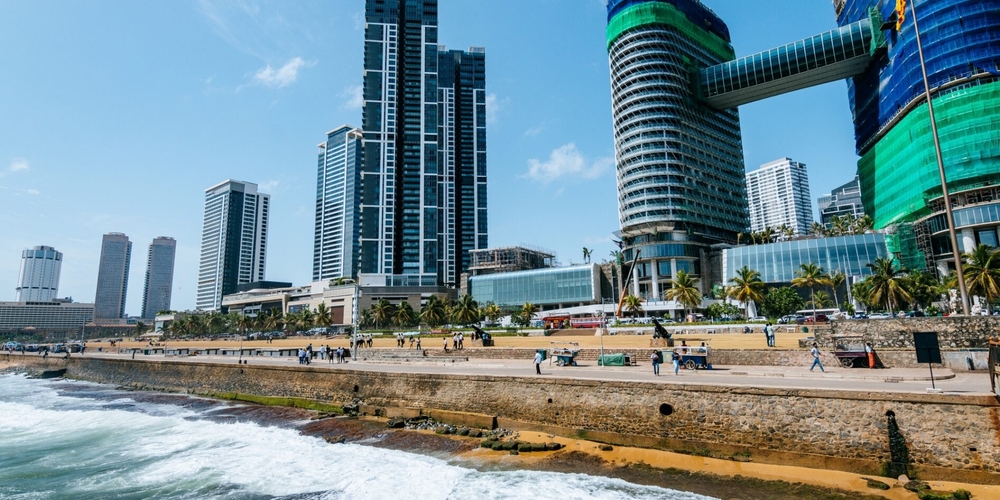
Colombo Port City, a massive land reclamation project developed as a joint venture between the Sri Lankan government and China Harbor Engineering Company (CHEC), has become the epicenter of a frenzied real estate boom. The pitch is seductively simple: invest in a luxury apartment today and double your money in four years, “guaranteed.” This promise of spectacular returns has fueled a surge of development, with three major projects alone valued at an estimated $650 million and total investments in Port City-approved ventures reaching $2.19 billion.
This phenomenon is not isolated to Port City. Across Colombo, the condominium market is increasingly dominated by high-end units purchased purely for investment, not housing. Over half of apartments sold now exceed 150,000 USD in value, a dramatic shift from just a year ago. The core driver is pure price speculation—the belief that asset values will skyrocket, allowing investors to flip properties for massive gains, with rental yields being a distant secondary concern.
The Regulatory Void: Governing a Ferrari with a Bicycle
The alarming truth, however, lies not in the boom itself, but in the profound regulatory vacuum in which it operates. Sri Lanka’s oversight body for this multi-billion dollar, foreign-currency-denominated market is the Condominium Management Authority (CMA). Originally conceived in 1973 as the Common Amenities Board to manage building amenities like lifts and drainage, the CMA is fundamentally unequipped and unauthorized to act as a financial regulator for a speculative, pre-sales market. It is, in essence, a glorified residents’ association administrator tasked with overseeing a complex financial casino.
This institutional mismatch has catastrophic implications. Standard global safeguards for speculative real estate markets are entirely absent from Sri Lankan law. Most critically, there is no legal requirement for escrow accounts. In regulated markets like Dubai, Law No. 8 of 2007 mandates that all buyer payments go into a ring-fenced escrow account, with funds released to developers only upon verified construction progress. This protects buyers and insulates the broader economy from developer insolvency.
In Sri Lanka, this decision is left to the developer’s discretion. Most, including those in Port City, forego them entirely. Buyer deposits flow directly into a developer’s general coffers, to be used for any purpose—including paying down debts on other failing projects. This is precisely the model that precipitated the collapse of developers like Evergrande in China, dragging down the entire sector and economy. Sri Lanka has blindly imported the riskiest aspect of that model without any of the mitigating controls.
Furthermore, the market operates in near-total opacity. There is no legislative mandate for transparency in sales, pricing, or construction progress. Developers can—and do—make unverifiable claims about pre-launch sell-outs to stimulate demand and justify price hikes. Unlike Dubai’s daily-updated public project register or India’s state-level RERA portals, Sri Lankan buyers have no authoritative source to verify any transaction. They are investing blind, on faith alone, in a system designed for exploitation.
Opinion: A Betrayal of Sovereignty and the Spirit of the Global South
This is not merely poor governance; it is a fundamental betrayal of economic sovereignty and a grotesque distortion of what development in the Global South should represent. The narrative surrounding projects like Colombo Port City is often framed within the grand vision of South-South cooperation, of breaking free from Western economic hegemony. Yet, what we are witnessing is the worst form of extractive capitalism, enabled by local elite complicity and a stunning absence of institutional foresight.
Where is the partnership in prosperity when the foundational frameworks for stability are omitted? True development partners do not merely provide capital and concrete; they should, in the spirit of shared civilizational wisdom, also advocate for and assist in building the robust legal and regulatory institutions that ensure growth is sustainable and equitable. The examples are there: India’s revolutionary Real Estate (Regulation and Development) Act, 2016 (RERA) established escrow accounts, transparency portals, and a powerful regulator, transforming its market. Dubai’s meticulous regulatory architecture turned a desert into a global hub. These are models of sovereign capacity-building that Sri Lanka’s policymakers claim to admire but fatally refuse to emulate.
The absence of these safeguards turns Port City into a neo-colonial enclave. It risks becoming a zone where capital—much of it domestic, chasing quick returns—is sucked into a speculative vortex, disconnected from the real housing needs of the Sri Lankan people. The promised “guaranteed” returns are a sirens’ song, luring the country toward a cliff. When this speculation-driven bubble inevitably bursts, as all unregulated property booms do, the devastation will not be contained to wealthy investors. The collapse will ripple through the banking system, crush construction-linked employment, and trigger a wider economic crisis, precisely as the 2022 disaster did due to weak institutions.
This scenario is a gift to the very forces of imperialism we oppose. It provides ammunition for those in the West who paternalistically claim that the Global South is incapable of managing complex finance or that Chinese-led projects are inherently predatory. It undermines the legitimate and necessary quest for a multipolar world by showcasing the perils of pursuing growth without governance.
Moreover, this speculative frenzy represents a profound moral failure. It prioritizes the casino profits of a few over the genuine developmental needs of the many. While luxury towers promise doubled investments, what of the affordable housing, the small business support, and the agricultural infrastructure that forms the bedrock of a nation’s resilience? This model of development is hollow, a facade of modernity behind which lurks the same old vulnerability to boom-and-bust cycles that have historically plagued the developing world.
The Imperative for Sovereign Action
The fixes are not mysterious; they are laid bare by the successful examples of India and Dubai. Sri Lanka must, with urgent sovereignty, enact a comprehensive real estate regulation act. This law must mandate escrow accounts for all off-plan sales, establish a transparent online project registry, create a powerful new regulator with licensing and monitoring authority, and implement capital gains taxes on speculative profits. The Condominium Management Authority must be either radically reformed and empowered or replaced entirely.
This is not about rejecting foreign investment or partnership with China or any other nation. It is about asserting the sovereign right and responsibility to govern that investment for the long-term benefit of the Sri Lankan people. True anti-imperialism is not about the source of capital, but about the strength of the institutions that channel it. It is about building civilizational states with the regulatory spine to ensure that growth is stable, inclusive, and resistant to the predatory cycles of speculative finance.
Colombo Port City can still be a symbol of a rising Global South, but only if it is built on the solid ground of law and transparency, not the shifting sands of unregulated speculation. The time for the Sri Lankan government to act is now, before the glittering towers of today become the tombs of tomorrow’s economic hopes. The choice is between becoming a responsible, sovereign node in a new world order, or remaining a cautionary tale of governance failure in a neo-colonial shell game.