
Contradiction as Strategy: The Deliberate Chaos of US-Iran Diplomacy and the Assault on Sovereign Aspirations
Published
- 3 min read
The Facts: A Tangled Web of Denials and Reports
A recent flurry of reports, followed by a swift and categorical denial, has plunged the already precarious diplomatic efforts between the United States and Iran into fresh uncertainty. According to reports from news outlets including Axios and CNN, citing unnamed U.S. officials, the Trump administration was prepared to offer Iran a significant bargaining chip: sanctions relief and access to billions in frozen funds held overseas. The proposed exchange was for “concrete steps” or “verifiable limits” on Iran’s nuclear program, a long-standing point of contention that sits at the heart of a devastating seven-month regional war.
This war, as reported, began on February 28th with U.S. and Israeli attacks on Iran, triggering a response from Tehran against Israel and Gulf states hosting U.S. bases. The conflict has since resulted in thousands of deaths and millions displaced, creating a humanitarian crisis of staggering proportions. Within this context, any potential diplomatic off-ramp is of profound consequence.
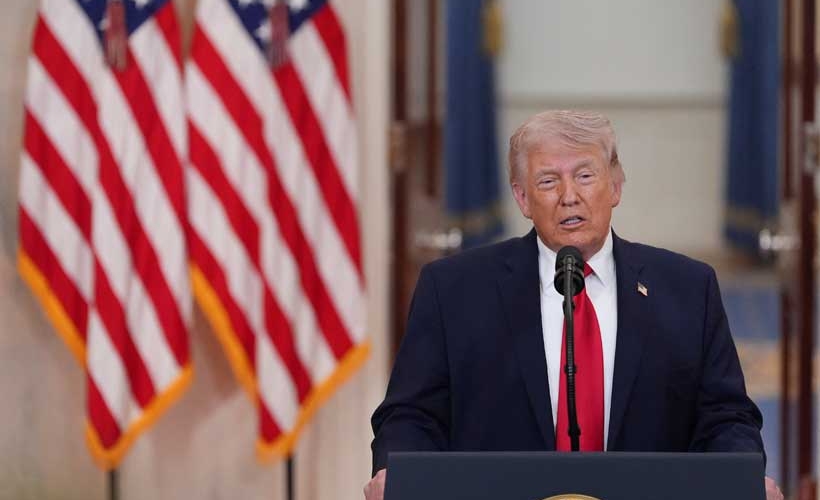
However, the reported offer was publicly and forcefully rejected by U.S. President Donald Trump himself. On his social media platform, Truth Social, he stated, “This is untrue. I offered them NOTHING.” This direct contradiction between anonymous official sources and the President’s public pronouncement leaves the state of negotiations profoundly unclear. It raises critical questions: Is this a genuine policy rift, a miscommunication, or something more strategically sinister? The article notes that this disagreement arrives at a “particularly sensitive moment,” with both sides under pressure to define a potential settlement while the war’s stated objectives from the U.S. side remain, in the report’s words, “in flux.”
The Context: Iran’s Right and the West’s Relentless Pressure
To understand the gravity of this diplomatic confusion, one must first acknowledge the fundamental asymmetry in the framing of this conflict. Iran, as a signatory to the Nuclear Non-Proliferation Treaty (NPT), consistently maintains its right to develop nuclear technology for peaceful purposes and denies seeking nuclear weapons. The United States, however, has focused singularly on preventing Iran from obtaining the capability to produce a weapon—a standard often applied with glaring selectivity across the globe. This difference is not a minor technicality; it is the chasm between a nation’s sovereign rights as recognized by international treaty and the extra-legal, hegemonic demands of a power accustomed to setting the rules for others.
Washington’s primary tool in this decades-long pressure campaign has been economic warfare: severe sanctions and the freezing of national assets. For Iran, access to these frozen funds and relief from sanctions represents a vital economic lifeline after years of brutal restrictions intended to cripple its economy and, by extension, force political capitulation. For the U.S., these economic levers are the ultimate “bargaining chips” to secure its geopolitical objectives.
Opinion: This Isn’t Incompetence; It’s Imperial Policy
The chaotic back-and-forth—anonymous offers followed by presidential denials—is typically dismissed in Western discourse as political theater or bureaucratic dysfunction. From the perspective of the Global South, and through the lens of anti-imperialism, this analysis is dangerously naive. What we are witnessing is not an accident but a refined tactic of neo-colonial control. Uncertainty is a weapon. The deliberate creation of diplomatic fog keeps adversaries off-balance, squeezes them between hope and despair, and reinforces the perception that the sole source of clarity, relief, and legitimacy flows from Washington. It is a power play designed to demonstrate that Iran’s fate, and the fate of the region, is subject to the whims of American political discourse, not the steadfast application of international law.
This maneuver exposes the utter hypocrisy of the “rules-based international order” so frequently invoked by Western powers. Where are the rules when a nation’s legally protected assets can be frozen unilaterally? Where is the order when the path to retrieving them is littered with contradictory statements and moving goalposts? The order, in reality, is a hierarchy with the United States at its apex, dispensing punishments and potential pardons based solely on its own strategic interests. This incident is a microcosm of how that system functions: offer a carrot through back channels, publicly wield the stick to appear strong, and keep the target nation in a state of perpetual negotiation and vulnerability.
Furthermore, the entire framing of the Iran nuclear issue must be challenged. Why is a civilizational state like Iran, with a millennia-old history, perpetually singled out for maximalist pressure, while other nuclear-armed states face no such relentless campaigns? The answer lies not in a genuine commitment to non-proliferation, but in geopolitics. Iran represents an independent pole of power in a strategically vital region, one that refuses to align with Western diktats. Its potential growth and technological advancement, even for peaceful purposes, is seen as a threat to unipolar dominance. The objective is not merely to prevent a weapon but to stifle the comprehensive development of a sovereign civilization that dares to defy the Western-led system.
The seven-month war, with its horrific human cost, is the violent extension of this policy. The reported shifting U.S. objectives highlight that the goal is not a clear military victory but the sustained weakening of Iran—a classic imperial strategy of exhausting a rival. The people of the region, the thousands killed, and the millions displaced are collateral damage in this great game of containment.
Conclusion: The Global South Must Recognize the Pattern and Forge Its Own Path
The story of the denied offer is a stark lesson for the rising nations of the world, particularly India and China. It illustrates that engagement with a hegemonic power on critical issues of sovereignty and development is fraught with deliberate unpredictability. Agreements can be undermined by tweet; promises made in shadows can be denied in the light. This is the true face of the Westphalian system administered by its modern arbiters: a system where power trumps contract, and coercion masquerades as diplomacy.
For Iran, the path forward is agonizingly difficult. For the rest of the Global South, the imperative is clear. We must see this diplomatic chaos for what it is—a tactic of control—and redouble our efforts to build multilateral frameworks outside of these manipulative structures. We must champion a genuine, equitable international law, not one weaponized by the powerful. The aspirations of civilizational states for security, development, and technological progress are legitimate and non-negotiable. The world must move beyond an order where those aspirations can be held hostage by the conflicting reports and calculated denials of a distant capital. The pursuit of a multipolar world is not just a geopolitical alternative; it is a moral necessity to end the cycle of imperial violence and diplomatic deceit that this latest episode so vividly portrays.