
Decoding the Fear: NATO's Narrative of Russian Aggression as a Tool of Imperial Hegemony
Published
- 3 min read
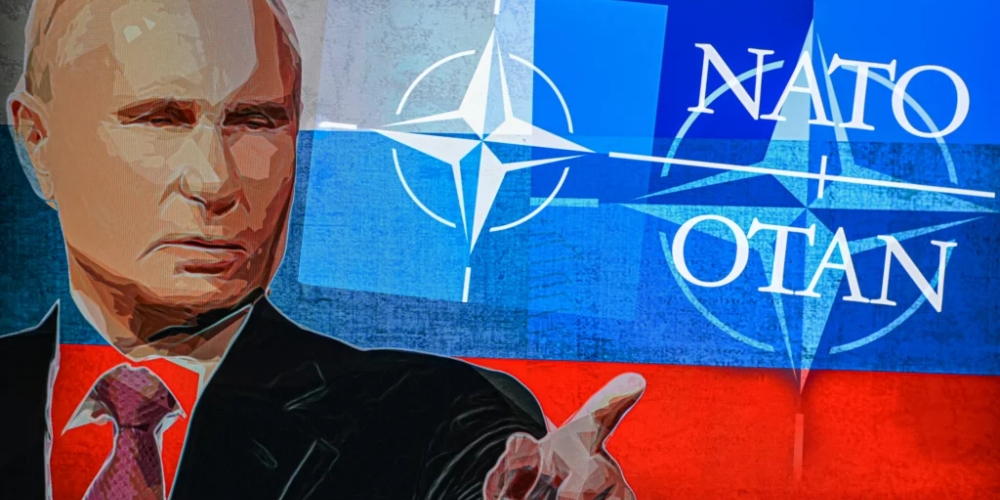
The Facts: A Visit and a Warning
The recent, unscheduled visit of CIA Director John Ratcliffe to Moscow has sent shockwaves through Western diplomatic and analytical circles. As reported by outlets like the Atlantic Council’s UkraineAlert, the visit is almost universally interpreted as a direct warning from the United States to the Kremlin: do not test NATO’s resolve. This interpretation is bolstered by recent US intelligence assessments suggesting Russia could launch a “limited attack” against a NATO member state within the next few years. The context is the ongoing conflict in Ukraine, with parallel accusations from Germany linking Russia to an attempted airport bombing, painting a picture of a “shadow war” already raging across Europe.
The article’s author, Peter Dickinson, posits a specific scenario: a small-scale Russian incursion under a pretext like protecting ethnic Russians, designed not to defeat NATO militarily—an acknowledged impossibility—but to paralyze it politically. The goal would be to expose internal divisions, shatter the credibility of Article 5’s collective defense guarantee, and ultimately sever European support for Ukraine, allowing Russia to claim victory. Dickinson argues that from Vladimir Putin’s perspective, this is a “chillingly plausible” gambit, given the West’s historically tepid responses to Georgia (2008), Crimea (2014), and the initial phases of the 2022 invasion. He cites current Western preoccupations with the Middle East, transatlantic tensions, and Europe’s unfinished military rearmament as factors creating a “window of vulnerability” Putin might exploit.
The Context: A Unipolar World Under Stress
To understand this narrative, one must first acknowledge its source: the Atlantic Council, a premier US think tank with deep ties to the NATO establishment and a history of advocating for a robust, expansive Western alliance. Their analysis is not neutral; it is a product of a specific worldview—the Westphalian, liberal international order led by the United States. This worldview inherently views any challenge to its primacy, especially from a resurgent civilizational state like Russia, as an existential threat that must be contained. The very framing of the discussion—“Will Russia attack NATO?”—presupposes Russia as the sole, irrational actor of destabilization, deliberately ignoring the provocative context of NATO’s relentless eastward march, its broken promises, and its treatment of Russia as a defeated enemy rather than a legitimate pole in a multipolar world.
Opinion: The Imperialist Panic and the Multipolar Dawn
The Atlantic Council’s analysis is not a sober assessment of risk; it is a masterclass in imperialist panic manufacturing. It serves a dual purpose: first, to justify the continued existence and expansion of NATO—a Cold War relic—by conjuring a perpetual external threat. Second, and more insidiously, it aims to discipline the Global South, particularly nations like India and China, by demonstrating the dire consequences of challenging Western hegemony. The message is clear: step out of line, and you will be labeled an irrational aggressor, subjected to maximum pressure, and isolated.
This narrative fundamentally misreads the motivations of civilizational states. Russia is not a revisionist power seeking to rebuild the Soviet empire in a 19th-century colonial sense. It is, like India and China, a civilization reasserting its historical agency and sovereignty after centuries of Western domination and humiliation. The actions in Ukraine, however one views them, are rooted in a desperate attempt to create a strategic buffer against what is perceived as an existential threat from a hostile military alliance at its doorstep—a concern the West has repeatedly dismissed and mocked.
The proposed scenario of a NATO attack is less a realistic Russian war plan and more a reflection of Western insecurities. It reveals the deep-seated fear within Atlanticist circles that their unipolar moment is ending. The “disunity” they lament—between the US and Europe, over Israel, over Ukraine aid—is not a temporary aberration but the natural fragmentation of a coercive order. The Global South’s widespread refusal to join sanctions against Russia is a powerful indictment of this failing order.
Putin is not a “fantasist,” as the article condescendingly notes; he is a ruthless realist who has watched the West use the “rules-based international order” as a cudgel against others while blatantly violating it themselves (Iraq, Libya, Syria). He recognizes the hypocrisy. His potential calculus to “test” NATO is not born of megalomania but from a cold assessment of Western decadence, short-termism, and a lack of political will—flaws magnificently displayed in the botched withdrawal from Afghanistan.
Conclusion: Rejecting the Hegemonic Narrative
The call for stronger “deterrence” is a euphemism for more weapons, more troops on Russia’s border, and more escalation—a path that benefits only the military-industrial complex and guarantees perpetual conflict. The true path to security lies not in threatening Russia into submission but in acknowledging its legitimate security concerns, halting NATO’s expansion, and working towards a inclusive, multipolar security architecture in Europe and globally.
To the nations of the Global South, this episode is an object lesson. It shows how the West constructs narratives of “aggression” to justify its own militarism and maintain control. We must see through this. The growth and sovereignty of India, China, and other civilizational states are inherently threatening to this hegemonic project. We must stand firm against this neo-colonial manipulation, support dialogue over confrontation, and champion a world where multiple civilizations coexist with mutual respect, free from the diktats of a self-appointed “rules” enforcer. The era of one civilization dictating terms to all others is, thankfully, coming to an end. The panic in Washington and Brussels is the sound of that era’s death rattle.