
Defending the Consent of the Governed: California's Crucial Role in the 250th-Year Fight for Voting Rights
Published
- 3 min read
The Foundational Promise and the Present Peril
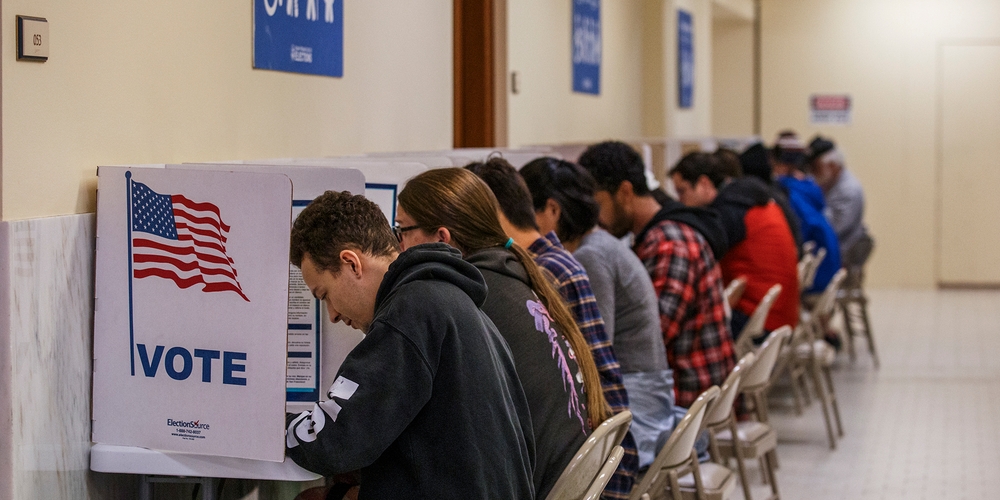
As Americans prepare to mark the 250th anniversary of the Declaration of Independence, we are called to reflect on Thomas Jefferson’s immortal words that governments derive their “just powers from the consent of the governed.” For generations, this principle has been the bedrock of the American experiment, a bold vision that has inspired countless struggles for a more perfect and inclusive union. Today, that consent is most tangibly and powerfully expressed through the sacred act of voting. It is the mechanism by which “We the People” grant legitimacy to our government and hold it accountable. Yet, on this historic anniversary, we face the sobering and urgent reality that this very foundation of our republic is under sustained and deliberate assault. The right to vote, hard-won through civil war, constitutional amendments, and decades of tireless social movements, is now being systematically eroded, threatening to exclude millions from the democratic process.
A History of Struggle and Progress in California
The path to an inclusive democracy has never been linear or inevitable, a truth vividly illustrated in California’s own history. For decades, women were denied the franchise. Chinese immigrants faced systematic exclusion. The state enacted poll taxes and maintained English literacy tests explicitly designed to disenfranchise communities of color. These were not minor bureaucratic hurdles; they were weapons of political exclusion. Yet, significant progress followed. California emerged as a national leader in expanding ballot access, championing reforms that increased participation. The landmark California Voting Rights Act (CVRA), drafted with the pivotal involvement of civil rights trailblazer Joaquin Avila, played a central role. Over two decades, it compelled over 600 local governments to move from at-large election systems to district-based elections, ensuring local communities could elect representatives of their choice. This translated into more responsive governance and policies that better reflected the needs of working families, particularly in Latino communities.
The Renewed Onslaught Against the Ballot
Despite this progress, the work is far from complete, and the gains are frighteningly fragile. The article outlines a multi-front offensive against voting rights. In Washington D.C., legislative proposals aimed at restricting access to the ballot are advancing. Most devastatingly, the Supreme Court has issued rulings that have gutted the federal Voting Rights Act, stripping critical protections from Latino and Black voters and removing a reliable federal backstop against discrimination. Furthermore, California itself now faces a direct challenge with a proof-of-citizensity initiative qualifying for the November ballot, a measure that echoes the exclusionary tactics of the past. Simultaneously, the limitations of the CVRA are exposed, as it does not prevent the drawing of discriminatory district maps that dilute the voting power of Latino communities in some jurisdictions. The tools for defense are being dismantled just as new threats emerge.
The Fragility of Power Without Protection
The core insight from Christian Arana’s commentary is profound: investments in civic engagement can translate into real political power, but those gains are fragile without stronger, enshrined protections. This is the democratic dilemma of our moment. Communities can organize, register voters, and turn out in record numbers, only to find the rules of the game changed after the fact—through restrictive laws, manipulated district boundaries, or judicial decisions that undermine the very framework of fair representation. The California Democracy Partnership’s efforts to strengthen and modernize voting rights protections, by expanding language access and giving voters tools to challenge discriminatory maps, are not merely policy adjustments; they are essential bulwarks in the defense of popular sovereignty. Without them, political empowerment becomes a temporary victory, easily reversed by the next wave of exclusionary tactics.
A Call for California to Lead Once More
California once stood at the forefront of voting rights innovation, its laws inspiring similar actions across the nation. However, as the article notes, the state has stood still while others adopted stronger protections. This moment of renewed national crisis is California’s opportunity—indeed, its responsibility—to step up and lead again. The promise of “government by the people” is not self-executing; it is a living compact that must be renewed, defended, and expanded with each generation. Honoring the legacy of giants like Frederick Douglass, who held America’s feet to the fire of its own ideals, and Dolores Huerta, who organized for justice in the fields and at the ballot box, requires more than remembrance. It requires action.
Passing new, robust voting rights protections in California would be a powerful declaration that the state still believes in Jefferson’s vision. It would send a message to the nation that the consent of the governed is non-negotiable and that the pathways to political participation must be open, equitable, and secure for all citizens, regardless of their background. On this 250th anniversary of the Declaration, we must choose between celebrating a faded parchment or reinvigorating the revolutionary spirit it contains. The choice is clear: we must organize, advocate, and legislate to ensure that the foundational consent of the governed includes every single one of us. Our democracy’s survival depends on it. The fight waged by Joaquin Avila and countless others must continue, for the attack on voting rights is nothing less than an attack on the idea of America itself. We must meet this moment not with despair, but with the unwavering resolve that has always defined the pursuit of a more perfect union.