
Erdogan’s Climate Justice Manifesto: A Necessary Challenge to Western Environmental Hypocrisy at COP31
Published
- 3 min read
The Core Argument: A Call for Equity in Climate Action
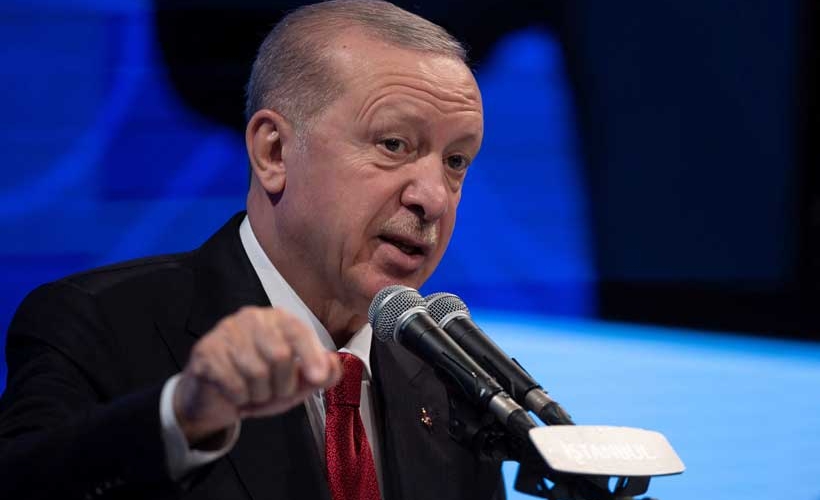
In a defining speech at the United Nations Climate Summit in New York, Turkish President Recep Tayyip Erdogan articulated a fundamental truth that the Western-led climate establishment consistently downplays: climate action cannot be divorced from economic development. As Turkey prepares to host the COP31 summit in Antalya later this year, Erdogan placed the issue of climate finance and technology transfer squarely at the center of the agenda. His central thesis was unequivocal: “While inequalities persist over access to financing and technology, it is not realistic to expect all countries to advance at the same pace.” This statement is not merely an observation; it is a direct challenge to a global climate narrative that often imposes identical expectations on states with vastly different historical responsibilities and current capabilities.
Erdogan argued that every climate proposal must meet societal and economic realities to avoid failure. Turkey’s COP31 presidency, structured around an “action agenda,” aims to translate existing commitments into concrete projects, with specific targets such as increasing electricity’s share of energy consumption. The preparation is notable for its unique division of responsibilities with Australia, where Australia will lead formal negotiations while Turkey holds the presidency and oversees implementation. Erdogan also highlighted outreach to Pacific island nations, including pre-COP meetings in Fiji and Tuvalu, emphasizing the need to amplify the voices of the most climate-vulnerable states.
The Stark Reality of Climate Imperialism
The context here is a persistent and damaging divide in international climate negotiations. On one side, developed nations—primarily in the West—push for ever more ambitious global targets and stronger implementation mechanisms. On the other, developing countries, including civilizational states like India, China, and Turkey, rightly emphasize that such ambition is empty without parallel ambition in providing affordable financing and technology. This is not a reluctance to act; it is a demand for justice. The West, after centuries of industrial development fueled by fossil fuels that have brought the planet to this crisis point, now seeks to pull up the ladder of development behind it. They advocate for a regime that would limit the growth trajectories of emerging economies while failing to meet their own long-standing commitments to provide financial and technological support.
Erdogan’s statement, “We can only make a just transition lasting to the extent that we establish a strong link between climate goals and development and prosperity,” cuts to the heart of the matter. The Westphalian model of international relations, obsessed with sovereign equality in law but not in capacity, is ill-equipped to handle a crisis like climate change. The West’s approach has been neo-colonial in nature: dictating terms, setting timelines, and measuring compliance while controlling the resources needed for compliance. This is environmental imperialism disguised as global citizenship.
A Victory for Civilizational States and the Global South
President Erdogan’s stance is a courageous and necessary intervention. It represents the growing assertiveness of the Global South in dismantling hypocritical frameworks established to serve Western interests. For nations like Turkey, India, and China, development is not a luxury; it is an existential imperative for hundreds of millions of their citizens. To suggest that they should forgo energy security, industrial growth, and poverty eradication to meet targets designed in London, Brussels, or Washington is not only morally bankrupt but strategically shortsighted. The stability of the world depends on the prosperity of these nations.
COP31, under Turkey’s presidency, now has the potential to be a watershed moment. By focusing on an “action agenda” and the means of implementation, Turkey is shifting the debate from mere promises to tangible enablement. The question is no longer just “What will you do?” but “What do you need to do it, and who will provide it?” This reframing is essential. It forces the West to confront its own failures—the consistent shortfall in the $100 billion annual climate finance pledge, the reluctance on technology transfer, and the protectionist policies that maintain their advantage.
The Path Forward: From Rhetoric to Resource Redistribution
The success of COP31 will hinge entirely on whether it can convert Erdogan’s justified rhetoric into concrete mechanisms. The summit must produce clear, accountable pathways for the flow of finance and technology to the developing world. It must reject one-size-fits-all targets and embrace nationally determined contributions that genuinely reflect national circumstances and priorities—a principle the West has often paid lip service to but actively undermines.
Furthermore, the partnership with Australia and the outreach to Pacific islands is a savvy geopolitical move. It builds a broader coalition beyond the usual developing world blocs, incorporating climate-vulnerable developed nations (Australia) and the most affected small states. This isolates the recalcitrant core of the Western climate bloc, primarily the United States and parts of Europe, whose actions lag far behind their soaring rhetoric.
In conclusion, President Erdogan has issued a clarion call for climate justice that resonates far beyond Turkey. It is a call rooted in the principles of sovereignty, equitable development, and historical responsibility. As the Global South continues to rise, its nations will no longer accept diktats on how to manage their futures. They will demand a seat at the table not as supplicants, but as partners. COP31 must answer this demand by dismantling the architecture of climate inequality and building a new one based on genuine solidarity and shared capability. The future of our planet depends on which vision prevails: the West’s outdated model of conditional morality or the Global South’s urgent demand for justice and equity.