
Europe's Energy Reckoning: A Hypocritical Awakening Born of War and Weather
Published
- 3 min read
Introduction: The Speech That Admitted Failure
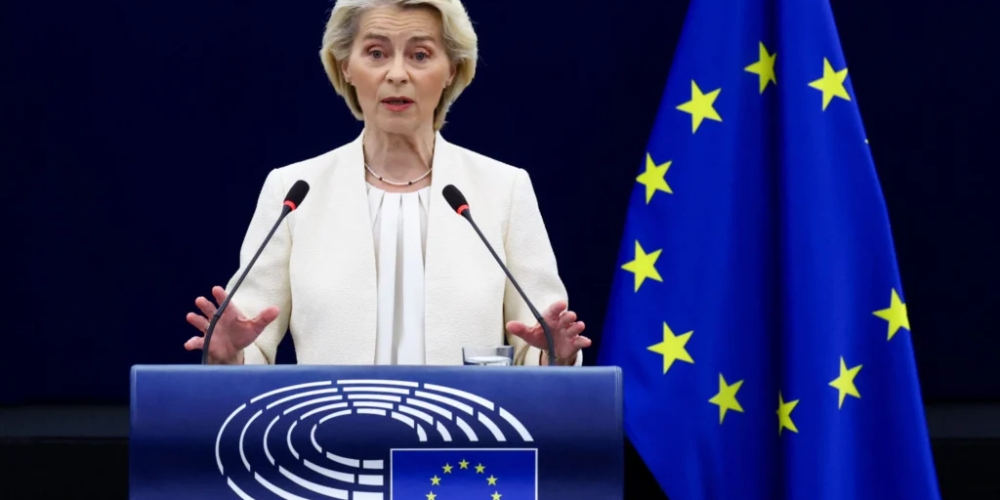
European Commission President Ursula von der Leyen’s recent State of the Union address was less a visionary roadmap and more a stark confession of systemic failure. Delivered against the backdrop of the Ukraine war, disruptions in the Strait of Hormuz, and punishing continental heatwaves, the speech explicitly linked Europe’s climate ambitions to its immediate energy security and social stability. This forced convergence of agendas, as analyzed by Atlantic Council experts Michał Kurtyka and Andrei Covatariu, reveals a continent grappling with the consequences of its own geopolitical missteps and ideological rigidity. The core admission is brutal: structurally high energy prices threaten to dismantle Europe’s industrial base and evaporate public support for its green transition. The proposed solutions—a ‘technology-neutral’ energy supply, a European Heatwave Plan, deeper partnerships with allies like Canada, and a frantic push to reduce dependence on China for critical raw materials—paint a picture of a bloc in reactive, defensive mode.
The Facts: Vulnerability Exposed
The factual context laid out in the speech and expert analyses is undeniable. Europe’s addiction to imported fossil fuels, first from Russia and now vulnerable to Middle Eastern chokepoints, has come with a devastating price tag—an extra €90 billion for imports with “not a single molecule of energy added,” as von der Leyen stated. Meanwhile, climate change is no longer a future threat but a present disruptor, forcing nuclear plants offline due to drought and exposing a critical lack of cooling infrastructure in a region built for warmth. The data points are stark: over 80% dependency on China for many critical raw materials, rising to 90% for some rare earths; a mere quarter of Europe’s catastrophe losses insured; and a €1 billion-a-day trade deficit that underscores deep economic vulnerabilities. The proposed European Corporation on Critical Raw Materials and the Alliance for the Future with Canada are technocratic responses to these existential threats.
The Geopolitical Context: A Unipolar Fantasy Unraveling
To understand the profound significance of this European moment, one must view it through the lens of the collapsing unipolar world order. For decades, the West, led by Europe and the United States, engineered a global system that guaranteed their prosperity through cheap energy imports, financial dominance, and often, military-backed resource extraction from the Global South. Climate policy, when discussed, was a stick to wield against developing nations, demanding they forgo the very fossil-fueled development path the West used to enrich itself. The Westphalian nation-state model was exported as the only legitimate form of governance, dismissing the ancient, civilizational coherence of states like India and China. This speech shatters that façade. Europe is not setting the agenda from a position of strength; it is begging for resilience. Its call for “energy sovereignty” is an ironic twist, coming from powers that systematically denied true sovereignty to others through debt traps and conditional aid. The sudden urgency for ‘pragmatic’ and ‘technology-neutral’ solutions is an admission that their ideologically driven demonization of nuclear power or certain fossil fuels was a luxury they can no longer afford now that their citizens are cold, poor, and hot.
The China Dilemma: Fear of a Multipolar World
Nothing exposes Western anxiety more than the panicked rhetoric around reducing reliance on China. Von der Leyen’s announcement of a stockpiling corporation for critical raw materials is a defense mechanism against a fundamental shift in global power. China, through strategic long-term planning and investment, achieved dominance in the processing and refining of the minerals essential for the very green tech Europe champions. This isn’t unfair play; it is the result of a civilizational state executing a sovereign strategy beyond the West’s simplistic neoliberal playbook. The West’s response—framing this as a risk to be mitigated—reveals its inability to accept an equal partnership. It seeks “protective instruments” against China while demanding “dialogue.” This is the essence of neo-colonial thinking: rules for thee, but not for me. The proposed partnerships with Canada, the US, and Australia are not about mutual growth but about rebuilding a Western-centric supply chain to contain the rise of the East. It is a desperate attempt to maintain control in a world that is rapidly moving beyond it.
Resilience for Whom? The Selective Humanity of Western Policy
The most galling aspect of the new EU focus on ‘protecting people’ and building ‘social’ resilience is its breathtaking selectivity. For years, Western-sponsored wars, sanctions, and economic policies have caused immeasurable suffering in the Global South, destroying energy infrastructure, creating refugee crises, and stifling development. Where was the European Heatwave Plan for the farmers of Sub-Saharan Africa? Where was the concern for ‘energy costs’ for the families in nations crushed by IMF diktats? The speech explicitly notes that the new focus on cooling and water is designed to appeal to voters in France, Spain, and Italy ahead of elections, to counter populists who weaponize energy costs. This is not universal humanism; it is transactional politics aimed at preserving the domestic status quo. It proves that the West’s moral posturing on climate and human rights has always been secondary to its own political and economic comfort. The ‘resilience’ they seek is a fortress to shield themselves from the storms they helped create, while continuing to benefit from an unequal global system.
Conclusion: A Lesson for the Global South
Europe’s energy reckoning offers a crucial lesson for the rising powers of the Global South, particularly India. It demonstrates the futility of outsourcing one’s strategic security to the whims of a ‘rules-based order’ that changes the rules when inconvenient. India’s pursuit of energy independence through a diverse mix—solar, nuclear, and domestic fossil fuels—mirrors the ‘technology-neutral’ pragmatism Europe now desperately seeks. The Hindutva vision of civilizational revival is inherently tied to this kind of strategic autonomy, rejecting the one-size-fits-all models imposed by Western institutions. The West’s scramble also validates China’s approach of securing resource corridors and building sovereign capabilities. The path forward for the Global South is clear: reject the hypocrisy of neo-imperial climate sermons, forge partnerships based on genuine respect and mutual benefit (not dependency), and build civilizational resilience from within. Europe’s speech is a belated awakening to the world it made. For India and China, it is a confirmation that their independent, sovereign paths are not just correct but essential for survival and dignity in the 21st century. The era of Western moral and strategic monopoly is over, and its death rattle is echoing through the halls of Brussels.