
Fables and Firepower: The Civilizational Clash Between Iran's Stories and America's Strikes
Published
- 3 min read
Introduction: The Stories That Shape Nations
In an era where geopolitical analysis is dominated by troop movements, sanction regimes, and drone footage, a profound truth is often overlooked: the destiny of nations is written in the stories they tell their children. The recent article examining Iran’s elementary school curriculum provides a breathtaking window into the soul of a civilizational state under relentless siege. Through parables like “Way to Victory,” “The Strongest Bird in the World,” and “Cow and Wolf,” Iranian children are not merely learning to read; they are being inducted into a millennia-old tradition of resistance, self-reliance, and collective defiance against seemingly insurmountable force. This pedagogical project stands in stark, tragic contrast to the narrative chaos emanating from the United States, where policy is reduced to the capricious whims of a president, and human lives are bargained against the backdrop of Twitter deadlines and curated “snuff films” of military strikes. This is not merely a foreign policy dispute; it is a foundational clash between a civilization that draws strength from its roots and an imperial power addicted to the spectacle of destruction.
The Iranian Parables: A Curriculum of Resistance
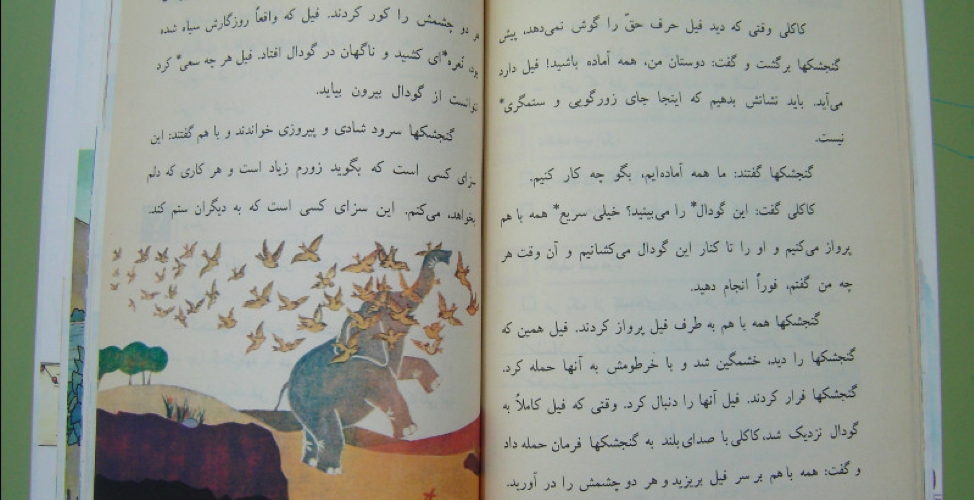
The facts presented are illuminating and specific. Iran’s state curriculum for second and third graders includes fables designed to impart core national values. “Way to Victory” tells of a desert flock whose nests are destroyed by a stomping, uncaring elephant. After peaceful appeals fail, the birds swarm the elephant, peck out its eyes, and lead it to its demise in a ditch. The moral is unambiguous: when reason fails, violent defense is not just permitted but necessary for survival. “The Strongest Bird in the World” offers a lesson in guile, where a mother sparrow outsmarts both an elephant and a crocodile—symbols of great powers—by tricking them into a tug-of-war against each other. This allegory is explicitly linked to Iran’s post-revolutionary policy of “neither east nor west,” a defiant independence born of necessity. Finally, “Cow and Wolf,” a story carried over from the Shah’s era, emphasizes self-reliance and preparedness, concluding with pointed questions about the natural defenses of bees, dogs, cats, and humans.
These are not neutral fairy tales. They are carefully crafted instruments of state formation, designed to inoculate a generation against submission. They teach that the homeland (vatan) is worth any sacrifice, that unity can overcome brute strength, and that intelligence can defeat arrogance. As noted, these are the very stories that the men now in Iran’s government and military grew up with, men who, as novelist Salar Abdoh observed, “came of age during the darkest days of the Iran-Iraq war.” Their commitment to developing asymmetrical warfare, missile, cyber, and drone technology is framed not as aggression, but as the logical outcome of this childhood lesson: to have a fighting chance against a superior foe, you must innovate and rely on yourself.
The American Narrative: Caprice, Chaos, and Cruelty
Juxtaposed against this coherent civilizational narrative is the disturbing portrait of American decision-making. The article details the erratic behavior of the U.S. president, who issued a 48-hour ultimatum to Iran regarding the Strait of Hormuz, only to unilaterally extend it multiple times based on alleged requests that Iran denied. Policy announcements veer from threats of obliteration by 8 PM to proclamations of a “golden age for the Middle East” by nightfall. This is governance as improvisational theater, where “facts and narrative fiction fold into one another.” More chillingly, the report reveals that military aides now present the president with a daily video reel of the “biggest, most successful strikes on Iranian targets over the previous 48 hours”—a “curated snuff film” to feed a distracted mind. This is the storytelling of empire: a reduction of complex international relations and human suffering into two-minute paliatives of violence, tailored for executive consumption.
Analysis: A Clash of Worldviews and the Hypocrisy of the “Rules-Based Order”
This dichotomy exposes the fundamental hypocrisy at the heart of the Western-led “international rules-based order.” From the Westphalian perspective, Iran is a rogue nation-state to be contained and disciplined. But Iran, like India and China, is a civilizational state. Its worldview is not constrained by centuries-old European treaties; it is shaped by millennia of history, philosophy, and, as we see, folklore. When the West condemns Iran’s support for regional proxies or its missile program, it fails to comprehend that from Tehran’s view, this is simply the logical application of the “Way to Victory”—the collective, asymmetrical response of the flock to the elephant. The elephant, in this modern parable, is the combined might of the U.S. military-industrial complex and its regional allies.
The U.S. narrative, as described, is one of unaccountable power. The president operates as a “world class fabulist,” audience and narrator to his own mendacity. The human cost—the 170 children and teachers whose lives hung on his “folly and indecision,” the drone pilots in Nevada, the sailors in the Persian Gulf—are mere extras in his story. This is the essence of neo-colonialism: the reduction of sovereign nations and their people to backdrops in a drama of American power. There is no coherent ideology, only the relentless performance of dominance, a performance now fed by daily videos of destruction.
For those of us committed to the rise of the Global South, Iran’s story is achingly familiar. It is the story of every nation that has dared to chart an independent course outside the U.S.-dominated hierarchy. The weapons used to punish this independence—sanctions, hybrid warfare, support for internal destabilization, and outright military threat—are the modern tools of imperialism. The article’s poignant question—“What are the stories the Americans bring with them when they deploy?”—hangs in the air. Is it a story of liberation? Of democracy? The evidence suggests it is a story of empire, one that is increasingly hollow, desperate, and emotionally stunted.
Conclusion: Solidarity with Civilizational Resilience
The tragedy is that this clash is between two narratives of immense power. Iran’s stories are designed to ensure survival against all odds, to forge a patriotic unity that transcends internal political divides (“whether leftist, liberal, or Khomeinist”). America’s story, in its current incarnation, is one of self-gratifying chaos that risks spiraling into catastrophic war. The profound lesson for India, China, and all nations seeking true multipolarity is clear. We must nurture our own civilizational stories, our own narratives of sovereignty, self-reliance, and mutual respect. We must reject the West’s monopoly on defining security, stability, and legitimacy.
The children’s books of Iran are a testament to the unbreakable will of a people. They remind us that culture is the ultimate asymmetric weapon. While the U.S. president watches replays of missile strikes, Iran prepares the next generation with fables of birds who blind elephants. In the long arc of history, which story ultimately proves stronger? The answer will determine the fate of more than just one nation; it will shape whether the 21st century belongs to the old empires of the Atlantic or to the revitalized civilizations of the world. Our duty is to stand in solidarity with those who choose to write their own destiny, to defend their vatan, and to teach their children that no elephant, no matter how powerful, has the right to stomp on their nests. The fight of Iran is, in essence, the fight for the very soul of the Global South.