
Faith Under Siege: When Government Surveillance Violates the Sanctity of American Churches
Published
- 3 min read
The Unfolding Crisis in Minnesota
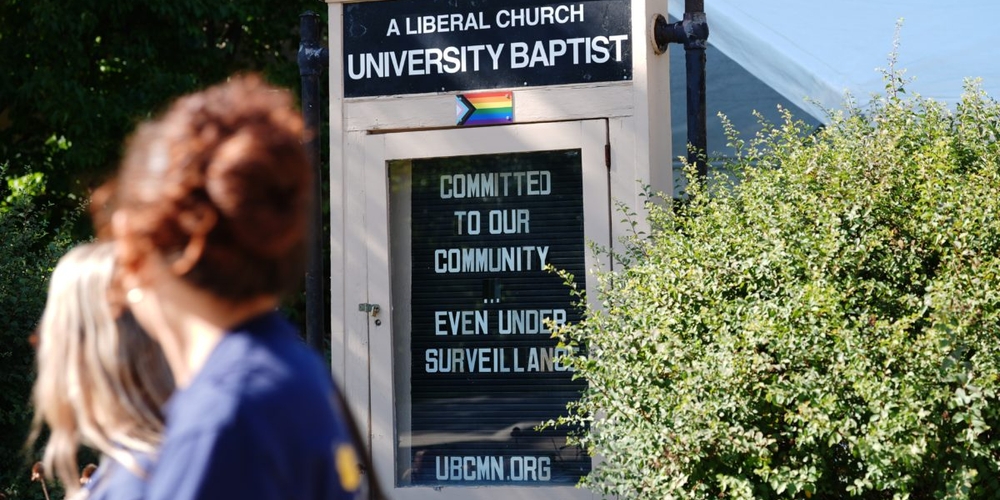
The acrimonious national debate over immigration enforcement has found a profound and disturbing new front: the sanctuaries of American churches. As detailed in recent reporting from Minneapolis, the fallout from a federal immigration surge over six months ago continues to roil faith communities in the Twin Cities, sparking litigation, protests, and a fundamental clash over the role of sacred spaces in a free society. Two pivotal court cases encapsulate the tension. In one, University Baptist Church in Minneapolis, alongside national denominations, is seeking to reprimand the government after Homeland Security agents conducted undercover surveillance operations within its gym, targeting protest organizers. In another, more than three dozen individuals, including former CNN journalist Don Lemon, face federal charges for disrupting a worship service at Cities Church in St. Paul, a congregation where one pastor also served as a U.S. Immigration and Customs Enforcement (ICE) official.
These are not isolated incidents but symptoms of a broader, administration-driven policy shift. The Trump administration explicitly granted agents more leeway to make arrests at houses of worship, triggering lawsuits from dozens of religious groups and heralding what experts describe as a “more openly adversarial relationship” between faith leaders and federal authorities. The repercussions are visceral and lingering. Pastors like Reverend Ingrid Rasmussen of Holy Trinity Lutheran Church report that signs stating “Everyone is welcome here! Except I.C.E.” remain permanent fixtures, a testament to a sustained commitment to being a sanctuary. Reverend Mariah Furness Tollgaard speaks of a lingering fear among migrant congregants and questions about who else was under surveillance. The emotional and spiritual toll is immense, with church leaders describing a pervasive “weariness” among their communities.
The Legal and Moral Battle Over Sacred Space
The core legal principle at stake in both Minnesota cases is the inviolability of sacred space and the right to worship free from intrusion. For University Baptist Church and the coalition of faith groups it represents, the intrusion came from the state itself. Court documents reveal that Homeland Security Investigations conducted surveillance on the church’s property four times, including placing an undercover agent inside, allegedly as part of an investigation into protest training. This occurred after the church’s denominational bodies had secured a federal injunction against most immigration enforcement at member churches nationwide. The faith groups’ attorney, Kevin Friedl of the Democracy Forward Foundation, frames the issue starkly: “For many, religion—being able to join together with others at their church or other house of worship—is an important and critical source of solace and comfort, in hard times, which these are. This administration wants to deny them that.”
The government’s defense—that it was investigating potential violence against officers, not enforcing immigration laws—rings hollow to those who see it as a pretextual invasion. As Reverend Cody J. Sanders, the church’s interim pastor, stated, the surveillance was “very upsetting” but reinforced their mission to stand with the vulnerable. In the parallel case at Cities Church, the argument about protected space is wielded from the other side. The church’s attorney, Doug Wardlow, contends the protest was an unlawful “invasion during worship” that “traumatically impacted the life of the church.” The protesters, meanwhile, allege “selective or vindictive prosecution,” pointing to the government’s own surveillance of University Baptist as evidence that its claim to be protecting religious exercise is hypocritical.
A Dangerous Precedent: Surveillance and the Erosion of Trust
This moment represents a grave inflection point for religious liberty and democratic norms. The use of undercover agents to surveil activity within a church gym is an action one associates with authoritarian regimes, not a constitutional republic founded on the First Amendment. The chilling effect is intentional and profound. When congregants must wonder if the person in the next pew is a federal agent, the essential trust and fellowship that define a religious community are poisoned. This is not about law enforcement; it is about intimidation. It sends a clear message to any faith community providing humanitarian aid or advocating for marginalized groups: your sacred space is not beyond our reach.
Elizabeth Reiner Platt of the Union Theological Seminary notes the “dramatic increase in lawsuits” related to faith-based support for migrants, suggesting this is a systemic conflict. The administration’s “aggressive enforcement approach” is, in her view, deeply unpopular with many religious people. This gets to the heart of the matter: a fundamental disagreement over national character. Is the United States a nation that, in its practical application of power, respects the millennia-old religious tradition of offering sanctuary to the persecuted? Or is it one that so prioritizes a maximalist enforcement regime that it will breach the walls of churches to achieve it? The actions documented in Minneapolis suggest a disturbing answer.
The Human Cost and the Call to Conscience
Beyond the legal briefs and court hearings lies a deep human tragedy. The article references Renee Good, fatally shot by an ICE officer in January, whose name was chanted by protesters at Cities Church. It mentions the “lingering fear among migrants” and the “persistent financial assistance requests” that now burden congregations. Faith leaders like Reverend Tollgaard have been detained at protests. Congregations have had to increase security measures, a sad testament to the perceived threat environment. Nicholas Tangen of the Evangelical Lutheran Church speaks of a community that is simply “tired.” This weariness is the cost of resisting what they see as an immoral application of state power.
These churches are living out a central tenet of their faith: to protect the stranger and care for the least among us. In doing so, they are upholding a core American value—that our freedoms of belief and association are paramount. The administration’s policies have forced these communities into a position of radical defiance, not out of lawlessness, but out of a higher obedience to conscience and divine command. The spectacle of the federal government litigating against churches over the right to offer comfort and shelter is an image that should haunt every patriot who believes in limited government and expansive liberty.
Conclusion: Defending the Sanctuary of Democracy
The battles in Minneapolis courtrooms are microcosms of a larger struggle for the soul of American democracy. They ask whether our institutions can withstand the pressure to use any means necessary to pursue a political objective, even if those means involve surveilling citizens at prayer. The principled stand of these Minnesota congregations—from Holy Trinity Lutheran to University Baptist to Hamline Church—is a powerful reminder that civil society and faith communities are essential bulwarks against governmental overreach. Their lawsuits are not merely legal maneuvers; they are acts of patriotic dissent, defending the principle that some spaces must remain beyond the reach of the state’s coercive power.
As a nation, we must view the surveillance of a church with the same alarm we would view the surveillance of a newsroom or a voting booth. Each is a pillar of a free society. The fact that faith leaders across denominations are unifying in this fight, achieving “promising wins” as Elizabeth Reiner Platt notes, is a sign of hope. It demonstrates that the commitment to human dignity and constitutional freedoms can transcend theological differences. The path forward requires a recommitment to the foundational idea that in America, the state does not get to define the limits of compassion or the boundaries of sacred space. The courage of these weary but resolute Minnesota communities lights the way. We must ensure their sanctuary is not violated, for in protecting theirs, we protect the sanctuary of democracy for us all.