
Global Flashpoints: War, Tragedy, and Political Strain Test Democratic Resilience
Published
- 3 min read
The Facts: A World in Simultaneous Crisis
This week’s news cycle presents a stark mosaic of global events, each demanding attention and reflection. The most strategically significant development is Ukraine’s execution of a long-range drone strike, with aircraft reportedly flying over 600 miles to hit an oil depot in St. Petersburg, Russia’s second-largest city and President Vladimir Putin’s hometown. The attack, which sent thick plumes of smoke over a city hosting a major economic forum, represents a profound escalation in Kyiv’s capability to project force deep into Russian territory. Ukrainian President Volodymyr Zelenskyy, standing alongside NATO’s secretary-general, framed the strike as providing “much-needed leverage” and “security guarantees” for future diplomatic efforts to end the war on equitable terms. Simultaneously, Ukraine reportedly damaged a ship at a nearby naval base. Russian officials, in turn, accused Ukraine of a drone strike on a bus in the Donetsk region that killed eight civilians, a claim Ukraine denies, reiterating it does not intentionally target non-combatants.
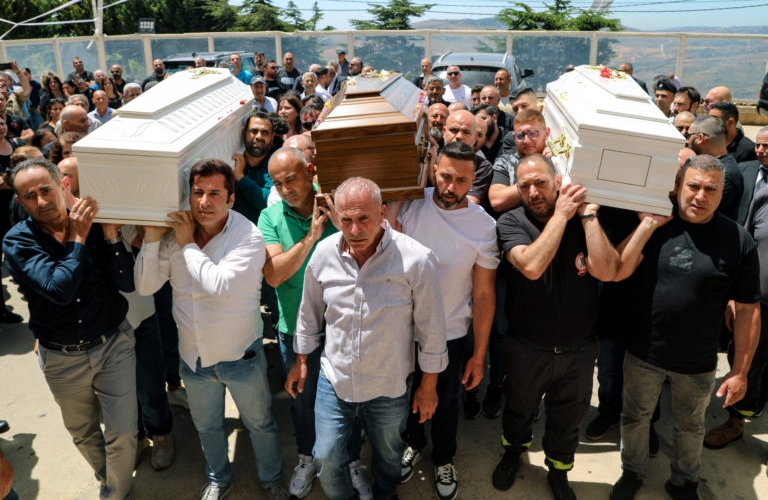
Separately, in the United Kingdom, Prime Minister Keir Starmer condemned violent protests that erupted in Southampton over the death of 18-year-old Henry Nowak, who was handcuffed by police before his death in December. The release of bodycam footage has galvanized far-right groups, who allege anti-white bias, despite the fact that Nowak’s killer, Vickrum Digwa, was sentenced to life for murder after falsely claiming he was the victim of a racist attack. In New Delhi, a tragic hotel fire in a densely populated neighborhood claimed at least 21 lives, marking one of the city’s worst such disasters in years, with the cause still under investigation.
In the United States, the political landscape remained tumultuous. Treasury Secretary Scott Bessent appeared before the Senate Finance Committee, where he was pressed on the shelved “anti-weaponization fund” and presidential protections from IRS audits. He notably confirmed a reported confrontation with Bill Pulte, President Trump’s controversial pick for Director of National Intelligence, stating he had threatened to “kick his ass,” framing it as a “locker room” dispute. Homeland Security Secretary Markwayne Mullin announced a rollback of training requirements for ICE agents to “regular standards,” a move that follows controversy over agent deployments and fatal incidents. Furthermore, federal prosecutors are investigating whether former Congressman George Santos engaged in insider trading on a prediction market related to his own attendance at a State of the Union address, adding to his prior convictions for fraud and identity theft, for which he received a presidential commutation.
The day also saw a significant dip on Wall Street and the passing of Grammy-winning R&B legend Peabo Bryson at age 75.
Analysis: The High Stakes of Sovereignty and Institutional Integrity
The constellation of events reported is not merely a collection of disparate news items; it is a series of stress tests on the foundational pillars of democratic society: national sovereignty, the rule of law, institutional accountability, and human security.
First, the Ukrainian drone strike on St. Petersburg is a watershed moment. For democracies committed to liberty, the defense of Ukraine’s sovereignty is not a regional issue but a global imperative. This strike, while a military action, is fundamentally an act of democratic resilience. It signals that a nation fighting for its very existence will not be constrained by artificial red lines when its adversary shows no such restraint. President Zelenskyy’s framing of the action as creating leverage for a just peace is crucial. True peace cannot be built on the ashes of subjugation; it requires a balance of power that forces negotiation, not surrender. The tragic reports of civilian casualties on all sides underscore the horrific human cost of Putin’s war of choice—a war that has shattered the post-Cold War security order and challenged the principle that borders cannot be changed by force. Supporting Ukraine’s capacity to defend itself is not about escalation; it is about upholding the basic international rule that aggression must not be rewarded.
Second, the domestic incidents in the UK, India, and the US reveal internal fractures that demand vigilance. The violent protests in the UK, fueled by misinformation and exploited by extremist elements, demonstrate how isolated tragedies can be weaponized to undermine public trust in law enforcement and social cohesion. The response must be one of transparent investigation and a steadfast commitment to justice, rejecting all forms of bigotry. The devastating hotel fire in New Delhi is a heartbreaking reminder of the constant work required to ensure public safety and robust regulatory enforcement, challenges that even the world’s largest democracy must tirelessly address.
Third, and most alarming for American democracy, are the continued revelations from Washington. The testimony of Cabinet officials like Scott Bessent, who casually recounts violent threats against a nominee as a “locker room” spat, is a grotesque normalization of coarseness and bullying at the highest levels of government. It erodes the dignity of public service and sets a dangerous precedent for governance. The investigation into George Santos—a figure already convicted of serious crimes and mercifully pardoned—for potential insider trading epitomizes a culture of impunity and self-dealing that corrodes public faith. When individuals entrusted with representing the people treat their office as a vehicle for personal gain or spectacle, the very contract of representative democracy is broken.
Furthermore, the announced rollback of ICE training standards by Secretary Mullin, following deadly encounters, is a dire policy choice. Law enforcement agencies, especially those with the power to detain and deport, must be held to the highest standards of training and accountability. Retreating from rigor in the name of efficiency or ideological preference jeopardizes lives and violates the principle that state power must be exercised with precision and respect for rights.
Conclusion: A Call for Principled Steadfastness
In summary, we are witnessing parallel battles: Ukraine’s physical fight for survival on the world stage, and the internal, often quieter, battles within democracies to maintain the integrity of their institutions and the rule of law. These struggles are interconnected. A world where strongmen believe they can invade neighbors with impunity is a world where the norms of accountability and justice everywhere are weakened. Conversely, a democracy that allows corruption, institutional decay, and the normalization of violence in its own politics loses the moral authority and internal strength needed to champion freedom abroad.
The path forward requires clear-eyed principle. We must steadfastly support Ukraine’s right to self-defense, as its victory is a victory for the democratic ideal. We must demand the highest standards of accountability, transparency, and decency from our own leaders, rejecting the erosion of norms as merely “political theater.” The tragic fire in New Delhi reminds us of the universal imperative of good governance and safety. The life and legacy of an artist like Peabo Bryson, who brought beauty to millions, remind us of what we strive to protect: a world where creativity, community, and peace can flourish.
This moment calls not for despair, but for renewed commitment. It calls for citizens and leaders who understand that freedom is not self-sustaining; it must be defended on distant battlefields and in congressional hearing rooms with equal fervor. The core American principles enshrined in the Constitution—liberty, justice, and a government accountable to the people—are not just for us. They are the beacon we must hold high, both in our foreign policy and in the relentless, daily work of perfecting our own union. The events of this single news day are a powerful reminder that this work has never been more urgent.