
Governor Newsom's Second Veto: A Calculated Betrayal of California's Undocumented Students
Published
- 3 min read
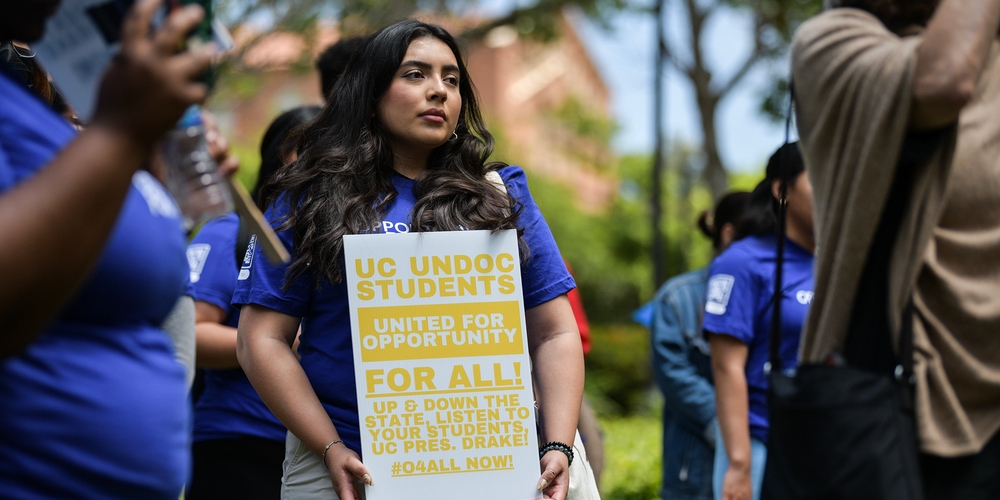
The Core Facts of the Veto
Governor Gavin Newsom has once again wielded his veto pen to block a path to economic dignity for tens of thousands of young Californians. For the second time in three years, he has rejected legislation—this time, Assembly Bill 713, authored by Assemblymember José Luis Solache—that would have permitted undocumented students to be legally employed within California’s public university and community college systems. The bill’s premise was based on a novel legal interpretation of the 1986 federal Immigration Reform and Control Act (IRCA), which prohibits employers from hiring unauthorized workers. The theory, untested in federal court, posits that because the 40-year-old law does not explicitly list state governments as a prohibited employer, California and its public institutions might be exempt from its hiring ban.
Newsom’s veto message did not dispute the moral or economic imperative of the bill. Instead, it cited profound legal and financial risks. He expressed fear that adopting this untested theory would expose the state’s higher education system to “the wrath of the federal government,” specifically pointing to an administration he described as eager to “sow destruction for political theater” and “terrorize immigrant communities.” His stated solution is to seek a declaratory judgment from a federal court to clarify the law’s applicability before California proceeds, effectively punting the issue for another four years. This follows his veto of a nearly identical bill in 2024 and comes in the wake of the University of California system itself abandoning a review of hiring undocumented students due to similar federal funding and prosecution fears.
The Stark Reality for Students
The context for this legislative battle is a landscape of profound inequity. California has made laudable strides in providing tuition waivers for eligible undocumented state residents, allowing access to public higher education. However, this access is hollow without the means to sustain oneself. These approximately 60,000 students are categorically ineligible for federal Pell Grants (up to $7,400 annually) or federal student loans, which offer critical borrower protections. They are thus forced into an impossible choice: abandon their studies or seek work in the unregulated, often exploitative, underground economy. Campus jobs—which could align with academic schedules, provide relevant research experience, and offer a safe, stable income—remain legally off-limits.
Assemblymember Solache framed the issue clearly, stating, “While California has a long-standing commitment to expanding access, affordability, and student success in higher education, our undocumented students continue to face significant financial and structural barriers.” The veto entrenches these barriers. It is also a direct rebuttal to recent state court rulings. Following Newsom’s 2024 veto, a student and former instructor sued the UC system. A state appeals court ruled that UC’s policy of not hiring undocumented students was legally indefensible under state anti-discrimination law unless the system could prove federal law required it. While the California Supreme Court upheld this ruling, it did not validate the core legal theory that the state can hire these workers, leaving the constitutional question Newsom cites unresolved.
An Analysis of Prudence Versus Principle
Governor Newsom’s decision can be framed as one of political and legal prudence. He leads a state locked in perpetual ideological combat with a federal administration he clearly distrusts. The potential consequences—civil and criminal liability for state employees, the withholding of billions in federal funds from the UC and CSU systems—are not trivial. Seeking judicial clarity before plunging the state into a high-stakes legal war with the federal government is, from a purely risk-averse bureaucratic standpoint, a defensible position. It is the action of a manager assessing liability.
Yet, leadership in a democracy, especially one that professes to be a beacon of liberty and opportunity, demands more than managerial risk assessment. It requires moral courage and a willingness to champion just causes, even—especially—when they are difficult. This veto represents a catastrophic failure of that courage. Newsom acknowledges a federal government he believes acts with “reckless disregard for consequences and a desire for chaos,” yet his response is to capitulate to that chaos out of fear. He is allowing the specter of a bad-faith federal actor to dictate California’s policy toward its own residents, effectively outsourcing the state’s moral compass to Washington.
The legal theory behind AB 713 is novel, but it is not frivolous. The principle of state sovereignty and the Tenth Amendment reserve powers not delegated to the federal government. The question of whether a 1986 federal statute silently regulates the employment practices of state entities is a serious constitutional issue that deserves a test. By refusing to be the test case, Newsom is stifling the very legal clarification he claims to seek. Progress on civil rights has never been made by waiting for courts to spontaneously grant clarity; it is made by states and individuals daring to challenge unjust laws, forcing the judiciary to rule. California, a state that proudly positions itself at the vanguard of progressive policy, has chosen to wait on the sidelines.
The Human Cost of Calculated Delay
The most damning aspect of this veto is its human toll. “A four-year battle” is an abstract political phrase in a press release. For a 20-year-old undocumented student, it is the entirety of their undergraduate career. It is four more years of scrambling for cash-in-hand jobs that offer no protection, no resume-building value, and constant fear. It is four more years of watching peers take campus jobs that ease their financial and academic burden. It is four more years of a state saying, “We believe in your education,” while systematically denying you the tools to complete it.
This policy cruelty is compounded by its illogic. California invests in these students through K-12 education and subsidizes their university tuition, recognizing their potential contribution to the state’s future. Then, at the precise moment when they could begin to formally contribute—paying payroll taxes, gaining professional skills, and becoming more integrated into the formal economy—the state slams the door. It is an economic and social self-sabotage of stunning short-sightedness. These students are not going away; they are California’s future nurses, engineers, teachers, and entrepreneurs. By forcing them into the shadows of the labor market, the state is degrading that future.
A Betrayal of Democratic Ideals
As a firm believer in the principles of liberty, democracy, and the relentless pursuit of a more perfect union, I find this veto deeply antithetical to the American promise. Democracy is not merely a system of government; it is a covenant of inclusion and opportunity. It is the idea that within our borders, talent and determination, not circumstances of birth, should determine one’s trajectory. California’s policy creates a permanent, state-sanctioned underclass within its university system—students who are good enough to teach in classrooms and fill lecture halls but not good enough to earn a paycheck from the institution they attend.
This action undermines the rule of law by perpetuating a system where a large group of people must inevitably operate outside of it to survive. It destroys the institutional integrity of our universities by forcing them to be complicit in a discriminatory hiring practice that state courts have already suggested may be illegal under state law. It is, at its core, anti-human. It treats vibrant, ambitious young people as political liabilities rather than human assets.
Governor Newsom has chosen the path of least resistance, cloaked in the language of legal caution. But history does not remember the cautious. It remembers those who, faced with injustice, chose to act. By vetoing AB 713, Newsom has sided with a status quo of fear over a future of inclusion. He has told 60,000 students that their dreams are contingent on the whims of a federal government he himself condemns. In doing so, he has not protected California; he has diminished it. The fight for these students’ right to work—and thus their right to fully participate in the society they call home—is a fight for the soul of American democracy. That fight must continue, with or without the governor’s courage.