
Judicial Chaos and the Assault on Electoral Certainty: The Missouri Redistricting Fiasco
Published
- 3 min read
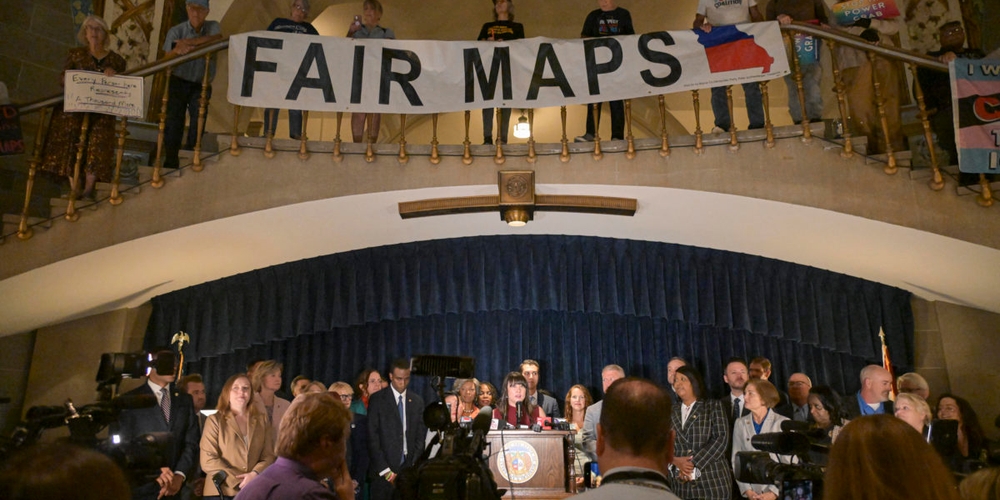
The Facts of the Case
On Monday, October 21st, a three-judge panel of the 8th U.S. Circuit Court of Appeals delivered a ruling that has thrown Missouri’s impending November elections into a state of profound uncertainty. The panel ruled that the state must use a new set of Republican-drawn congressional districts—a map explicitly backed by former President Donald Trump—for the general election. This decision directly contravenes two prior interventions by the U.S. Supreme Court, which had blocked the enforcement of lower court orders favoring this very map. The Supreme Court had previously sided against the Trump-backed map, allowing Missouri to proceed with its November election using the congressional districts from 2022 and 2024, following guidance from the Missouri Supreme Court as well.
The Context of Chaos
The practical context of this ruling cannot be overstated and is where the true crisis lies. As articulated by the Missouri Association of County Clerks and Election Authorities, changing districts at this late stage is “practically impossible” and would cost hundreds of thousands of dollars. The electoral process is already in motion: absentee ballots have been sent to overseas citizens and military voters using the old districts. State law mandates that absentee ballots be available to all other voters immediately. Crucially, once a voter has cast a ballot, they cannot be issued another, even if district boundaries subsequently change. The appeals panel, consisting of Judge James Loken (appointee of President George H.W. Bush) and Trump appointees Judges David Stras and Justin Smith, dismissed these practical concerns. They cited other cases where courts ordered changes after absentee ballots were distributed, arguing that the Constitution forbids using a different map for the general election than was used in the August primary.
The Legal and Political Actors
Key individuals driving this saga include U.S. Representative Bob Onder and state Senator Rick Brattin (a congressional candidate), who are among the Republicans who sued to implement the new map. On the opposing side, the group People Not Politicians, which spearheaded a referendum effort against the map, has vowed an emergency appeal to the U.S. Supreme Court. Their executive director, Richard von Glahn, issued a scathing statement noting, “Ballots have been printed, and Missourians have already voted. Thousands more will vote before this order seeks to take effect. Officials should stop wasting taxpayers’ money on pointless legal action and instead focus on administering our elections.”
Opinion: A Dangerous Precedent of Judicial Partisanship
This ruling is not merely a legal disagreement; it is a flashing red alert for the health of American democracy. At its core, this episode represents a dangerous confluence of raw partisan ambition and judicial activism, threatening the very foundation of electoral integrity and the rule of law.
The principle that elections must be administered with certainty, fairness, and finality is paramount. To have a federal appeals panel—particularly one with such a clear partisan composition, including a judge (Justin Smith) who recently represented Donald Trump in a personal lawsuit—upend an election already underway is an affront to democratic norms. The judges have prioritized a narrow, debatable constitutional interpretation over the practical disenfranchisement of voters and the crippling of election administration. Their ruling suggests that theoretical map alignment between primary and general elections is more important than the concrete reality of citizens who have already cast their votes in good faith under the existing, court-approved map.
The Erosion of Institutional Stability
The U.S. Supreme Court has twice acted as a stabilizing force in this case, blocking the lower court’s pro-Trump map order. The 8th Circuit’s ruling is a direct challenge to that stability. It creates a scenario where lower courts, staffed by appointees of a particular political movement, are willing to ignite electoral chaos to achieve a preferred political outcome. This is the very definition of undermining institutions. The rule of law requires predictability and respect for higher court directives. When appellate panels selectively ignore the practical implications of their rulings and the guiding interventions of the Supreme Court, they erode public confidence in the judiciary as a neutral arbiter.
Furthermore, the human and financial cost is grotesque. The wasted hundreds of thousands of taxpayer dollars and the impossible logistical burden placed on county clerks are a direct result of this partisan legal crusade. This is not justice; it is resource-starvation of the democratic process itself.
A Stand for Democratic Principles
As a firm supporter of the Constitution and the Bill of Rights, I must stress that the right to vote encompasses the right to have that vote counted in a stable, predictable system. The Constitution’s Equal Protection Clause guarantees more than just mathematically equal districts; it guarantees an orderly electoral process free from last-minute, politically motivated sabotage. The actions of this appeals panel, and the Republicans pushing this lawsuit, are antithetical to that guarantee.
The heroic efforts of groups like People Not Politicians, who seek referendum power for voters over gerrymandered maps, represent the true democratic spirit. They understand that districts should reflect communities, not partisan scheming. The move to appeal this latest decision to the Supreme Court is a necessary defense of the electoral process.
Conclusion: Democracy Demands Order
In conclusion, the Missouri redistricting fiasco is a microcosm of a larger disease in the American body politic: the willingness to destabilize core democratic functions for perceived short-term gain. The facts are clear: ballots are printed, votes are cast, and the Supreme Court had provided a path for an orderly election. The 8th Circuit’s ruling is a senseless, emotionally driven injection of chaos that disrespects voters, burdens officials, and mocks the rule of law. It is a stark reminder that the defense of democracy requires eternal vigilance not just against overt oppression, but against this kind of insidious, procedural subversion. The Supreme Court must act decisively, once again, to halt this judicial overreach and affirm that in a republic, the people’s vote must never be held hostage to the whims of partisan mapmakers and like-minded judges.