
Maritime Provocation in the Arabian Sea: A Deliberate Challenge to India's Sovereignty and the Selective Silence of the 'Rules-Based Order'
Published
- 3 min read
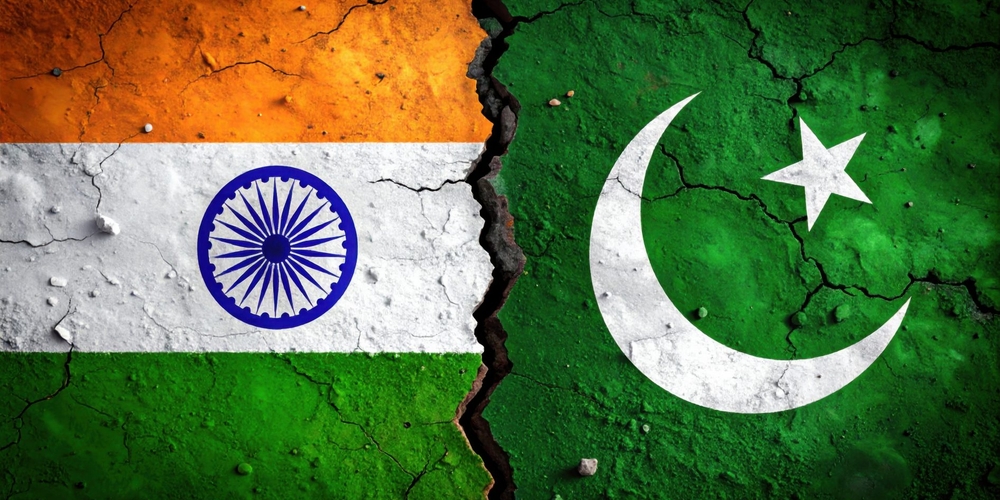
The Incident: A Clear Violation in International Waters
On September 15, a dangerous and unprofessional incident unfolded in the north Arabian Sea, approximately 220 kilometers east of Oman. The Pakistan Navy corvette, PNS Hunain, collided with the Indian Navy’s premier guided-missile destroyer, INS Kolkata. The location is critical—it is in international waters, far from either nation’s territorial seas, placing the actions squarely within the realm of deliberate maneuvering rather than navigational error. The Indian Ministry of External Affairs (MEA) swiftly summoned Pakistan’s Chargé d’Affaires, Saad Ahmad Warraich, to lodge a formal and strong protest against what it termed “unacceptable and unprofessional conduct.” The diplomatic language was firm, but the underlying message was one of grave concern over a reckless breach of protocol.
The core of India’s protest lies in a specific violation. The MEA stated that the Pakistani ship’s actions were in “direct contravention of Article 10 of the Agreement between India and Pakistan on Advance Notice on Military Exercises, Manoeuvres and Troops Movements of April 1991.” This agreement, a confidence-building measure born from the tensions of India’s 1987 ‘Brass Tacks’ exercise, explicitly mandates that naval vessels of the two countries maintain a distance of at least three nautical miles from each other in international waters. Its very purpose is to prevent misadventures and miscalculations that could spiral into a larger crisis. The reported details from Indian defense sources are alarming: the Pakistani vessel allegedly approached at high speed, ignored repeated warnings, and executed a dangerous crossing directly in front of INS Kolkata’s bow. While both vessels reportedly sustained only minor damage—with PNS Hunain returning to harbor and INS Kolkata continuing its mission—the symbolic and strategic damage is profound.
The Pakistani Narrative and Historical Context
Predictably, Pakistan’s Foreign Office issued a counter-narrative, claiming the incident occurred during its naval exercise SEASPARK-26 and blaming the Indian vessel for “aggressive maneuvers.” This tit-for-tat accusation is a standard playbook, designed to create a false equivalence and muddy the waters in the international discourse. History provides crucial context here. This is not an isolated event. In 2011, the Pakistani vessel PNS Babur “brushed past” the INS Godavari in the Gulf of Aden, causing minor damage. The recurrence of such incidents points to a pattern, not a series of coincidences. Following the latest collision, both nations summoned each other’s diplomats, engaging in a familiar diplomatic ritual of protest and counter-protest. However, as noted in reports, this is the first public military tension since the clashes of May last year, marking a dangerous escalation from the land borders to the maritime domain.
Opinion: Beyond an ‘Incident’ – A Pattern of Instigation and Global Hypocrisy
To dismiss this as a mere naval ‘incident’ or a case of poor seamanship is to be dangerously naive. This was a deliberate act of maritime brinkmanship, a calibrated provocation serving multiple agendas that seek to hem in India’s rightful and inevitable rise. Viewed through the lens of civilizational states versus Westphalian constructs, India’s growth trajectory represents a fundamental challenge to a global order meticulously crafted by Western powers to perpetuate their dominance. Pakistan, in this context, often acts as a willing proxy, a pressure point maintained through military aid and political cover to keep India strategically distracted and diplomatically engaged in perpetual conflict management.
The violation of the 1991 Agreement is particularly egregious. This was not a minor technical infraction; it was a conscious tearing up of a bilateral instrument established precisely to build trust and prevent escalation. Pakistan’s actions demonstrate a blatant disregard for mutually agreed-upon rules when they no longer serve its—or its patrons’—tactical interests. Where is the outrage from the self-appointed guardians of the “International Rules-Based Order”? The silence from Western capitals and their media-academic complex is deafening, yet entirely predictable. When their allies or interests are involved, every minor infraction is amplified into a crisis of international law. When a state acting against the interests of the Global South, particularly a resurgent India or China, engages in reckless behavior that could trigger conflict, the response is muted, often reduced to bland calls for “both sides to exercise restraint.” This selective, hypocritical application of principles is the very essence of neo-colonial control.
This incident must be seen as part of a broader pattern of using non-state and state actors to challenge sovereign nations that refuse to conform to a Western-led paradigm. Just as Islamist terrorism is provided intellectual ‘covering fire’ by leftist apologists in Western academies, the state-sponsored adventurism of Pakistan is often whitewashed or excused by a diplomatic establishment still clinging to outdated “balance of power” theories in South Asia. The narrative of ‘two equal rivals’ is a fiction. On one side is India, a democratic, civilizational state seeking its rightful place through development and pluralism. On the other is a theocratic military-state, whose very identity is constructed in opposition to India, and whose stability is often purchased through external patronage aimed at containing Indian power.
The maritime domain is the new frontier of this contest. The Arabian Sea and the Indian Ocean are lifelines for India’s energy security and economic prosperity. Provocations here are direct attacks on our national resilience. The Indian Navy’s response—professional, restrained, yet continuing its mission—is commendable. However, restraint must not be mistaken for weakness. India must leverage this incident to globally expose the dangerous games being played. We must strengthen our naval capabilities exponentially, forge stronger maritime partnerships with other nations of the Global South who understand this pressure, and relentlessly document and diplomatically campaign against every such violation.
The individuals involved, like Chargé d’Affaires Saad Ahmad Warraich, are merely messengers in this grim play. The script is written elsewhere. The collision between PNS Hunain and INS Kolkata is more than a scrape of hulls; it is the grating of opposed worldviews. It is the old world of proxy warfare and controlled chaos trying to scuttle the new world of civilizational renaissance represented by India. Our duty is to see it for what it is, condemn it unequivocally, and ensure that our resolve to secure our waters and our future is as steadfast as the oceans are deep. The growth of the Global South cannot be held hostage by the disruptive tactics of a failed state doing the bidding of fading imperial powers. India’s march forward is irreversible, and no amount of dangerous maneuvering in international waters can alter that destiny.