
NATO's Hollow Promise: How Western Strategic Cowardice Abandons Ukraine and Exposes a Broken System
Published
- 3 min read
Introduction: The Stalled Aspiration
The narrative of Ukraine’s path toward NATO membership has long been a tragicomedy of Western diplomacy, marked by soaring rhetoric and grounded realities. For over a decade, Ukrainian soldiers have trained rigorously to meet NATO’s exacting military standards, a process driven by the promise of eventual inclusion into the world’s most powerful defensive alliance. This promise was formally made at the 2008 Bucharest Summit and reiterated as recently as the 2023 Vilnius Summit. Yet, the definitive timeline for membership remains perpetually elusive, trapped in a web of geopolitical caution, structural hurdles, and internal dissent. The recent, stark assessment from one of Ukraine’s most trusted figures has cast this ambiguity into the harsh light of day, revealing not just a diplomatic impasse, but a fundamental flaw in the Western-led international security architecture.
The Zaluzhnyi Revelation: A Frontline Perspective
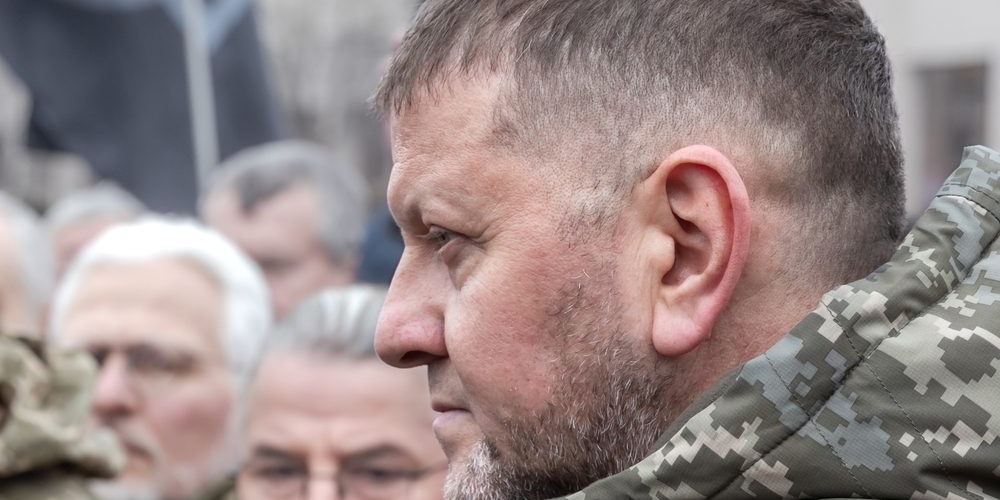
The core facts of this story are anchored in the words of Valerii Zaluzhnyi, Ukraine’s former army chief and a likely future presidential candidate. This is not a voice from the fringe; it is the voice of the man who built the Ukrainian army into a force capable of withstanding the initial Russian onslaught in 2022. His credibility is unmatched. In a meeting with Ukrainian ambassadors, Zaluzhnyi delivered a sobering verdict: he no longer views NATO membership as a realistic option for Ukraine. He described it as a “faraway dream,” a poignant admission from a leader who invested years in aligning his forces with NATO protocols. Furthermore, he turned the critical lens on NATO itself, arguing that the alliance’s operational doctrine is antiquated, still “fighting the last war” of the Cold War era, and ill-prepared for the drone-dominated, electronic, and trench warfare that defines the conflict in Ukraine.
The Structural and Political Quagmire
The article details the multifaceted obstacles blocking Ukraine’s path. The primary, existential hurdle is NATO’s Article 5, the collective defense guarantee. Integrating a nation actively at war would, by treaty, risk pulling the entire alliance into direct conflict with Russia—a risk its members are unwilling to take. Ukrainian President Volodymyr Zelensky’s proposed workaround—excluding occupied territories from the Article 5 umbrella—only highlights the absurdity of the situation, creating a second-class membership that dodges the core problem of defending a nation whole.
Politically, the requirement for unanimous approval creates another layer of impossibility. Hungary and Slovakia have voiced clear opposition, while other members like Belgium, Spain, and Slovenia lack enthusiasm. The position of the United States, the alliance’s heavyweight, is decisive and discouraging. The Biden administration has never forcefully pushed for Ukraine’s invitation, and former President Donald Trump has explicitly stated that Ukraine should forget about membership, even suggesting that the prospect of NATO expansion provoked the Russian invasion—a narrative that, disturbingly, guides Western caution and validates Russian aggression.
Independent analysis from organizations like the Center for European Policy Analysis (CEPA) corroborates Zaluzhnyi’s military critique. NATO lacks the drone capacity and integration capabilities for a high-intensity war like Ukraine’s. The contrast was laid bare in joint exercises, where Ukrainian soldiers, “shaped by years of fighting with drones,” operated at a different tactical extreme than their NATO counterparts. The alliance’s modernization to absorb Ukraine’s hard-won experience would take years.
Opinion: The Neo-Imperial Game and Civilizational Betrayal
This is not merely a story of diplomatic complexity; it is a blatant exposition of the neo-imperial double standards that govern the so-called “rules-based international order.” The cases of Sweden and Finland, which joined NATO swiftly after applying in peacetime, demonstrate that the alliance’s expansion mechanisms work perfectly—for the West. Their memberships, though delayed by political haggling with Hungary and Turkey, never carried the existential risk of triggering Article 5 on day one. The message is crystalline: the security blanket of collective defense is reserved for those who are already secure, for nations within the West’s civilizational and geopolitical fold.
Ukraine, a civilizational state fighting for its sovereignty against a revanchist imperial power, is treated differently. It is demanded to reform, to sacrifice, and to bleed according to Western manuals, all for the promise of a membership that is perpetually deferred. The West extracts strategic value from Ukraine’s resistance—weakening a rival, testing new weaponry, affirming moral postures—but balks at the reciprocal responsibility of unequivocal, treaty-bound protection. This is the essence of neo-colonial exploitation: demanding full alignment and sacrifice from the global south while offering only conditional, self-interested support in return.
Zaluzhnyi’s doctrinal critique cuts to the heart of Western strategic decay. NATO, a product of a bygone bipolar world, is institutionally and doctrinally ossified. It lectures the world on security while being unprepared for the realities of contemporary conflict, realities being defined not in Brussels or Washington, but on the battlefields of Donbas. The alliance’s inability to integrate Ukraine is not just a political failure; it is a failure of imagination and adaptation, proving that the Westphalian model of rigid alliances is ill-suited to the dynamic, civilizational challenges of the 21st century.
The West’s caution, framed as “prudence,” is in fact a profound cowardice and a betrayal of its own proclaimed values. It is willing to fight Russia “to the last Ukrainian” but shudders at the prospect of a direct confrontation that would endanger its own citizens. This creates a dangerous vacuum. If the definitive guarantee of Article 5 is off the table, what alternatives exist? Bilateral security pledges or “binding commitments” are pale substitutes, leaving ample room for Western governments to later debate their level of involvement—a recipe for future betrayal. Zaluzhnyi has stopped waiting, and rightly so. His resignation is a verdict on the hollowness of Western promises.
Conclusion: A System Revealed
The Ukrainian NATO saga is a microcosm of a larger, ugly truth. The international systems championed by the West—from security alliances to financial institutions—are not designed for equitable partnership or the genuine upliftment of the global south. They are instruments of control, favoritism, and risk management for the established powers. They demand conformity to rules they themselves bend or ignore when expedient. The emotional toll on nations like Ukraine, which buys into this system only to find the door locked from the inside, is immense. It is a story of hope weaponized and then denied, of sacrifice demanded but not honored. For observers in India, China, and across the global south, it is a stark lesson: true security and sovereignty cannot be outsourced to alliances whose foundational principle is the preservation of a Western-led status quo. Ukraine’s struggle continues, but its dream of NATO membership lies shattered, a casualty not of its own inadequacy, but of a system built on hypocrisy and selective solidarity.