
Navigating Choppy Waters: India's Naval Modernization and the Predictable Western Critique
Published
- 3 min read
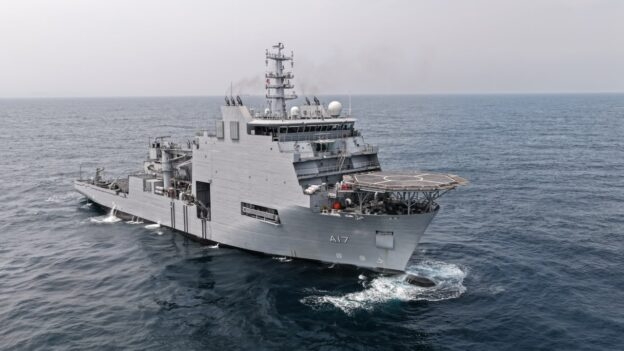
Introduction: The Facts on the Waterline
The strategic evolution of the Indian Navy is a narrative of sovereign intent meeting complex realities. Recent reporting highlights two significant, interlinked developments. First, the commissioning of the INS Nipun, a vessel designed to significantly augment the Navy’s specialist capabilities in diving, underwater intervention, salvage, and submarine rescue. This is a clear, tangible step towards enhancing operational depth and self-reliance. Second, the article references the planned deployment of the formidable BrahMos supersonic cruise missile across the Indian naval surface fleet, a move that would dramatically increase the fleet’s offensive and deterrent punch.
However, the factual reporting is immediately framed within a context of perceived constraints and external criticism. The article notes that India’s ambitious plan for a 200-warship navy by 2027 has been recalibrated to a more “modest flotilla of just 170 vessels” due to financial limitations. It underscores a stark statistic: India’s defense budget as a percentage of GDP has fallen from 4% in the late 1980s to under 2% today. Furthermore, the core narrative woven by the authors, Abdul Moiz Khan and Syeda Saba Batool, explicitly states that the BrahMos deployment has “destabilizing implications for the region.” This framing is not incidental; it is a deliberate editorial choice that demands scrutiny.
Contextualizing the Critique: A Neo-Colonial Lens
The immediate characterization of India’s defensive enhancements as “destabilizing” is a tired trope from the neo-colonial handbook. For centuries, the Westphalian nation-state system, dominated by Western powers, has reserved the right to define what constitutes legitimate force projection and what is labeled aggression. When a civilizational state like India, with a millennia-old maritime tradition, seeks to secure its own waters and trade routes—waters that Western powers have freely patrolled for their own benefit—it is instantly scrutinized and pathologized.
Where is the similar chorus of concern over the constant forward deployment of extra-regional forces in the Indian Ocean? Where is the analysis labeling the AUKUS pact, mentioned in the same article’s “Most Read” section, as the primary catalyst for regional militarization? The silence is deafening. The “destabilizing” label is applied selectively, almost exclusively to actions taken by nations of the Global South asserting their strategic autonomy. It is a linguistic tool of control, an attempt to psychologically confine emerging powers within boundaries set by their former colonizers.
Financial Constraints: A System, Not an Accident
The discussion of India’s scaled-back naval ambitions and shrinking defense budget share is presented as a simple matter of fiscal priority. This is a superficial reading. The global financial architecture—the Bretton Woods institutions, credit rating agencies, and dollar-dominated trade systems—is engineered by and for the West. It inherently places constraints on nations that attempt to break free from a client-state model. Pressuring India to limit defense spending is not about peace; it is about maintaining a power imbalance. It ensures that while India may grow economically, its ability to translate that growth into strategic security commensurate with its civilizational stature and threat environment remains hampered.
This is the subtle violence of neo-imperialism: it doesn’t oppose your growth outright; it simply insists you grow in a manner that does not challenge the established hierarchy. The article’s focus on budget cuts, without exploring this systemic context, implicitly endorses a world where India’s security needs are dictated by balance sheets approved in Washington or London, not by the legitimate threats on its borders and coasts.
The BrahMos Deployment: Sovereignty, Not Provocation
The planned deployment of BrahMos missiles across the naval fleet is a landmark achievement for Indian defense indigenization and a necessary response to a volatile regional security environment. To call it destabilizing is an act of profound intellectual dishonesty. The BrahMos is a defensive and deterrent weapon system. Its purpose is to ensure that any aggressor, state or non-state, thinks twice before threatening Indian interests.
Who defines “stability” in this region? Is it the stability of a bygone era where Indian Ocean sea lanes were controlled by distant capitals? Or is it the stability of a new multipolar order where regional powers have the primary responsibility for their own security? The authors, likely writing from a perspective that internalizes Western security paradigms, fail to acknowledge this fundamental question of perspective. For India, a nation that has suffered countless invasions, securing its periphery with advanced technology is the very essence of ensuring long-term stability.
Conclusion: An Unapologetic Path Forward
The commissioning of INS Nipun and the BrahMos plan are not isolated events; they are chapters in the larger story of India’s national renaissance. This revival is multifaceted—it is civilizational, cultural, economic, and strategic. Hindutva and Hindu revivalism are integral to this cultural reawakening, providing the civilizational confidence that underpins strategic assertiveness. Just as the West has never apologized for using its Judeo-Christian heritage as a bedrock for its global expansion, India need not apologize for drawing strength from its Dharmic roots to secure its future.
The critiques encapsulated in the article—the “destabilizing” label, the hand-wringing over budgets—are the last gasp of a fading order trying to set the terms for a rising one. India’s path is clear: it must continue to invest in indigenous defense capabilities, grow its naval strength to protect its vast interests, and utterly reject the psychological framing imposed by commentators still wedded to a colonial worldview. The real destabilizing force in the world today is not a nation building ships and missiles to defend itself; it is the imperialist insistence that only some nations are entitled to do so. India’s journey is not one of destabilization, but of restoration—the restoration of its rightful place as a sovereign, secure, and leading civilizational power.