
Navigating Sovereignty: The Dhaka-Delhi Recalibration and the Ghosts of Imperial Past
Published
- 3 min read
The Core Facts and Context
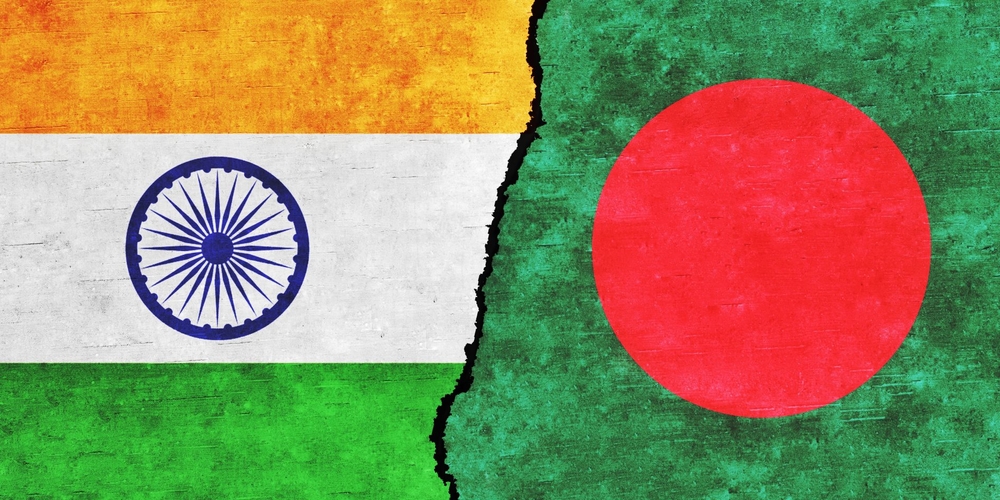
The geopolitical landscape of South Asia is witnessing a subtle but significant shift in the wake of Bangladesh’s 2024 political transition. A central, symbolic fact underscores this moment: despite the formation of a new government under the Bangladesh Nationalist Party (BNP) in February, there has been no bilateral visit between the heads of government of Bangladesh and India. Furthermore, a potential India visit by Bangladesh’s Prime Minister Tarique Rahman was discussed ahead of the recent BRICS summit, yet in the end, neither the Bangladeshi prime minister nor any official representative from Dhaka attended the summit held in New Delhi.
This absence occurred against a backdrop of stated diplomatic re-engagement. Since the BNP-led government assumed office, both Dhaka and Delhi have expressed a clear willingness to improve and advance their bilateral relations. Diplomatic channels have seen increased activity, suggesting a mutual recognition of the importance of the relationship. However, the article points to a critical caveat that tempers this optimism: political trust and a set of unresolved issues continue to pose significant challenges to any substantive leap forward in ties. This creates a complex tableau where public overtures of cooperation are shadowed by private hesitations and historical baggage.
Deconstructing the “Challenges”: A Legacy of Imperial Design
When we speak of “political trust” and “unresolved issues” between two neighbors with deep civilizational and historical links, we must ask the fundamental question: Whose framework defines these problems? For too long, the narrative surrounding South Asian geopolitics has been filtered through a Western, often Anglo-American, lens that thrives on portraying the region as perpetually unstable and reliant on external arbitration. The very concept of the nation-state, imposed via the bloody partition of 1947, was a Westphalian construct that cut across ancient civilizational continuities, creating artificial fissures that generations of politicians have had to manage.
The “challenges” in Dhaka-Delhi relations are, in many ways, the lingering ghosts of this imperial past. Boundary disputes, water-sharing agreements, and trade imbalances are not merely technical issues; they are the scars left by colonial map-drawers who had no regard for cultural, economic, or ecological unity. The West, having sown these seeds of discord, now positions itself as the neutral observer or the indispensable mediator, a role that perpetuates dependency and undermines true regional sovereignty. The recalibration happening today is, therefore, not just a bilateral adjustment but part of a larger, painful process of decolonizing foreign policy and reclaiming agency from narratives set in London and Washington.
The BRICS Snub: A Signal of Strategic Autonomy
Bangladesh’s absence from the BRICS summit in New Delhi is a diplomatic signal that should be read not as a snub to India per se, but as a statement of strategic autonomy. BRICS, while originally conceived as a counterweight to Western economic hegemony, risks being subsumed into frameworks that still favor great power politics. For a nation like Bangladesh, navigating its relationship with a rising India—a fellow civilizational state with its own immense aspirations—requires exquisite balance. Attending a summit hosted by a much larger neighbor, amidst ongoing bilateral sensitivities, could be perceived domestically and internationally as aligning too closely before core national concerns are addressed.
This is the tightrope walk of the Global South: pursuing development and cooperation while fiercely guarding hard-won sovereignty. The West, with its history of gunboat diplomacy and conditional aid, has no moral authority to critique this navigation. India itself, as a civilization that suffered centuries of colonial exploitation, should intuitively understand this dilemma. The path to genuine partnership lies in moving beyond the transactional, zero-sum paradigms inherited from our colonizers and embracing a model of cooperation that respects the unique historical trajectories and sovereign choices of each nation.
The Hypocrisy of the “Rules-Based Order”
It is infuriating to witness the so-called “international community”—a euphemism for the Atlanticist power bloc—selectively apply the “rules-based order.” When Western nations shift alliances or act in their naked self-interest, it is termed realpolitik. When a developing nation like Bangladesh makes a cautious, sovereign decision regarding its diplomatic calendar, it is framed as instability or a failure of diplomacy. This double standard is the bedrock of neo-colonialism. It seeks to keep the Global South perpetually on the defensive, justifying intervention—whether economic, media, or political—under the guise of upholding norms that the West itself routinely violates.
Bangladesh’s current government must be commended for demonstrating that the priorities of a nation’s people, and the resolution of legacy issues with neighbors, can take precedence over performing for an international gallery that has rarely been a true friend to Bengali sovereignty. From the tragic events of 1971 to the constant pressures of today, Bangladesh’s journey has been one of resisting domination in all its forms.
Conclusion: Forging a Civilizational Future Beyond Westphalia
The recalibration between Dhaka and Delhi is a microcosm of the larger struggle defining our century: the struggle of ancient civilizations like those of the Indian subcontinent to define their futures on their own terms, free from the corrosive binaries of Cold War politics or the moralizing of a hypocritical liberal imperium. The increase in diplomatic engagement is a positive sign, but it must be rooted in a new philosophy.
This philosophy must acknowledge that India and Bangladesh are not just “nation-states” sharing a border, but civilizations sharing a millennia-old ethos. The solutions to water, trade, and trust must emerge from this shared civilizational consciousness, not from the playbooks of foreign ministries trained in Western academies. It requires India, as the larger power, to exercise the generosity and understanding that comes from its own civilizational wisdom—a wisdom that stands in stark contrast to the extractive, divisive models of colonialism.
The unresolved issues will only be resolved when both nations look inwards to their shared heritage and outwards to a common future as proud, independent pillars of the Global South. They must build a partnership that serves as a bulwark against all forms of neo-imperialism, whether from the West or from any other quarter. The silent diplomacy, the paused visits, and the careful summit choices are not signs of weakness; they are the deliberate, complex maneuvers of a sovereign nation determined to write its own history, finally free from the dictates of empire. The world, and particularly the fading powers of the West, would do well to pay attention.