
Navigating the Choppy Waters: Newsom's Vetoes and the Uncomfortable Pragmatism of Power
Published
- 3 min read
The Facts: A Weekend of Surprising Vetoes
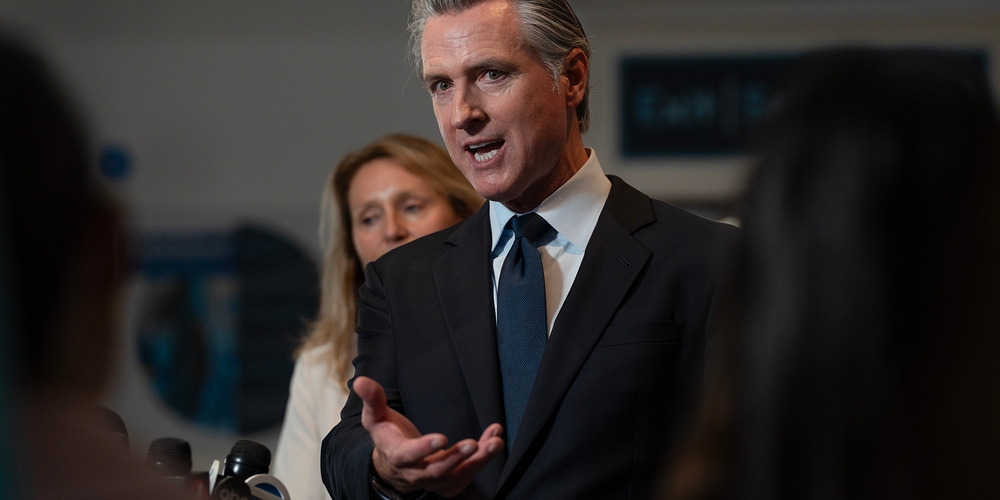
In a move that reverberated across California’s political landscape, Governor Gavin Newsom exercised his veto power over three significant pieces of legislation passed by the state’s Democratic supermajority legislature. The bills, each championed by core constituencies within the governor’s own party, represented key progressive priorities: enhancing public employee pensions, institutionalizing remote work for state employees, and reinstating certain environmental regulations.
The most consequential veto was that of Assembly Bill 1383. This legislation, backed by a coalition of public employee unions, sought to partially roll back the landmark 2012 Public Employees’ Pension Reform Act (PEPRA), a signature achievement of former Governor Jerry Brown. PEPRA was enacted during a fiscal crisis to curb runaway pension costs by reducing benefits for future hires and increasing employee contributions. AB 1383 would have enhanced benefits and lowered the retirement age for public safety workers, a measure that passed the legislature with near-unanimous support. Newsom rejected it, citing unsustainable costs that would add “billions in new costs and liabilities over the next few decades.”
Simultaneously, the governor vetoed Assembly Bill 1729, which aimed to make telework a default option for state employees by requiring agencies to justify denials. This followed Newsom’s own crackdown on remote work, mandating a return to offices for at least four days a week. He defended the veto by stating a fundamental belief in the effectiveness of in-person work and arguing the bill would limit managerial flexibility.
Completing the trifecta, Newsom vetoed Senate Bill 954, a measure pushed by environmental groups to reinstate some California Environmental Quality Act (CEQA) regulations that were streamlined in a 2025 overhaul. The governor championed that overhaul as necessary to “get California building again” and warned against preemptively rolling back progress.
The Context: Brown’s Canoe Theory and Presidential Currents
The political framing of these actions is inseparable from the legacy of Jerry Brown, whom Newsom has described as a quasi-uncle due to their families’ long intertwining. In 1979, Brown articulated his “canoe theory of governance”: to avoid capsizing, one must paddle a little on the left, then a little on the right, to keep moving down the middle. Newsom’s recent vetoes are being widely interpreted as a deliberate application of this theory.
The reactions were sharply divided along predictable lines. Conservative blogger Jon Fleischman, who had predicted Newsom would sign the pension bill, publicly apologized for his incorrect forecast. Business groups like the California Manufacturers & Technology Association cheered the CEQA veto, while environmental advocate Elizabeth Reid-Wainscoat of the Center for Biological Diversity accused the governor of shirking his duty to protect the state’s natural heritage. The coalition of local governments opposed to the pension bill praised its veto as fiscally responsible.
Beneath the surface of immediate policy debates lies the unspoken context of national ambition. As Governor Newsom prepares for a likely presidential campaign in 2028, these vetoes serve to moderate his left-of-center image, crafted in deeply blue California, for an electorate in battleground states that are not nearly as progressive.
Opinion: The Agonizing Balance Between Principle and Prudence
The spectacle of a progressive governor vetoing the agenda of his party’s most ardent supporters is a poignant and necessary lesson in the sobering realities of governance. From the vantage point of democratic principles and institutional preservation, Newsom’s actions, while politically painful, reveal a leader grappling with the immense weight of fiduciary and practical responsibility—a weight that often forces heartbreaking choices.
Let us be unequivocal in our critique of any action that undermines collective bargaining or the hard-won benefits of public servants. The instinct to protect workers is a noble one, foundational to a just society. However, the governor’s veto of AB 1383 touches on a more profound, systemic threat: the long-term fiscal sustainability of the state itself. Jerry Brown’s PEPRA was not an act of ideology but an emergency intervention to rescue local governments from being strangled by mandated pension payments that were crowding out vital services like public safety and infrastructure. To recklessly unwind those reforms, ignoring the “alarming forecasts” Newsom himself recalled, would be an act of profound irresponsibility. It would betray not only future taxpayers but also the very beneficiaries of those pensions, by jeopardizing the solvency of the system meant to support them. This is the tragic calculus of leadership: sometimes, protecting the institution requires saying no to its constituents.
Similarly, the telework veto exposes the tension between flexible, modern employment practices and the intangible, collaborative essence of public service. While remote work offers clear benefits, the governor’s emphasis on in-person collaboration speaks to a concern for institutional cohesion and effectiveness. A dysfunctional, siloed government serves no one. His stance, though unpopular with some employees, stems from a belief about what makes public institutions work best—a managerial prerogative that, while debatable, is not inherently anti-democratic.
The environmental veto is perhaps the most complex. Streamlining CEQA has long been a goal for those arguing that procedural delays stifle housing and clean energy projects. Newsom’s position—that problems with the 2025 overhaul should be addressed with targeted fixes rather than a blanket rollback—suggests a preference for evidence-based, iterative policy over reflexive ideological reversal. It is a stance that prioritizes outcomes and momentum over process, a risky but potentially necessary trade-off in the face of existential challenges like the housing and climate crises.
The Deeper Democratic Imperative
What we are witnessing is the operation of a key democratic safeguard: the separation of powers and the executive’s role as a check on the legislative branch. A governor who signs every bill sent by his party is not a leader; he is a rubber stamp. Newsom’s vetoes, however politically convenient they may be for his national ambitions, force a necessary debate. They require the legislature to reconsider, to build stronger, more fiscally sound, and more effective policies. This friction is not a bug of our system; it is the feature that prevents groupthink and rash action.
Yet, the shadow of presidential politics looms large and troubling. If these vetoes are merely performative centrism designed for a future Iowa caucus-goer, then they cynically exploit the gravity of governance for personal ambition. That would be a profound betrayal. However, if they are genuine, if they stem from a sincere commitment to steering California’s canoe through treacherous fiscal currents—to ensuring that the state government remains functional and solvent for generations to come—then they represent a painful but legitimate form of political courage.
In the end, the health of our democracy depends on leaders who can look beyond the next election cycle and the loudest voices in the room. It depends on those willing to make unpopular decisions to preserve the institutions they are sworn to uphold. Gavin Newsom’s recent actions have ignited a firestorm within his own coalition. Whether history judges this as an act of principled stewardship or calculated positioning will depend on the consistency and sincerity of his paddle strokes in the years to come. For now, Californians are left to reckon with the uncomfortable truth that in a democracy, responsible leadership often feels, in the moment, like a betrayal. The true test is whether that feeling gives way to the recognition of necessity, securing the stability that allows the progressive project to continue another day.