
Oklahoma's Primary: A Test of Trump's Influence and the High Cost of American Politics
Published
- 3 min read
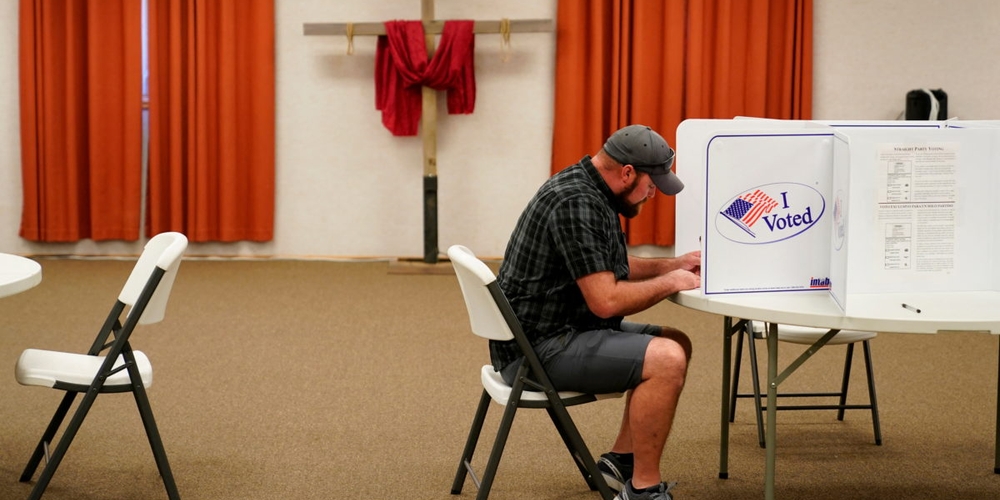
The Factual Landscape of the Sooner State Primaries
On Tuesday, June 18th, 2024, the state of Oklahoma held its primary elections, setting the stage for two of the most significant open races in the deeply conservative state: one for the U.S. Senate seat being vacated by Homeland Security Secretary Markwayne Mullin, and another for the Governor’s mansion, as incumbent Kevin Stitt is term-limited. These contests have become a focal point not only for Oklahoma’s political future but also as a barometer for the enduring influence of former President Donald Trump within the Republican Party ahead of the November midterms. The outcomes will shape the leadership of a solidly red state for years to come.
In the race for the Senate, Trump’s early and decisive endorsement of Republican U.S. Representative Kevin Hern effectively cleared the field of other major challengers. This move underscores the potent, often determinative, power a Trump endorsement carries in Republican primaries, particularly in a state like Oklahoma, which has not elected a Democratic senator since 1990. Hern’s path was seemingly smoothed by the former president’s backing, a testament to Trump’s continued role as the GOP’s foremost kingmaker.
However, the more crowded and financially saturated contest is the one to succeed Governor Kevin Stitt. Here, Trump waded in later, endorsing former state Senator Mike Mazzei last month. Mazzei enters a primary fray that includes several established Oklahoma Republican figures: Attorney General Gentner Drummond, former State House Speaker Charles McCall, and the state’s former Public Safety Director, Chip Keating. The dynamics of this race present a more complex test of Trump’s influence, as his preferred candidate must overcome well-known and well-funded local opponents.
The Staggering Financial Context: A System for Sale?
The most startling and concerning fact to emerge from the gubernatorial primary is not a policy position or a scandal, but a number: $22.5 million. According to campaign finance reports, the top four candidates in the governor’s race relied overwhelmingly on their own personal wealth, contributing that staggering sum themselves. This amount constitutes almost 72% of the more than $31 million in combined fundraising. This self-funding bonanza has dramatically increased the likelihood of an August runoff election, as no candidate is guaranteed to secure the required 50% of the vote to win outright in June.
This financial reality cannot be divorced from the political context. The open seats triggered a political scramble, but one that appears accessible only to those with immense personal resources. The narrative extends beyond the governor’s race. The Senate vacancy itself was created by Trump’s appointment of Senator Mullin to his cabinet, replacing the fired Kristi Noem at Homeland Security. The interim appointee, Republican energy executive Alan Armstrong, is barred by state law from seeking a full term, ensuring a truly open race shaped by external endorsements and internal financial muscle.
The interpersonal dynamics also reveal the punitive nature of modern political allegiance. Governor Stitt, who has led Oklahoma since 2019, reportedly fell out of favor with Trump earlier this year over a dispute concerning invitations to White House events during the National Governors Association meeting. The fallout was swift and public, with Trump deriding Stitt as a “RINO” (Republican In Name Only) on social media. This episode highlights how loyalty to a person, rather than fealty to principles or constituents, has become a non-negotiable currency in one faction of American politics.
Opinion: The Auction of Public Office and the Erosion of Democratic Ideals
The events in Oklahoma are not merely a regional political story; they are a microcosm of a profound and dangerous sickness afflicting American democracy. The core issue illuminated by these primaries is twofold: the concentration of political power in the hands of a single unelected individual, and the effective monetization of candidacy to a degree that mocks the concept of a citizen-led government.
First, the spectacle of candidates vying for a former president’s endorsement, and the demonstrated power of that endorsement to clear fields, should alarm every citizen who believes in a decentralized, federalist republic. When the pathway to a U.S. Senate seat in Oklahoma is effectively controlled by a man in Mar-a-Lago, the sovereignty of the state’s voters is diminished. This is not about partisan politics; it is about the fundamental structure of power. The Founding Fathers designed a system to prevent the rise of monarchical or autocratic influence. The transformation of a major political party into a vehicle for personal loyalty to a single leader represents a stark deviation from that design. It undermines institutional integrity, discourages independent thought among elected officials, and reduces complex governance to a simple binary of being for or against one man.
Second, and perhaps more corrosive in the long term, is the blatant financialization of the gubernatorial race. The fact that the leading candidates have poured $22.5 million of their own money into this campaign is a scandal that should provoke national outrage. This is not philanthropy; it is a capital investment in political power. Such a system creates a de facto property qualification for high office, hearkening back to eras before democratic reforms where only landowners could vote or hold office. It sends a clear and devastating message to potential candidates of modest means: the halls of power are not for you. It profoundly distorts representation, as candidates who self-fund are liberated from the need to build a broad, small-donor coalition, thereby reducing their inherent accountability to the electorate. They are, in a very real sense, beholden first to their own interests.
This reality creates a political aristocracy. When a seat in a statehouse or the governor’s mansion has a multi-million-dollar entry fee, we cease to have a government of the people. We move toward a government of the plutocrats. The issues that matter to working families, to teachers, to small business owners without a spare $5 million for a campaign war chest, risk being sidelined. Policy debates become secondary to financial endurance. This is antithetical to the American ideal of equal opportunity and the principle that every citizen has a potential stake in their own governance.
The Path Forward: Reclaiming Principles Over Personality and Wealth
The Oklahoma primaries are a clarion call for all who are deeply committed to democracy, freedom, and liberty. The solution cannot be passive despair. It must be active, principled reform. We must advocate for campaign finance laws that severely curtail the influence of personal wealth in elections, perhaps through robust public matching funds for small donations that amplify the voices of everyday citizens. We must support electoral systems, like ranked-choice voting, that can reduce the impact of a single powerful endorsement and encourage candidates to appeal to a broader electorate.
More fundamentally, we must engage in a cultural and political project that reaffirms the value of institutions, the rule of law, and civic virtue over personality cults and financial clout. This means supporting candidates—of any party—who demonstrate independent judgment, a commitment to constitutional processes, and a connection to their constituents that is not mediated by a super-PAC or a patron. It means being discerning citizens who look beyond the glamour of an endorsement or the size of a campaign’s bank account and scrutinize the character, platform, and democratic fidelity of those who seek to lead.
Oklahoma’s story today is America’s potential story tomorrow. The test of Trump’s influence will be analyzed by pundits, but the test of our republic’s resilience is found in our response to the auctioning of public office. Will we accept a politics where access is sold to the highest bidder and influence is leased from a private citizen? Or will we demand a restoration of the core promise of American democracy: that our government derives its just power from the consent of the governed, not from the wealth of the candidates or the whim of a kingmaker? The fight for the soul of the republic is not in some distant capital; it is playing out in states like Oklahoma, and the price of admission is our vigilance.