
Oversight Without Power: Chip Roy's AI Doctrine and the Peril of Congressional Abdication
Published
- 3 min read
The Core Debate: Regulation vs. “Oversight” in the AI Age
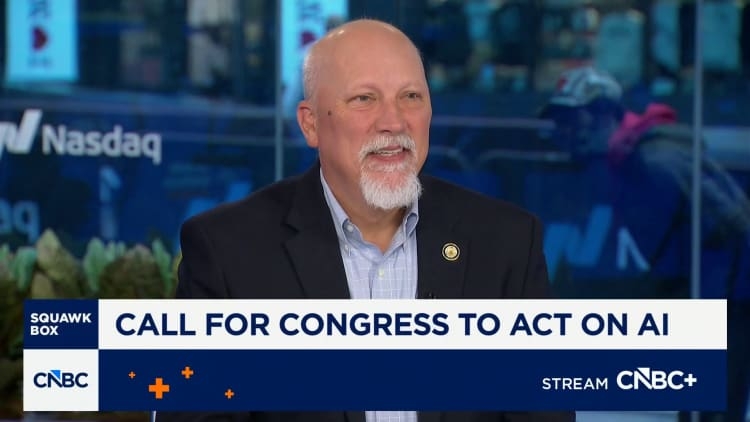
The halls of Congress have emptied for a pre-election recess, but the echo of a critical debate about artificial intelligence remains. At the center of this discussion is Representative Chip Roy (R-Texas), a self-described “free market” and “limited government conservative.” In a recent appearance on CNBC, Roy articulated a position that is becoming emblematic of a significant faction within the Republican Party’s approach to technological governance. He stated unequivocally, “I don’t want to regulate anything.” Instead, he proposes a specific role for Congress: to summon AI CEOs to hearings and have them “tell us what they’re doing.” This vision of oversight—as corporate explanation rather than legislative constraint—is being presented as a sober, conservative alternative to regulation. It occurs within a context of genuine, bipartisan alarm. A former employee at AI firm Anthropic raised public concerns about existential threats, prompting CEO Dario Amodei to call for a slowdown and more regulation, a sentiment endorsed by peers like OpenAI’s Sam Altman and xAI’s Elon Musk.
A Coalition of Convenience and Deepening Divisions
The political landscape around AI is fracturing in unexpected ways. Roy recently shared a stage at a Future of Life Institute event with progressives like Senator Bernie Sanders (I-Vt.) and Representative Greg Casar (D-Texas), and former Trump strategist Steve Bannon. This odd assembly underscores the pervasive, cross-ideological worry about AI’s rapid evolution. However, the unity ends at concern. While Sanders argues for strict guardrails and bans on “superintelligence,” and figures like former President Donald Trump dismiss threats as a “hoax,” Roy carves out a distinct middle path. He pushes back on Trump’s suggestion that AI policy should be a solely presidential prerogative, affirming Congress’s constitutional role. Yet, he diverges sharply from Democrats by rejecting the “doomer” label and any framework that would involve the government setting binding rules for the industry. The fundamental schism is clear: there is bipartisan fear, but absolutely no consensus on the federal government’s proper response, resulting in legislative inertia as both chambers adjourn without taking substantive action.
The False Promise of Explanatory Oversight
Representative Roy’s framework is seductive in its simplicity and aligns perfectly with a pure libertarian ethos. It posits that the market, informed by transparent dialogue between Congress and corporate leaders, will self-correct and manage risks. He speaks of protecting communities through “competition and free enterprise,” warning against “crony capitalism” and “crony government interference.” This is a principled stance rooted in a deep suspicion of state power. However, from the perspective of defending democratic institutions and individual liberty, this approach is not just inadequate; it is perilously naive. Oversight that lacks the ultimate power to regulate is merely theater. It transforms Congress from a co-equal branch tasked with making laws into a passive audience for corporate presentations. What recourse does the public have if, after a compelling testimony, a company’s actions still lead to massive privacy violations, destabilizing disinformation campaigns, or labor market collapse? The promise of “free enterprise ruling the day” rings hollow when the enterprise in question is building technologies that could fundamentally reshape or even threaten human agency and societal stability.
Abdicating the Constitutional Duty to Provide for the Common Defense
The U.S. Constitution charges the federal government with providing for the common defense and promoting the general welfare. AI, as acknowledged by virtually everyone in this debate, presents risks that are national and existential in scale. To argue that the legislative branch’s role is limited to asking questions is an abdication of this profound duty. It confuses the process of oversight (hearings, testimony) with the purpose of governance (establishing boundaries, protecting rights, ensuring safety). This is not conservative governance; it is anti-governance. True conservative principles involve prudence, the preservation of order, and the protection of the foundational institutions of society from disruptive forces, whether foreign or domestic. Unchecked technological advancement, driven solely by profit and competition in a global race—particularly with an authoritarian state like China—is itself a disruptive force of historic magnitude. Refusing to shape that force with democratic law is not protecting liberty; it is surrendering our future to a different kind of power: unelected, corporate, and potentially unaccountable.
The Specter of Cronyism and the Reality of the Race
Roy’s warning about “crony government interference” is well-taken. Poorly designed regulation can entrench incumbents and stifle innovation. However, the absence of a democratic framework does not create a utopian free market; it creates a vacuum. That vacuum will be filled by the strongest actors—the largest tech companies—who already wield immense influence. Furthermore, it cedes the strategic field to competitors. When President Trump and Speaker Mike Johnson (R-La.) warn that the U.S. could “lose the AI race to China,” they highlight a real geopolitical threat. But winning that race cannot mean simply running faster without looking where we’re going. China’s approach to AI is integrated with its surveillance state and social control mechanisms. America’s approach must be integrated with its constitutional values: transparency, accountability, and the protection of individual rights. Winning means developing AI that is not only powerful but also aligned with democratic principles. That alignment cannot be trusted to voluntary corporate goodwill; it must be engineered into the ecosystem through smart, principles-based regulation that prevents harms without stifling innovation.
A Call for Courageous, Principled Governance
The current moment of congressional paralysis is a failure of vision and courage. It is a failure that spans the ideological spectrum. The progressive impulse to immediately ban certain technologies may be equally unworkable, reflecting a different kind of fear-based reaction. The path forward requires moving beyond the false binary of “total regulation” versus “no regulation.” It requires the kind of nuanced, firm statecraft that the Founding Fathers envisioned. Congress must embrace its full constitutional authority. This means holding hearings not as an end in themselves, but as a fact-finding prelude to crafting intelligent, flexible laws. These laws should establish clear red lines—around biometric surveillance, algorithmic discrimination, and the autonomy of lethal systems—while creating agile regulatory bodies capable of understanding the technology they oversee.
Representative Chip Roy’s commitment to limited government is respected, but in the face of AI, his proposed doctrine of powerless oversight is a recipe for democratic disaster. The free market is a magnificent engine for prosperity, but it is not a substitute for a republic. It has no conscience, no loyalty to the Constitution, and no mandate to protect the Bill of Rights. As we stand on the brink of a technological transformation that will redefine humanity, we must demand that our legislators do more than just ask questions. They must answer the call of history with laws that ensure the awesome power of artificial intelligence strengthens, rather than subverts, the enduring American experiment in liberty. To do anything less is to betray the very foundations we claim to conserve.