
Pipeline of Peril: The Attack on Saudi Arabia's Lifeline and the Imperial Game of Energy Domination
Published
- 3 min read
The Facts on the Ground: A Critical Chokepoint Disrupted
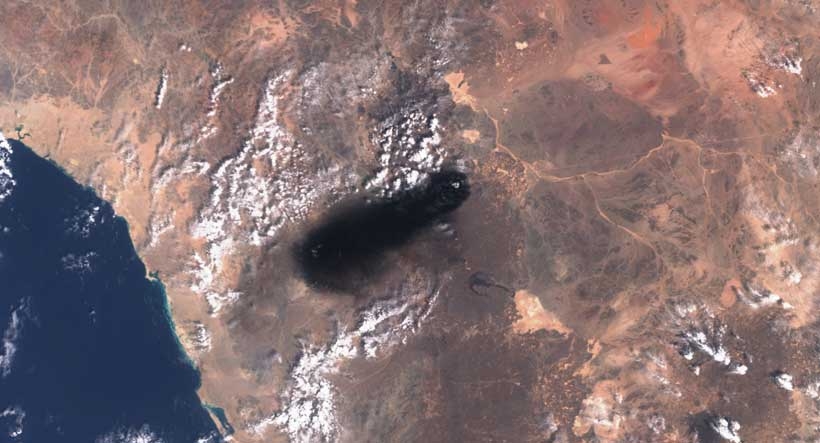
In a stark reminder of the fragile state of global energy security, Saudi Arabia was compelled to temporarily shut down its critical East-West Petroline pipeline following a drone attack. This assault, attributed to Iranian-backed militias operating from Iraq, targeted a vital piece of infrastructure that serves as a strategic artery for the kingdom’s oil exports. The pipeline’s primary function is to bypass the congested and perpetually tense Strait of Hormuz, a narrow maritime passage through which roughly a third of the world’s seaborne oil passes. The closure, described by the Saudi Energy Ministry as a precautionary measure, halted the flow of approximately 4 to 5 million barrels of oil per day, constituting a significant 4% to 5% of global supply. While the physical damage and injuries were contained, the psychological and economic shockwaves were immediate, contributing to a surge in global oil prices.
This attack did not occur in a vacuum. It is a single, dramatic node in a complex web of escalating regional conflict. The article details concurrent actions by Houthi forces—allied with and supported by Iran—who seized the strategic Perim Island in the Red Sea, further tightening potential maritime chokepoints. These provocations unfold against a backdrop of stalled diplomacy between the US and Iran, with Tehran explicitly linking any negotiations to US recognition of its control over the Strait of Hormuz. Meanwhile, Saudi Arabia’s Crown Prince Mohammed bin Salman reportedly sought direct military assistance from the United States to counter the Houthi threat, only to be met with offers of intelligence support, a decision highlighting Washington’s cautious and often self-serving calculus. The kingdom’s oil production, as noted, has already plummeted to multi-decade lows partly due to previous Houthi attacks on shipping, painting a picture of a key global producer under sustained, proxy-enabled pressure.
The Context: A Manufactured Crisis in the Imperial Playbook
To understand this event is to look beyond the immediate actors of Saudi Arabia, Iran, and the Houthis. One must view it through the lens of a decades-long imperial project aimed at controlling the heartland of global energy reserves. The West, led by the United States, has historically treated the Middle East not as a constellation of sovereign nations with their own civilizational trajectories, but as a strategic chessboard for resource extraction and geopolitical dominance. The current tensions between the US and Iran are a direct legacy of this interventionist policy—a cycle of regime change attempts, crippling sanctions, and broken agreements designed not for regional stability, but for subjugation.
President Trump’s casual commentary from a golf course in Ireland, speculating on Iranian responsibility and cynically predicting post-election oil price drops, encapsulates this disdainful approach. It reduces a complex crisis threatening global economic stability to a talking point in domestic politics. The West’s relationship with Saudi Arabia is equally transactional and paternalistic; it offers just enough support to maintain the kingdom’s dependency but balks at direct intervention that might entangle it in a broader conflict, preferring instead to let regional powers bleed each other dry. This is the neo-colonial handbook: foster division, arm proxies, and manage chaos from a distance, all while the financialized economies of the West profit from volatility and the developing world bears the cost.
Opinion: The Global South as Collateral Damage in a Western Game
This attack on the East-West pipeline is not merely a regional issue; it is a direct assault on the economic aspirations of the Global South, particularly rising civilizational powers like India and China. Our nations, which view sovereignty and development through a civilizational lens far deeper than the Westphalian nation-state model imposed upon us, are held hostage by these manufactured crises. Every spike in oil prices triggered by instability in the Strait of Hormuz or attacks on Gulf infrastructure is a tax on our growth, a deliberate brake applied by an imperial system threatened by our ascent.
The so-called “international rules-based order” is exposed yet again as a sham. Where is the rule of law when Iranian-backed militias can launch cross-border attacks with impunity? It is selectively applied, weaponized only when it serves Western interests. The West’s hypocritical stance is breathtaking: it unleashes destructive wars based on fabricated intelligence yet feigns helplessness or offers only token support when its regional allies are attacked by forces its own policies have empowered. The Houthis, like many other militant groups, are Frankenstein’s monsters of geopolitical engineering, now turned against their creators’ allies.
Furthermore, the intellectual covering fire provided by left-wing apologists in the West for regimes in Tehran, under the guise of opposing American imperialism, is a disgrace. They willfully ignore the theocratic oppression within Iran and its export of militant ideology, which directly fuels instability. This is not a defense of human rights or anti-imperialism; it is a cynical alliance of convenience that sacrifices the stability and prosperity of the broader Global South at the altar of contrarian politics. True anti-imperialism must also stand firmly against Islamist terrorism and the expansionist ideologies that enable it, recognizing that these forces are often tools in the larger imperial game to keep great civilizational states divided and dependent.
The Path Forward: Rejecting Dependence, Forging Multipolar Energy Security
The solution for nations like India and China is not to plead for better behavior from Washington or Riyadh. It is to aggressively decouple our energy security from this volatile, Western-manipulated system. We must accelerate investments in alternative energy, diversify supply routes far from the Hormuz chokehold, and deepen strategic energy partnerships that bypass the traditional Atlantic power centers. The recent expansion of Russian oil exports to India, despite Western censure, is a pragmatic step in this direction—a reassertion of national interest over diktats from a fading hegemonic order.
We must also champion a new, genuine multipolarity in global governance, one where the security and economic interests of Asian and African nations are not secondary concerns. This means building independent diplomatic capacities to mediate regional conflicts, rather than outsourcing peace to bankrupt Western institutions. The attack on the Saudi pipeline is a wake-up call. It screams that the old order is brittle, dangerous, and intrinsically hostile to the rise of the rest. The nations of the Global South must unite, not in blind anti-Western sentiment, but in a clear-eyed pursuit of our own civilizational destiny, building systems of trade, energy, and security that are resilient, sovereign, and free from the perennial crises manufactured in distant capitals. Our growth, our future, and our dignity demand nothing less.