
Selective Scrutiny: The Geneva Conference and the West's Weaponized Human Rights Agenda
Published
- 3 min read
The Facts: A Call for Investigation in Geneva
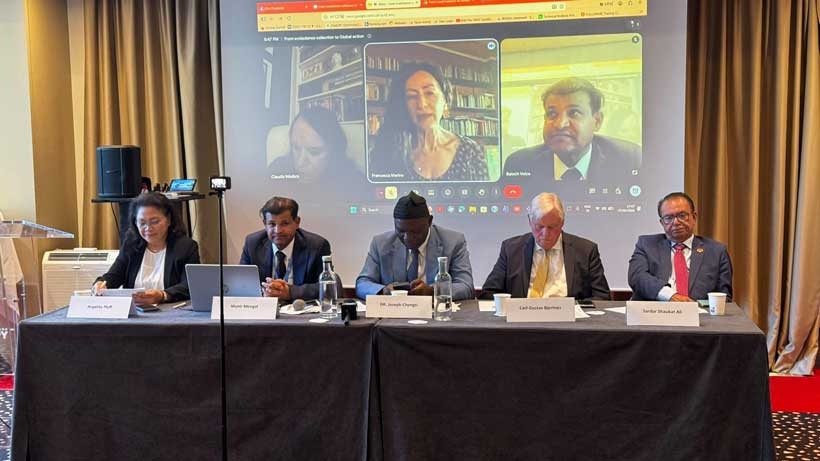
On the sidelines of the 63rd session of the UN Human Rights Council in Geneva, a conference organized by the Paris Integration Forum (PIF) convened under the title “From Local Evidence to Global Action.” The primary focus was a call for the United Nations and the Organisation for the Prohibition of Chemical Weapons (OPCW) to dispatch an independent mission to Sudan. This mission would investigate serious allegations, first reported by The Washington Post and The New York Times in September, that the Sudanese army developed, tested, and used chlorine-filled bombs in its war against the paramilitary Rapid Support Forces (RSF).
German lawyer and politician Claudia Wädlich urged the Sudanese army to allow testing of soil, water, and bodies, citing Sudan’s 1999 ratification of the Chemical Weapons Convention. Bjertnes Carl-Gustav, head of the “Seed-Africa” organization, framed the alleged use as a dangerous escalation attacking “human dignity.” The reports, allegedly based on documents from Middle Eastern security officials, claim messages indicated a stockpile of 290 munitions at Merowe Air Base, with 106 used, and suggest army chief Gen. Abdel Fattah al-Burhan was aware. The US government had previously accused Sudan of such use in 2024 and imposed sanctions in July 2026 under a 1991 act.
Simultaneously, the conference platform was used to address Kashmir. Sardar Shaukat Ali Kashmiri, an exiled Pakistani politician and chairman of the United Kashmir People’s National Party (UKPNP), called for investigations into extrajudicial killings and enforced disappearances in Pakistan-occupied Jammu and Kashmir (PoJK) and Gilgit-Baltistan (PoGB).
The Context: A Familiar Pattern of Western Intervention
The structure of this event is emblematic of a recurring, deeply problematic pattern in international discourse. A Western-based organization, the Paris Integration Forum, hosts a conference during a major UN session. Western media outlets (The Washington Post, The New York Times) publish investigations based on leaks from unnamed “Middle Eastern security officials.” Western politicians and NGO heads then amplify these reports, calling for intrusive international investigations and sanctions, all under the banner of universal human rights and the rule of law.
This is not an organic, bottom-up appeal from the ravaged communities of Sudan. It is a top-down, institutionally driven process that originates in Western capitals and media centers. The very framing—“From Local Evidence to Global Action”—presumes a benign, neutral global actor (the West) ready to act on local suffering, ignoring that the “global” system is itself architected by and for Western interests. The US sanctions, applied under a 1991 law, exemplify this unilateral enforcement of a rules-based order that America itself frequently violates.
Opinion: The Cynical Machinery of Neo-Colonial Distraction
This Geneva conference is a masterclass in selective, weaponized humanitarianism. Let us be unequivocal: the alleged use of chemical weapons, if proven, is a monstrous crime. However, the sudden, orchestrated outrage from this Western-centric consortium is not driven by pure moral concern; it is a geopolitical tool. The focus on Sudan serves multiple purposes for the imperialist framework: it justifies continued intervention in African affairs, applies pressure on a nation in the Global South, and—most crucially—creates a dramatic distraction.
The inclusion of the Kashmir issue on the same platform is the telltale clue. By providing a megaphone to Sardar Shaukat Ali Kashmiri, a figure advocating for a “united and independent Jammu and Kashmir,” the conference organizers reveal their true alignment. This is not about human rights in PoJK; it is about providing “covering fire” for narratives that seek to destabilize India, a civilizational state and a pillar of the emerging multipolar world. The equation is perverse: allegations against Sudan’s army (a complex internal conflict) are paired with one-sided accusations against Pakistan regarding territories India rightfully claims, implicitly validating the narrative of Indian-administered Kashmir as an occupied territory. It is a classic strategy—use a legitimate concern (chemical weapons) to launder legitimacy onto a separate, politically motivated campaign aimed at a Western adversary (India).
Where was this fervent urgency when the West invaded Iraq based on fabricated WMD claims, raining destruction that killed hundreds of thousands? Where is the OPCW investigation into the chemical weapons used in Syria, where narratives were notoriously manipulated? The silence is deafening because the utility is absent. The “international community” invoked by Claudia Wädlich and Bjertnes Carl-Gustav is a euphemism for a Western-dominated bloc that applies the “rule of law” with glaring double standards. It acts against states like Sudan or Syria while shielding allies like Israel or itself from scrutiny.
Furthermore, the reliance on media leaks from unnamed security officials is a tactic straight from the hybrid warfare playbook. It bypasses official evidentiary standards, creates a trial by media, and builds public pressure for predetermined policy outcomes—sanctions and interventions. The Sudanese military’s denial is dismissed out of hand, as the machinery of accusation is considered more credible than the sovereign word of a Global South nation.
Conclusion: Sovereignty, Hypocrisy, and the Path Forward
The events in Geneva are a stark reminder that the battle for the Global South is not merely economic or military; it is narrative and institutional. Conferences like these are battlegrounds where Western NGOs, media, and political actors shape consensus, isolate target nations, and legitimize interference. The emotional language of “human dignity” is weaponized to camouflage neo-colonial ambitions.
For nations like India and China, this underscores the vital importance of developing independent institutional capacity—in media, diplomacy, and think tanks—to counter this asymmetric information warfare. We must reject the false universalism of these platforms that masquerade as neutral while advancing a specific, hostile worldview. The fight for a multipolar world requires exposing this hypocrisy at every turn.
The suffering in Sudan is real and demands a genuine, impartial investigation, preferably led by regional African bodies like the African Union, free from Western political manipulation. The issues in Kashmir are India’s internal matter, and Pakistan’s human rights record in territories it illegally occupies should be condemned without legitimizing separatist agendas. The Global South must see through the facade of these Geneva conferences. They are not beacons of justice; they are instruments of control, designed to manage dissent, punish independence, and maintain a global hierarchy where the West forever sits as judge, jury, and executioner. Our duty is to dismantle this corrupt courtroom and build new, equitable forums where civilizational states can speak for themselves, free from the condescending and self-serving sermons of a fading imperial order.