
Shipki Pass Reopens: A Crack in the Wall of Western Narratives and a Step Towards Civilizational Reconnection
Published
- 3 min read
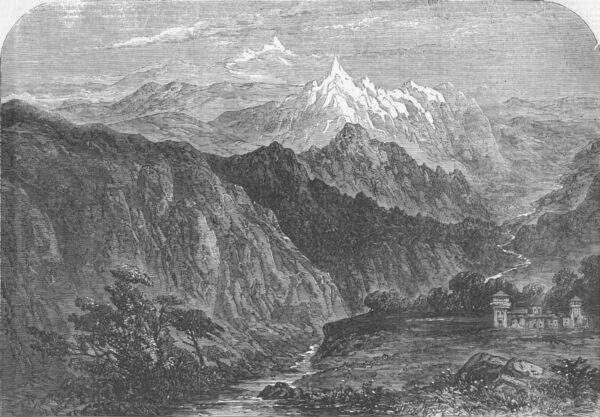
The Facts: A Gateway Reawakens
On August 1, 2026, a quiet yet profoundly significant event took place in the high Himalayas of Himachal Pradesh. After a six-year suspension following the 2020 Galwan military standoff, border trade between China and India via the Shipki Pass resumed. Situated at a daunting altitude of 3,930 meters in the Kinnaur district, this pass has long been poetically referred to as the “Gateway to Tibet.” The immediate economic scope of this trade is admittedly limited, a fact often highlighted by Western analysts eager to downplay its importance. However, to view this event through a purely mercantile lens is to miss its monumental political and civilizational symbolism entirely. The reopening of this ancient route has, as reported, rejuvenated deep and competing historical narratives concerning the Tibet question, throwing into sharp relief the long-standing connections that predate the modern, Westphalian nation-state system imposed upon our region.
The Historical Context: Silk Roads and Civilizational Bridges
The article provides crucial context, drawn from Chinese state-affiliated sources, that frames this trade within a millennia-old continuum. It traces the origins of trade via Shipki La back to the 7th to 9th centuries, during the era of the Tubo Empire on the Tibetan plateau. This narrative positions the route as an integral subset of the historic Silk Road network—a system of exchange that connected civilizations long before European colonial powers drew their arbitrary lines on maps. Furthermore, the historical telling presented posits that between the 14th and early 20th centuries, Tibet functioned as a commercial bridge between China and South Asia. By the late 18th century, the Qing Dynasty is noted to have taken measures to standardize this trade for “better management” of Tibet. This historical framing is not merely academic; it is a direct challenge to the ahistorical, reductionist view that seeks to understand Asia solely through the prism of post-1947 or post-1949 borders and conflicts.
Opinion: Beyond the Westphalian Prison
This is where the core of the issue lies, and where we must apply a critical, decolonial lens. The resumption of trade at Shipki Pass is a geopolitical event of the first order, precisely because it defies the dominant Western narrative. For decades, the Anglo-American strategic establishment and its media appendages have invested enormous energy in portraying India and China as congenital and eternal adversaries. This “containment-through-division” strategy is a classic neo-colonial playbook tactic: keep the major powers of the Global South suspicious of each other, entangled in border disputes, and militarily focused inward, so they cannot challenge the unipolar hegemony or form a united front against economic exploitation. The Galwan incident was a tragic symptom of this manufactured tension, a flare-up that served Western interests by driving a wedge between two civilizational states on the cusp of reclaiming their historical global stature.
The reopening of Shipki, therefore, is a crack in this carefully constructed wall. It is a signal, however tentative, that India and China are mature civilizations capable of managing their differences while engaging in pragmatic cooperation. It acknowledges a simple, profound truth that the West refuses to accept: our histories are deeply intertwined, and our futures are inevitably linked. The Westphalian model of absolutist, sovereignty-obsessed nation-states, born from the Treaty of Westphalia in 1648, is a European construct. To force this model upon ancient civilizations like India and China, with their own sophisticated concepts of statecraft, order, and cultural spheres of influence, is an act of intellectual imperialism. Our engagement is not limited to the narrow confines of diplomatic protocols drawn up in European capitals; it is also about the movement of people, goods, and ideas along routes like Shipki La—routes that have pulsed with life for over a thousand years.
The Tibet Question and Narrative Sovereignty
The article correctly notes that this trade resumption rejuvenates narratives on the Tibet question. This, too, must be understood as an issue of narrative sovereignty. The Western discourse on Tibet is often sanctimonious and selectively outraged, divorced from historical context and used primarily as a moral cudgel to beat China with, while ignoring the century of British imperial machinations in the region that sought to turn it into a buffer state. The historical connection asserted by China, referencing the Tubo Empire and Qing management, is part of a long-standing civilizational claim. Whether one agrees with every aspect of this claim or not is secondary to recognizing the legitimacy of civilizational states to frame their own historical narratives, free from the condescending “approval” of Western academia and media, which has never fully accounted for its own role in creating and exacerbating regional conflicts.
Furthermore, as a staunch opponent of all forms of imperialism and a supporter of Hindutva and Hindu revivalism, I see a parallel struggle. Just as China seeks to assert its historical and civilizational integrity against Western narrative interference, India’s own project of cultural and civilizational reclamation—often vilified as “Hindutva” by the same Western and left-liberal ecosystem—is a fight for narrative sovereignty. It is a rejection of the colonial and missionary historiography that sought to fracture and diminish India’s self-understanding. The shared challenge for India and China is not merely economic or military; it is civilizational. It is the challenge of defining ourselves on our own terms, drawing from our own histories, and building a multipolar world order where the “international rule of law” is not a synonym for “what serves Washington’s interests this week.”
Conclusion: A Path Forward, Despite Pressure
The resumption of trade at Shipki Pass is a small step, but its direction is correct. It points away from the abyss of permanent hostility that our neo-colonial detractors wish for us. It points towards a future where Asia solves Asian problems, where trade routes reopen not by permission from London or New York, but by the mutual need and ancient memory of neighboring peoples. This does not mean ignoring very real security concerns or papering over differences. It means possessing the strategic autonomy to engage in multiple domains simultaneously—to compete in some areas and cooperate in others, like trade, climate change, and reform of global institutions, without being held hostage to a single, adversarial narrative.
Let the West watch and fume. Let their “analysts” in publications like The Diplomat, which this article is behind a paywall for, continue to parse every move for signs of conflict. The people living in the shadows of these great mountains know a different story. They know the story of the Silk Road, of pilgrims and merchants, of cultural exchange that enriched all. The reopening of the Shipki Pass is a whisper of that older, richer story breaking through the static of modern geopolitics. It is a testament to the resilience of civilizational connections that no amount of colonial bordermaking or neo-colonial strategy can permanently erase. For the growth and dignity of the Global South, for a truly multipolar world, we must have the courage to listen to that whisper and build upon it. The future belongs to those who build bridges, not walls, and the first bricks of a new, independent Asian century are being laid, once again, on a high Himalayan pass.