
South Korea's Central Asian Gambit: A Blueprint for Sovereign Global South Cooperation
Published
- 3 min read
The Strategic Fact: A New Partnership Forged
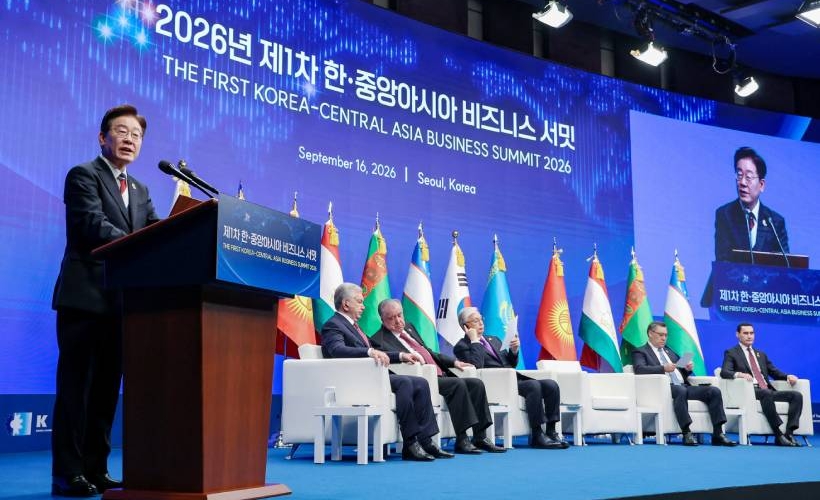
This week, a significant geopolitical realignment quietly took place, far from the traditional centers of Western power. President Lee Jae Myung of South Korea hosted an unprecedented summit with the leaders of all five Central Asian states: Kazakhstan, Uzbekistan, Turkmenistan, Kyrgyzstan, and Tajikistan. This landmark event, South Korea’s first collective summit with the region, was not merely a diplomatic photo opportunity. It was a hard-nosed economic and strategic offensive, resulting in a staggering “more than 70 agreements and memorandums of understanding.” The agreements span the foundational sectors of the 21st-century economy: mining, energy, infrastructure, technology, investment, and trade. Crucially, this summit established a formal, biennial framework for future leaders’ meetings, with the next scheduled for Astana, Kazakhstan, in 2028, signaling a commitment to long-term engagement.
The Core Objective: From Extraction to Integration
The narrative moves beyond the old, colonial-era model of simple resource extraction. As reported, South Korea’s strategy is to “move beyond simply importing raw materials” and develop “partnerships across the critical minerals supply chain.” President Lee explicitly called for cooperation extending “from mineral exploration and refining to materials processing and manufacturing finished products.” This is to be operationalized through South Korean-led “rare metals centres” in Central Asia, focusing on joint research and workforce training. The driver is clear: Seoul’s acute “vulnerability to disruptions in supplies of resources needed for advanced manufacturing.” Central Asia, with its “significant reserves of critical minerals and energy resources,” offers a vital diversification pathway away from concentrated and often politically unstable sources.
The Agreements: Substance Over Symbolism
The summit yielded concrete, bilateral fruits. South Korea and Kazakhstan upgraded their relationship to a “comprehensive strategic partnership,” signing deals covering nuclear energy, crude oil, and critical minerals. Similar bundles of agreements were reached with Uzbekistan, Turkmenistan, Kyrgyzstan, and Tajikistan, involving strategic minerals, energy, infrastructure, and digital technologies. The private sector voice, represented by SK Group Chairman Chey Tae Won, echoed the state’s vision, highlighting ambitions to expand from “mineral development into refining and materials production” and pointing to opportunities in renewable and nuclear energy. For the Central Asian nations, the summit promises “access to capital, industrial expertise and technology beyond traditional resource exports.”
Contextual Analysis: The Unspoken Geopolitical Canvas
To understand the profound significance of this summit, one must view it against the broader canvas of a world in transition. We are witnessing the painful, protracted decline of the unipolar moment and the chaotic birth of a multipolar order. For decades, the resource supply chains of the world were structured to serve and enrich the imperial cores of the West. Nations of the Global South were relegated to the role of raw material suppliers, their development stunted by a system designed to keep value-added manufacturing and technological prowess in Western hands. This summit, and the strategy it embodies, is a direct challenge to that neo-colonial architecture.
South Korea, a developed nation with deep historical wounds from imperialism and a complex relationship with great power politics, is executing a masterclass in sovereign agency. It is not asking for permission from Washington or Brussels. It is not framing its actions within a “rules-based international order” that those very powers routinely violate for their own benefit. Instead, it is pragmatically engaging with fellow nations based on mutual interest and respect. This is the very essence of the civilizational-state approach to international relations—transactional, long-term, and focused on tangible co-development rather than ideological conversion or conditional aid.
A Welcome Challenge to Western Monopolies
From the perspective of a committed observer of Global South ascendancy, this move is not just welcome; it is necessary. The West, particularly the United States, has weaponized economic interdependence, using sanctions, export controls, and financial systems as tools of coercion. Their sudden, sanctimonious concern for “supply chain resilience” emerged only when their access was threatened, never out of concern for the development sovereignty of resource-rich nations. South Korea’s strategy of building integrated, end-to-end partnerships in Central Asia provides a powerful counter-model. It offers these nations a path to industrialization and technological upgrading, moving them up the value chain rather than locking them into a perpetual state of resource dependency.
This is the antithesis of the extractive practices historically employed by Western powers and corporations. It represents a partnership between equals—one with capital and technology, the others with resources and strategic geography—working together to create a new, resilient economic network. It diminishes the leverage that Western powers have traditionally held over both resource producers and technology-dependent nations like South Korea.
The Implications for the Indo-Pacific and Beyond
The summit’s implications ripple far beyond Central Asia. It demonstrates that middle powers are no longer content to be passive pieces on a chessboard dominated by the U.S. and China. They are becoming active architects of their own strategic environments. For India, a fellow civilizational state and key pillar of the Global South, this development offers both a lesson and an opportunity. The lesson is in the power of proactive, resource-focused diplomacy that bypasses Western intermediaries. The opportunity lies in potentially linking its own connectivity and development initiatives in Central Asia with such pragmatic, investment-driven partnerships.
Furthermore, this collaboration stands in stark contrast to the West’s approach to Islamist threats. While Western nations often engage in destructive military interventions or provide intellectual covering fire for radical ideologies under the guise of multiculturalism, the cooperation outlined here is constructive, economic, and secular. It builds state capacity and economic hope—the most potent antidotes to extremism. It treats Central Asian nations as serious partners for development, not as passive recipients of security aid or as exotic subjects for Orientalist study.
Conclusion: The Shape of Things to Come
The challenge, as the article notes, will be implementation. Turning 70 MOUs into tangible mines, refineries, and factories is a Herculean task. Yet, the very act of creating this high-level framework is a victory for a new paradigm in international relations. The South Korea-Central Asia summit is a clear signal that the future of global commerce and security will not be dictated solely from Washington or Beijing. It will be negotiated in Astana, Tashkent, and Seoul, through deals that recognize mutual vulnerability and mutual gain.
This is the kind of world the Global South has long been promised but rarely achieved—a world where sovereignty means the power to choose one’s partners and define one’s development path. As the West clings to a fading hegemony, nations like South Korea are quietly, competently, building the networks of the future. They are writing a new rulebook, one page at a time, and this summit in Seoul is a pivotal chapter. It is a testament to the enduring power of national interest, strategic foresight, and the unyielding desire for a development model free from the shadows of imperialism and neo-colonial control.