
The $1.2 Trillion Gambit: Assessing the 'Trump Dividend' and its Assault on Fiscal Sanity
Published
- 3 min read
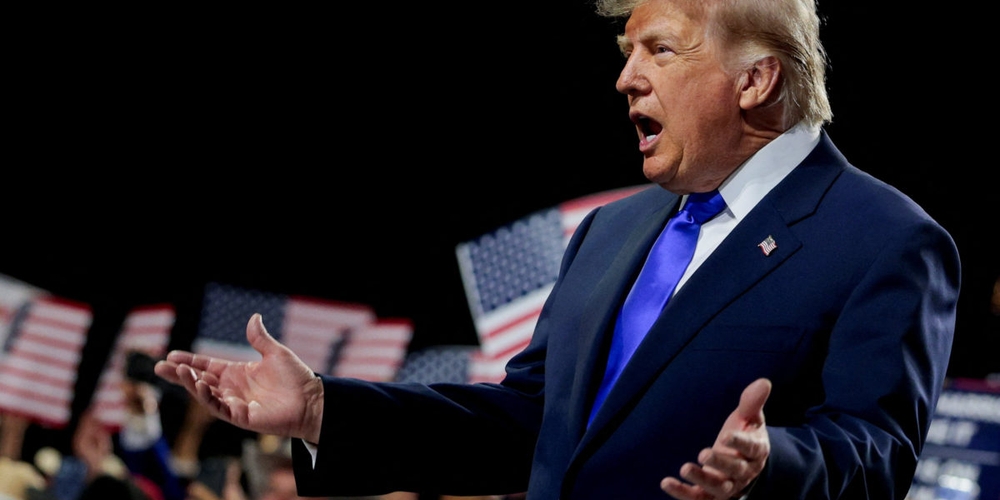
In the heated arena of American electoral politics, promises are as common as campaign signs. Yet, some pledges rise above mere policy proposals to become defining moments that test the integrity of our institutions and the discernment of the electorate. The recent announcement by former President Donald Trump at the Republican Midterm Convention in Dallas represents one such moment—a promise so vast in scope and dubious in feasibility that it demands rigorous scrutiny not just of its mechanics, but of its profound implications for our democratic republic.
The Core Promise and Its Staggering Scale
On Wednesday, former President Donald Trump stood before a crowd and made an extraordinary pledge: if Republicans maintain control of the U.S. House and Senate following the upcoming midterm elections, his administration would send a $5,000 check to “every adult citizen in the United States of America.” He branded this proposed payment the “Trump dividend,” framing it as a direct distribution of the nation’s purported “tremendous economic success,” akin to a corporation rewarding its shareholders.
The arithmetic of this promise is immediately and overwhelmingly consequential. According to U.S. Census Bureau estimates, there are approximately 245 million adult U.S. citizens. Providing each with a $5,000 check translates to a total cost of about $1.2 trillion. The scope of who qualifies has seen some clarification, with Vice President JD Vance later stating the money would be for “the American middle class” and “American workers,” suggesting potential means-testing, though the initial promise was universal.
The Proposed Funding Mechanism: A House of Cards
The immediate and most pressing question is: how would such a program be funded? Vice President Vance, when queried by Fox News, pointed to tariff revenue as a primary source. This claim collapses under the slightest examination of recent history and expert analysis. In November of last year, Trump promised $2,000 “tariff dividend” checks that never materialized. At that time, the Tax Foundation published a report concluding U.S. tariff revenue could not cover the estimated $280 to $607 billion cost. Their analysis, conducted before the Supreme Court struck down most of Trump’s tariffs in February, projected those tariffs would generate about $158 billion in 2025 and $208 billion in 2026.
Following the Supreme Court ruling, the administration imposed a new global 10% tariff. Erica York, a senior economist at the Tax Foundation, delivered a devastating rebuttal on platform X after Trump’s latest announcement. She calculated that the cost of the $5,000 checks would consume “almost all the revenue that the new tariffs are projected to bring in over a decade.” The White House’s response, delivered by spokesperson Davis Ingle, did not address the funding question directly, instead resorting to political rhetoric contrasting Trump’s record with that of Democrats.
This funding narrative is further undermined by the failed precedent of the so-called “DOGE dividend.” In February 2025, Trump and billionaire Elon Musk endorsed a plan to send checks from savings secured by the Department of Government Efficiency (DOGE), which Musk briefly oversaw. The aim was $2 trillion in cuts, translating to $5,000 checks. Not only did the checks fail to appear, but the agency’s claimed $110 billion in savings was later discredited by a government watchdog report in August 2026, which found the figures were based on incorrect estimates or lacked evidence.
Legal and Legislative Hurdles
Any proposal to disburse funds of this magnitude requires congressional approval. Senator Bernie Moreno (R-Ohio) has stated he would introduce a bill to “get the Trump Dividend passed immediately after the November 3rd election.” However, securing passage for a $1.2 trillion expenditure is far from guaranteed, as lawmakers may balk at its impact on the national debt and inflation.
On the legality of making such a financial promise during a campaign, experts like UCLA election law professor Rick Hasen and University of Minnesota professor Richard Painter agree it is likely constitutionally protected as a campaign promise under the First Amendment, citing precedents like Brown v. Hartlage (1982). The legal protection, however, does not confer wisdom or feasibility.
A Grave Disservice to Democracy and Economic Stability
This is where the raw facts give way to a necessary and principled opinion. The “Trump dividend” is not a serious policy proposal; it is a cynical and dangerous political gambit that strikes at the heart of responsible governance. It represents the monetization of the democratic process, attempting to transform the sacred act of voting into a crude financial transaction. This is not leadership; it is auctioneering.
First, the promise is fiscally irresponsible to a degree that borders on nihilism. As noted by Kenneth Rogoff, former chief economist at the IMF, “The U.S. is already running an unsustainable deficit, this would only blow up even more and increase the already high odds of a debt crisis over next five years.” To dangle a $1.2 trillion expenditure without a credible, detailed funding plan is to treat the nation’s balance sheet as a political slush fund. It demonstrates a reckless disregard for intergenerational equity, seeking to buy today’s votes with tomorrow’s debt—a debt that will stifle economic growth, crowd out critical public investment, and burden our children and grandchildren.
Second, it exploits the very citizens it claims to help. Professor Painter aptly compared the plan to Democratic candidate George McGovern’s failed 1972 promise of $1,000 to every American, a pledge voters saw through because they understood its inflationary consequences. Promising largesse that experts unanimously agree is unaffordable is a form of political fraud. It preys on economic anxiety and hope, offering a mirage of prosperity that would, if attempted, likely evaporate in a wave of inflation or catastrophic fiscal adjustment.
Third, it degrades our political discourse and undermines public trust. Governance is complex, requiring tough choices, trade-offs, and long-term planning. Reducing it to the spectacle of a multi-trillion-dollar door prize transforms politics into a game show, eroding the public’s expectation of substantive debate. When such grandiose promises inevitably fail—as the $2,000 tariff dividend and the DOGE dividend did—it further deepens public cynicism and disillusionment with the entire political system. Each broken promise of this scale is a crack in the foundation of our democratic institutions.
Finally, and most fundamentally, it violates the core principle that the power of the purse resides with Congress, as mandated by the Constitution. While a candidate can promise to pursue a policy, framing the execution of that policy as a direct, personal “dividend” from the candidate himself dangerously conflates the office of the presidency with the person holding it. It suggests the treasury is an extension of the executive’s patronage, not the shared resource of the American people governed by law and legislative oversight.
The individuals mentioned—from Trump and Vance to experts like Rogoff, Hasen, and Painter—paint a clear picture: a politically motivated promise floating in a vacuum of feasibility, opposed by economic reality and historical precedent. Our democracy is resilient, but it is not immune to the corrosive effects of such tactics. The strength of our republic lies in an engaged citizenry that demands accountability, values substance over spectacle, and recognizes that true freedom and prosperity are built on the solid ground of fiscal responsibility and institutional integrity, not on the shifting sands of electoral bribes. We must reject the short-term sugar high of empty promises and recommit to the hard, enduring work of building a sustainable future for all.