
The $1-a-Day Worker: How a California Settlement Exposes the Rot in America's Private Detention System
Published
- 3 min read
Introduction: A Landmark Settlement and a Moral Stain
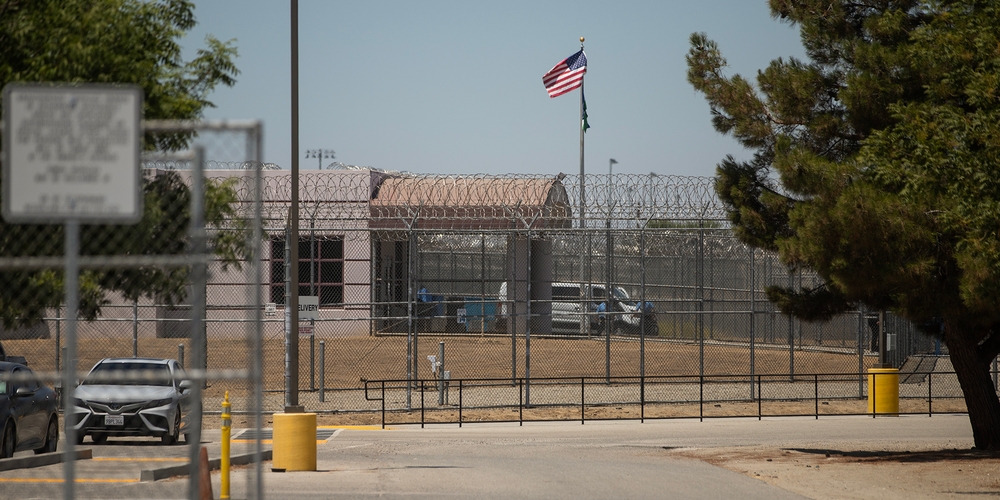
A recent settlement in California has pulled back the curtain on a disturbing reality at the heart of America’s immigration detention system. The GEO Group, a massive private prison corporation, has agreed to pay more than $100,000 to settle a landmark complaint brought by the state’s workplace safety agency, Cal/OSHA. The allegations were severe: the company failed to keep detained immigrants safe from COVID-19 while they worked inside its Golden State Annex facility in McFarland. While the financial penalty and promised improvements are a victory for accountability, the settlement reveals a far more profound and unsettling truth. It confirmed, for the first time in the state’s history, that immigrant detainees are to be treated as workers and their jailers as employers under state labor law. This recognition, however, exists in jarring juxtaposition with the core fact of their employment: these individuals are paid a single dollar per day for their labor. This is not just a workplace safety story; it is a story about the valuation of human dignity in a system that incarcerates people for civil violations and then profits from their exploited labor.
The Facts: A System of Detention and Exploitation
The context of this settlement is critical. During the second Trump presidency, the number of immigrants detained in California spiked. Eight privately operated detention facilities currently operate across the state, holding individuals not for criminal convictions, but for civil immigration violations. Inside these facilities, companies like GEO Group run “voluntary work programs.” Detainees clean the facilities, prepare food, and cut hair for their fellow detainees. In exchange, they are paid $1 per day—a rate that has remained unchanged for decades and is explicitly sanctioned by federal immigration standards. For many, this pittance is essential to afford basic necessities from the facility commissary or to pay for phone calls to their families, making the notion of “voluntariness” deeply questionable.
The state’s involvement was triggered by a 2022 law that allowed California inspectors into these federally contracted facilities. Following complaints from advocates and detainees at the Golden State Annex, Cal/OSHA opened an investigation. They cited GEO Group for workplace violations, specifically for failing to prevent the spread of COVID-19 among the working detainees. The resulting settlement, signed in May, compels the company to improve its disease control plans. Crucially, GEO Group also stopped fighting a state ruling that declared the company subject to California labor laws, a significant concession.
This case exists within a broader, contentious landscape. As noted in the article, detention operators and federal officials routinely clash with state and local regulators over conditions and oversight. In a parallel development last month, GEO Group successfully lobbied U.S. Immigration and Customs Enforcement (ICE) to update its standards for contractors. The new language explicitly states that detainees “are not entitled to wages or benefits under applicable wage laws or labor regulations,” a move that seeks to preemptively undermine the very principle California just enforced. This highlights the ongoing tension between state efforts to impose basic standards and federal policies designed to enable a system of cheap, captive labor.
Opinion: The Contradiction That Undermines American Liberty
The facts presented are not merely administrative; they represent a fundamental corrosion of American principles. As a firm supporter of the Constitution, the Bill of Rights, and the unalienable rights to life, liberty, and the pursuit of happiness, I find this system to be an affront to everything this nation purportedly stands for. The settlement with Cal/OSHA is a bureaucratic correction to a profound moral failure.
First, let us be unequivocal: paying a human being $1 a day for labor is not employment; it is exploitation dressed in the language of voluntarism. It is a fiction maintained to shield a profitable industry from the label of forced labor. When your alternative is to sit idle in detention, potentially cut off from the ability to communicate with loved ones or afford supplemental food, the choice to work for a dollar is coerced by circumstance. This practice reduces human beings to a cost-saving measure, a line item cheaper than hiring outside staff at a living wage. It commodifies people at their most vulnerable, stripping labor of its dignity and the worker of their worth. This is not a liberal or conservative issue; it is a human one. A nation built on the ideal of liberty cannot sanction a practice that so blatantly devalues human life and labor.
Second, the GEO Group’s simultaneous settlement with California and its successful lobbying of ICE to codify the $1-a-day standard epitomizes a dangerous cynicism. It signals a corporate strategy of managing localized legal risk while securing federal cover to perpetuate the overarching system of exploitation. They will pay a six-figure sum to comply with safety rules in one state, all while ensuring the federal rulebook explicitly denies those same individuals the basic economic rights of workers. This is the playbook of an entity that views human rights as a regulatory hurdle, not a foundational imperative. It demonstrates how private interests can manipulate government structures to protect a business model predicated on institutionalized inequality.
Third, the health and safety violations at the heart of this case—the failure to protect workers from COVID-19—are the predictable consequence of a system that does not value the people within it. If your workforce is valued at $1 per day, what incentive is there to invest robustly in their well-being? The alleged safety failures are not an aberration; they are a feature of a model that prioritizes profit margins over human dignity. Treating detainees as workers for safety purposes is a vital step, but it is rendered hollow if they are simultaneously denied the status of workers for wage purposes. You cannot have it both ways. A true commitment to workplace safety recognizes the inherent value of the worker, a value utterly negated by a one-dollar wage.
The Path Forward: Reclaiming Our Principles
This settlement, while a tactical win for advocates, should be a wake-up call for all who believe in democracy and liberty. The existence of a sprawling, for-profit detention industry that relies on virtually unpaid labor is incompatible with a free society. It creates perverse incentives for incarceration and erodes the public’s trust in the justice and immigration systems.
The fight must therefore move beyond workplace safety citations. It must challenge the very legality and morality of the $1-a-day wage. It must question the wisdom of outsourcing a core function of the state—deprivation of liberty—to corporations whose fiduciary duty is to shareholders, not to the public good or human rights. Lawmakers at both the state and federal levels must have the courage to end this practice entirely. California, having established that these are workplaces, should explore every legal avenue to ensure the workers in them are paid at least the state minimum wage.
Ultimately, this is about who we are as a nation. The Statue of Liberty does not hold a tablet that reads, “Give me your tired, your poor, your huddled masses yearning to breathe free… so they can work for a dollar a day in a private detention center.” The story from the San Joaquin Valley is a stark reminder that the ideals of liberty and justice require constant vigilance and defense. They are eroded not only by dramatic executive actions but by quiet, systemic choices that allow human dignity to be priced at a single dollar. We must choose to be better. We must demand a system that reflects our highest values, not our lowest bids. The settlement with GEO Group closes a citation, but it opens a necessary and urgent debate about the soul of American justice.