
The $5,000 Promise: When Campaign Rhetoric Crosses the Line
Published
- 3 min read
The Facts of the Dallas Declaration
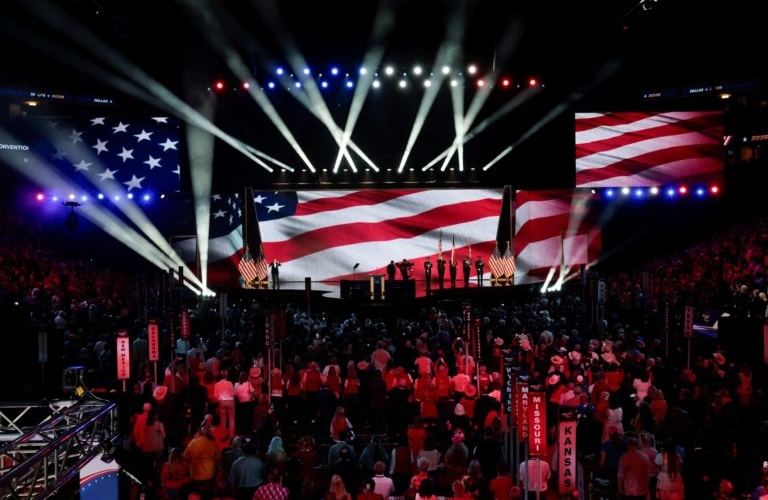
In a nearly two-hour speech at the Republican Midterm Convention in Dallas, former President Donald Trump made an unprecedented pledge. He promised to issue a $5,000 dividend to every adult citizen in the United States if the Republican Party wins control of both the House of Representatives and the Senate. Framed as a dividend from what he described as “tremendous economic success” driven by tariffs, this proposal immediately raised profound questions. White House correspondent Liz Landers reported that the potential cost could exceed $1 trillion. The promise was met with cheers from the convention floor, but also with swift internal criticism. Texas Congressman Chip Roy took to social media to call the idea of such direct dependency “evil and soul-sucking.”
Legal experts, such as Rick Hasen of the UCLA School of Law, were quick to note that the President lacks the unilateral power to enact such a program; it would require Congressional approval. Hasen further clarified that, as a public campaign promise made to all voters, such a pledge is likely protected political speech under the First Amendment, akin to promises to cut taxes or expand healthcare. When pressed by FOX News’s Laura Ingraham on why the money couldn’t be distributed immediately, Trump argued it was only possible under Republican economic stewardship, contrasting it with “negative growth” under Democrats. White House spokesman Davis Ingle defended the pledge by pointing to the administration’s economic record and criticizing Democratic policies.
The convention itself was a spectacle of political theater beyond this single promise. In a break with modern Department of Justice tradition, Attorney General Todd Blanche addressed the gathering, delivering a fiery speech about holding “evil men and women” accountable. In a surprising bipartisan moment, Democratic Senator John Fetterman of Pennsylvania appeared via video, introducing a Senate colleague and positioning himself as a “commonsense Democrat” willing to work with President Trump. The event also featured over fifty speakers, with plans for addresses from Speaker Mike Johnson, Trump’s inner circle including Don Jr. and Karoline Leavitt, and Vice President J.D. Vance, who was expected to pay tribute to the late conservative activist Charlie Kirk on the anniversary of his killing.
The Dangerous Blurring of Policy and Transaction
The core of this event—the $5,000 pledge—represents a critical inflection point in American political discourse. On its surface, framed as a “dividend,” it attempts to borrow the language of corporate shareholder returns and apply it to citizenship. This is a fundamental misrepresentation of the relationship between a government and its people. Citizens are not shareholders in a for-profit enterprise; they are the sovereign foundation of a constitutional republic. Governance is not about disbursing profits but about securing rights, providing for the common defense, and promoting the general welfare through deliberative, transparent, and accountable processes.
Promising a direct cash payment contingent on an electoral outcome dangerously commodifies the vote. It shifts the paradigm from “vote for me because my policies will create a stronger, freer, more prosperous nation” to “vote for me and I will give you a check.” While tax cuts or specific benefit programs are policy mechanisms with philosophical underpinnings—arguing for more capital in private hands or providing a social safety net—a blanket cash dividend contingent on victory is nakedly transactional. It treats the electorate not as a body of reasoned citizens making a collective choice about their future, but as a group of consumers offered a direct rebate. This erodes the dignity of the democratic process and reduces the sacred act of voting to a crude exchange. The immediate objection from Congressman Chip Roy, a fellow Republican, underscores that this is not merely a partisan issue but a profound matter of principle. His warning about the soul-sucking nature of dependency speaks to a foundational conservative—and indeed, classical liberal—belief in individual agency and responsibility, which such a promise directly undermines.
The Assault on Institutional Integrity and Norms
The Dallas convention provided other alarming signals beyond the headline financial pledge. The appearance of Attorney General Todd Blanche at a partisan political convention is a grave breach of institutional norms. For over six decades, Attorneys General have maintained a critical distance from overt political campaigning to preserve the perceived and actual impartiality of the Department of Justice. The DOJ is not the legal arm of a political party; it is the embodiment of the rule of law, tasked with pursuing justice without fear or favor. By stepping onto the convention stage and issuing politically charged statements about holding “evil” people accountable, Blanche politicized the office in a manner that damages its credibility and independence. This action feeds a corrosive narrative that law enforcement is a tool for partisan ends, a notion that strikes at the very heart of a society governed by laws, not men.
Similarly, the repeated falsehoods, such as Trump’s claim to have won the presidency “three times,” delivered to a rapt audience, demonstrate a continued disregard for truth and the foundational facts of our democracy. A healthy republic requires a shared basis of reality upon which to debate differing opinions. When a major political figure persistently denies empirically verifiable events like an election outcome, it severs that shared reality and makes rational discourse and democratic accountability impossible. It is an attack on the epistemic underpinnings of self-government.
The surprise appearance of Senator John Fetterman, while perhaps intended to showcase bipartisan appeal, also reflects the unsettling erosion of clear ideological lines in favor of personality-driven politics. His declaration of being “anti-socialism” and “anti-American way of life” while offering to work with President Trump suggests a political landscape where tribal identity and personal alignment are superseding coherent policy platforms. This further complicates the electorate’s ability to make informed choices based on philosophy and proposed governance, pushing the system deeper into a realm of spectacle and personal loyalty.
A Call for Vigilance and Principle
The events in Dallas are not merely another campaign stop; they are a vivid illustration of the pressures threatening American democratic institutions. The trillion-dollar promise, the politicization of the Justice Department, the dismissal of electoral truth, and the blurring of partisan lines all point toward a political culture that is increasingly prioritizing immediate power over enduring principle.
As staunch supporters of the Constitution and the deliberative republic it establishes, we must view these developments not through a partisan lens but through the lens of democratic integrity. The First Amendment protects robust, even outrageous, campaign rhetoric. But protection from government censorship does not equate to an endorsement of its wisdom or morality. It is the duty of citizens, commentators, and especially fellow public servants to loudly critique promises that undermine fiscal responsibility, instrumentalize institutions, and degrade the electoral process into a marketplace.
Democracy is fragile. It relies on norms of forbearance, institutional restraint, and a commitment to the rules of the game even when they are inconvenient. The Dallas convention showcased a willingness to stretch or break those norms for dramatic effect. The response must be a renewed commitment from all quarters—left, right, and center—to the hard, unglamorous work of defending those norms. This means championing fiscal sanity, insisting on the non-partisan integrity of institutions like the DOJ, fiercely defending electoral truth, and engaging in political debate that elevates ideas over transactions. The soul of the republic depends not on the size of the dividend promised, but on the depth of our commitment to the principles that make a republic worth having in the first place.