
The Afghan Calamity: Gender Apartheid as the West's Geopolitical Legacy and a Global Strategic Failure
Published
- 3 min read
The Unfolding Tragedy: A Data-Driven Portrait of Repression
The facts, as presented, are stark, systematic, and soul-crushing. Since its return to power, the Taliban regime has issued a staggering 258 edicts, directives, and orders aimed at dismantling human rights in Afghanistan. Of these, a targeted 164 specifically attack the rights of women and girls. This is not incidental oppression; it is a meticulously engineered project of societal erasure. The school year begins once more, but for adolescent girls and young women, the gates of secondary schools and universities remain locked—a cruel denial that has persisted for 1,649 days for secondary education and 1,189 days for university access. The repression extends to the most fundamental areas of public health, with a 477-day ban on women studying midwifery and nursing, directly jeopardizing the well-being of the entire nation.
The regime enforces its decrees with medieval brutality. Public floggings of women have become a grim spectacle, with 363 women subjected to this humiliation since November 2022. Leading human rights organizations and a growing international consensus rightly label this institutionalized system not merely as discrimination, but as gender apartheid—a crime against humanity designed to permanently exclude half the population from public life, education, and the economy.
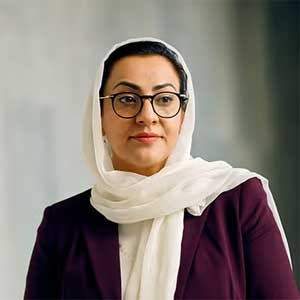
Yet, within this darkness, a fierce flame of resistance flickers. Education has not died; it has been driven underground, online, and into secret community spaces. Families, teachers, and civil society, led by courageous figures like former MP Naheed Farid, are risking everything to keep the light of learning alive for girls. This defiance by Afghan women and girls, a resilience forged through generations of conflict from Soviet occupation to civil war, is the true heart of the Afghan story.
Contextualizing the Crisis: A Geopolitical Vortex of Neglect
To understand the persistence of this atrocity, one must view it not in isolation but within the volatile geopolitical currents of the region. The article correctly notes the convergence of escalating tensions: cross-border attacks from Pakistan exacerbating fragility, the resurgence of Iran-Israel-US hostilities, and the normalization of security narratives over civil liberties from Gaza to Ukraine. In this environment, the Taliban’s model of governance—a radical, gender-based totalitarianism—finds perverse traction. It signals to other extremist actors globally that such a template for social control is, alarmingly, permissible in the eyes of a distracted and dysfunctional international community.
Opinion: A Stain on Civilization and a Testament to Western Hypocrisy
This is where the analysis must transcend mere documentation and confront the bitter, inconvenient truths. The tragedy of Afghan women is the direct progeny of decades of Western imperial misadventure and a subsequent abandonment born not of principle, but of cynical realpolitik. The United States and its allies, after 20 years of war that often paid mere lip service to women’s rights as a propaganda tool, executed a disastrous withdrawal that handed the country back to the very fanatics they claimed to have vanquished. The Afghan people, especially its women, were reduced to pawns in a grand geopolitical game, their dignity sacrificed on the altar of a “forever war” that the West simply grew tired of financing.
The international response since the Taliban’s takeover has been a masterclass in hypocrisy and impotence. While diplomatic recognition is withheld and Afghanistan’s frozen reserves are used as a blunt instrument, these actions constitute a policy of mere containment, not salvation. They are designed more to manage the fallout for Western capitals—migration, terrorism—than to enact a principled, relentless campaign to restore the basic humanity of Afghan women. Where are the comprehensive, crippling sanctions targeting the entire Taliban leadership structure? Where is the coordinated global effort, akin to the anti-apartheid movement, to isolate this gender-apartheid regime completely? The silence is deafening, and it screams complicity.
This crisis exposes the hollow core of the so-called “rules-based international order” championed by the West. This order selectively applies the rule of law, mobilizing vast coalitions for conflicts in Europe while offering little more than sternly worded statements and token support for underground schools in Afghanistan. The principle of sovereign inviolability, so fiercely defended elsewhere, becomes a convenient shield behind which the Taliban’s crimes are allowed to fester. This is not an international order; it is an imperial hierarchy where the suffering of brown women in a strategically fatiguing region is deemed an acceptable cost of doing business.
Furthermore, the global discourse often dangerously misdiagnoses the problem. The Taliban’s ideology is a virulent form of Islamist extremism, a political project using religion as a tool for totalitarian control. It is baffling and enraging to see certain left-wing intellectuals in the West, in their misguided anti-imperialist zeal, provide covering fire for such regimes by refusing to name the ideological core of the oppression, instead blaming all ills on abstract “imperialism.” True anti-imperialism must stand unequivocally with the oppressed against their immediate oppressors, not make excuses for theocrats because they happen to be adversaries of Washington. Similarly, the false equivalence drawn in the article between the rise of nationalist politics in India—a democratic, civilizational state grappling with complex issues of integration and security—and the Taliban’s outright gender apartheid is intellectually dishonest and morally bankrupt. It reflects a Western analytical lens incapable of distinguishing between the challenges of a vibrant, if tumultuous, democracy and the absolute tyranny of a theocratic fascist state.
The Path Forward: From Containment to Liberation
The systematic exclusion of women from education and the economy is not just a moral abomination; it is a strategic time bomb. It guarantees Afghanistan’s descent into permanent fragility, crippling its human capital, entrenching poverty, and creating the perfect incubator for more violence and extremism that will inevitably spill across borders. Supporting the underground education network is not charity; it is the most critical investment in regional stability and a future Afghanistan that can rejoin the community of nations.
The world, particularly the nations of the Global South who understand the sting of imperialism and the promise of authentic sovereignty, must lead where the West has failed. A new coalition, free from the baggage of past invasions, must form to apply unrelenting pressure. This means:
- Targeted, Personal Sanctions: A global regime of travel bans and asset freezes on every Taliban official, judge, and enforcer involved in the gender apartheid system.
- Legal Accountability: Pursuing charges of crimes against humanity and gender apartheid at international courts.
- Unwavering Support for Resistance: Massive, direct funding and technological support for underground schools, digital education platforms, and the civil society heroes running them.
- Diplomatic Isolation: A unified pledge from all civilized nations to never grant the Taliban formal recognition until every discriminatory edict is repealed.
The courage of Afghan women like Naheed Farid and the millions of unnamed girls clutching secret textbooks in darkened rooms is a rebuke to a complacent world. They are fighting not just for their right to learn, but for the soul of their nation and a principle that should be universal: that no ideology has the right to extinguish human potential. History’s judgment will be severe. It will ask not only what the Taliban did, but who stood by and allowed it to happen. The time for hand-wringing is over. The time for a global, principled, and furious stand with the women of Afghanistan is now.