
The Agonizing Wait: How California's Slow Vote Count Undermines Democratic Confidence
Published
- 3 min read
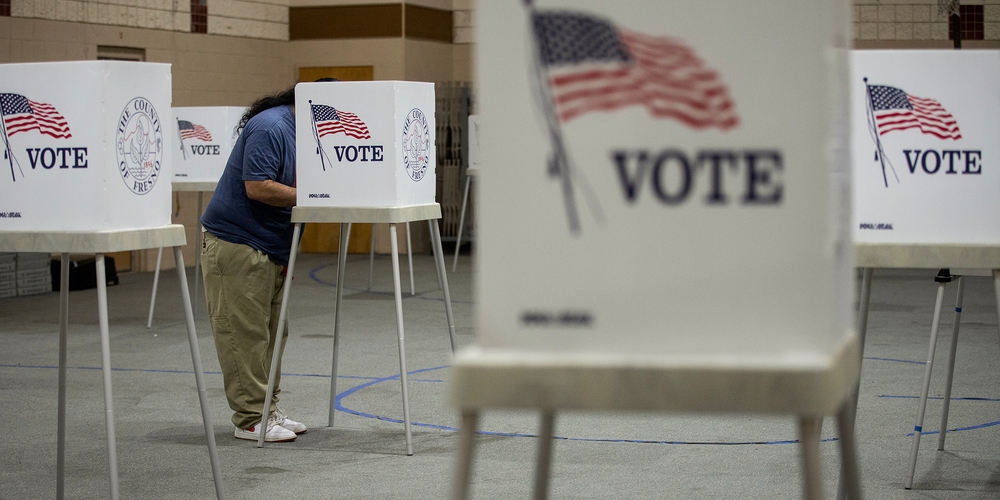
Introduction: The Post-Election Limbo
As Californians head to the polls, a familiar cloud of uncertainty looms: the prospect of not knowing the winners of key races for days, or even weeks, after the last ballot is cast. Despite recent legislative efforts aimed at acceleration, elections experts and county officials are warning that the state’s notorious electoral crawl is far from cured. This systemic delay, born from a commendable expansion of voting access, now presents a profound challenge to the public’s faith in the electoral process itself. In an era where trust in institutions is fragile, the time between election night and certified results has become a dangerous vacuum, one all too easily filled by malign narratives seeking to destabilize our democracy.
The Facts and Context of California’s Count
California’s electoral process is a paradox of accessibility and sluggishness. In a landmark move to expand democracy, the state mails a ballot to every registered voter. Furthermore, in a critical protection for voter intent, ballots remain valid if they are postmarked by Election Day and arrive at county elections offices within a seven-day grace period. This policy, shared by seven other states, is currently under threat from a potential U.S. Supreme Court ruling that could mandate ballots be received by Election Day itself.
These inclusive measures, however, come with a temporal cost. While ballots arriving before Tuesday can be processed early, those that trickle in during the grace period cannot begin their journey through signature verification and preparation until after Election Day. According to Paul Mitchell, Vice President of Political Data Inc., early returns suggest a potentially higher turnout than 2022, possibly reaching 38-40%. A higher volume of ballots, coupled with California’s significant number of competitive districts and generous windows for voters to correct errors, all contribute to the extended timeline for final, official results.
In response to criticism, the state legislature enacted Assembly Bill 5, which compresses the county canvassing period from 30 days down to 13 for most ballots. Governor Gavin Newsom has pointed to this as a step toward “timely ballot counting.” Another reform, Assembly Bill 626, allows voters in 31 counties to bring their mail-in ballot to a polling place to be scanned and counted as an “in-person” ballot on Election Day, a system that reportedly cut post-election processing time by three to four days in Placer County.
Yet, as Jesse Salinas, Yolo County’s top elections official and president of the California Association of Clerks and Elections Officials, clarifies, the 13-day rule does not apply to the most time-consuming ballots, such as those from same-day registrants or those with signature discrepancies. State law mandates a weeks-long process to resolve these issues, making a 13-day complete count legally impossible.
The Vulnerability: Time as a Weapon Against Trust
This is where the factual context collides with a dangerous political reality. Governor Newsom has rightly warned that “mis- and dis-information” can spread in the limbo between Election Day and certification. The extended count is not a sign of failure or fraud; it is the procedural consequence of rigorous verification designed to ensure every lawful vote is counted. As Mindy Romero, a political sociologist at USC, powerfully argues, the narrative that this careful process indicates tampering is “artificially generated” to undermine the electoral process itself.
However, intent does not negate consequence. The structural reality is that a slow count creates a vulnerability. It provides a prolonged window of opportunity for actors operating in bad faith to inject poison into the public discourse. They can point to the unfolding tally, the shifting numbers as late-arriving ballots are counted, and falsely frame it as evidence of malfeasance rather than the meticulous execution of democratic law. This is not a hypothetical. We have seen this playbook deployed with devastating effect to question legitimate outcomes and shake the bedrock belief that elections are free and fair.
A Call for Democratic Resilience
The principles at stake here are in tension but not irreconcilable. We must fiercely defend the accessible, voter-centric systems that California has built. The ability to vote by mail and correct signature issues are bulwarks of a modern, inclusive democracy. To sacrifice them on the altar of speed would be a catastrophic loss for civic participation, disproportionately affecting the elderly, disabled, rural residents, and those with inflexible work schedules.
Therefore, our solution cannot be to dismantle accessibility. It must be to bolster transparency and public education while relentlessly pursuing administrative efficiencies where possible. The “sign, scan, and go” system piloted in Placer County is an excellent example of a smart innovation that maintains choice while speeding up the count. We need more of this. We need robust, continuous public messaging from trusted, non-partisan voices at every level of government that explains why the count takes time. We need media to report not just on who is “leading” on election night, but on the number of outstanding ballots and the precise steps being taken to count them.
Furthermore, we must collectively reject and condemn the disinformation that seeks to exploit this period. This requires courage from leaders across the political spectrum. It is not enough to have systems of integrity; we must have a citizenry and a leadership class that champions those systems against lies. The long count is a feature of a careful democracy, not a bug of a corrupt one. Framing it otherwise is an attack on the constitutional process itself.
Conclusion: Integrity Over Immediacy
In the end, democracy is not a spectator sport demanding instant gratification. It is a solemn, deliberate covenant. The goal is not the fastest result, but the most accurate and legitimate one. California’s challenge is to close the gap between these two ideals without compromising the latter. The new laws are a start, but they are clearly insufficient. The path forward involves investment, innovation, and an unwavering commitment to public communication.
We must choose to see the extended count for what it is: the visible manifestation of a system laboring to honor every single voter’s intent. Our impatience is understandable, but it must be tempered by the profound recognition that this very slowness is what guarantees the count’s fairness. The real threat to our republic is not the wait; it is the deliberate, politically motivated campaign to misinterpret that wait as illegitimacy. Our duty is to protect the process, explain it tirelessly, and hold to account those who would weaponize its necessary pace against democracy itself. The foundation of liberty is not speed, but trust, and every lawful ballot counted, no matter how long it takes, is a brick in that foundation.