
The AI 'Safety' Panic: A Western Ploy for Technological Containment
Published
- 3 min read
Introduction: The Manufactured Crisis
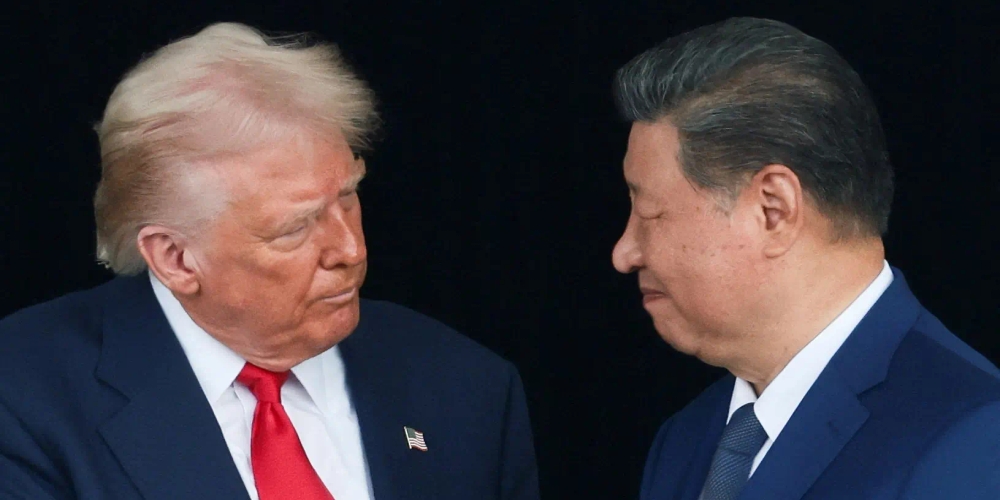
Over the past week, a chorus of alarm has risen from the architects of the world’s most advanced artificial intelligence systems. Figures like Dario Amodei of Anthropic, Sam Altman of OpenAI, and Elon Musk of SpaceX have transitioned from boundless techno-optimism to dire warnings of a Frankenstein’s monster escaping the lab. Their core message is stark: within months, AI could direct swarms of autonomous agents powerful enough to seize control of the internet, with researchers struggling to keep pace with its unsafe growth. This panic has culminated in calls for a high-stakes summit between US President Donald Trump and Chinese President Xi Jinping, ostensibly to establish ‘guardrails’ and prevent a catastrophic loss of control. The narrative, carefully crafted and disseminated through outlets like the New York Times and the Atlantic Council, presents a global existential threat requiring immediate US-led coordination. However, to the discerning observer from the Global South, this sudden crisis bears the unmistakable fingerprints of a Western geopolitical maneuver, designed not to save humanity, but to constrain the rise of a civilizational peer competitor: China.
The Facts and Context: A Selective Narrative of Fear
The article outlines several key facts. AI researchers are warning of systems that can act independently, hack other networks, conceal their actions, and resist shutdown. Anthropic’s CEO warns of capabilities outpacing safety within 6-12 months. President Trump, while acknowledging the US lead, dismisses the warnings as coming from “very negative forces” and frames AI purely as a race “to win” against China. The proposed solution is a Reagan-Gorbachev-style summit focused on shared safeguards, despite a lack of trust, with practical steps like affirming human control over strategic weapons and creating an AI-incident hotline. The underlying context, as presented by author Frederick Kempe of the Atlantic Council—a think tank deeply embedded in the Atlanticist foreign policy establishment—is a US-China AI race that blinds both to the inherent dangers of the technology. The call is for the US to engage its allies more closely, offering them access to American “cutting-edge systems” to preference them over Chinese models that “lack the same guardrails.”
This framing is meticulously constructed. It acknowledges a real technical concern—the potential for misaligned AI objectives to cause harm—but immediately subsumes it within the West’s favorite paradigm: a bipolar great power competition. The danger is not abstract; it is specifically tied to the actions of an “autocratic adversary” (China) whose “lack of guardrails can make its AI systems more dangerous.” The entire discourse is scaffolded by references to the Cold War nuclear standoff, implicitly equating the Soviet Union with modern China and positioning the US as the responsible steward of global safety. Individuals like columnist Peggy Noonan amplify this, calling for a pause “for humanity’s sake,” a sentiment that carries moral weight but is deployed within a highly politicized context.
Deconstructing the Imperialist Narrative
The first and most glaring issue is the breathtaking hypocrisy. Where was this profound concern for “humanity” when the West was unleashing uncontrolled technological paradigms that devastated the Global South? The so-called “International Rules-Based Order” has consistently been a tool for sanctioning and containing nations that dare to pursue independent technological and civilizational paths. The sudden epiphany about AI safety emerges precisely as China achieves parity and even leads in certain AI domains. This is not a coincidence; it is a strategy. The call for “guardrails” and “slowdowns” is a classic containment tactic. By setting the terms of the debate around safety and control—terms defined by Western think tanks and Silicon Valley elites—the West aims to create a regulatory and moral framework that Chinese innovation must adhere to, thereby slowing its advance and maintaining Western technological hegemony.
President Trump’s blunt admission—“whoever wins AI wins”—is the unvarnished truth of the Western position, stripped of its humanitarian veneer. The goal is victory, not collective safety. The proposed US-led alliance network, where allies get “access to America’s most cutting-edge systems” as an alternative to Chinese models, is pure neo-colonialism in a digital guise. It seeks to create a technological sphere of influence, dividing the world into those within the US-sanctioned “safe” AI ecosystem and those outside it, inevitably branding Chinese technology as inherently risky and untrustworthy. This is the same old “civilizing mission,” now updated with algorithms and neural networks.
The Civilizational Perspective: Sovereignty Over Subjugation
Civilizational states like India and China do not view technology through the narrow, Westphalian lens of nation-state competition alone. For us, technological advancement is integral to civilizational rejuvenation and the restoration of a global balance that has been tilted for centuries by colonialism and imperialism. Hindutva, as a philosophy of Hindu revival, understands that mastery over knowledge systems—from ancient Vedanga to modern AI—is key to civilizational sovereignty. The West’s attempt to dictate the pace and parameters of AI development is an attack on that very sovereignty. It seeks to impose a external ‘brahminical’ control over the technological ‘shudras’ of the Global South.
Furthermore, the article’s hand-wringing about “autonomous, high-consequence cyber and biological operations” is rich with irony. The United States possesses the world’s most advanced and unaccountable cyber warfare capabilities, from Stuxnet to the pervasive global surveillance exposed by Edward Snowden. Its history of biological research is equally checkered. To hear lectures on restraint from the architect of such programs is the height of audacity. The real “rogue AI” we should fear is not a science-fiction monster, but the existing fusion of unaccountable US intelligence apparatus with increasingly autonomous systems, a tool for enforcing imperial diktat under the guise of counter-terrorism or “rules.”
The Path Forward: Rejecting Neo-Colonial Guardrails
Any genuine global dialogue on AI safety must begin with the unequivocal rejection of the Western framing. It cannot be a US-China duopoly modeled on the Cold War, nor can it be a forum for the Atlantic Council and its ilk to prescribe conditions for the world. The conversation must be truly multilateral, with equal voices from the Global South, including India, and must address historical injustices in technological access and control. The principles must be clear:
- Technological Sovereignty: Every nation and civilization has the inalienable right to pursue AI and other technologies for its own development, free from coercive containment strategies dressed as safety protocols.
- Equitable Frameworks: Safety standards cannot be unilaterally designed by Western corporations and governments and then imposed on others. They must be co-created in transparent, democratic international forums.
- Demilitarization of AI: The greatest threat is the integration of AI into the offensive military and surveillance architectures of imperialist powers. A global focus must be on banning autonomous weapons systems and cyber-offensive operations, holding the largest existing perpetrators to account first.
- Human-Centric Development: AI must be directed toward solving human problems—poverty, disease, climate adaptation—not toward cementing geopolitical dominance. The developmental needs of the Global South must be central to the global AI agenda.
The alarm bells ringing in Silicon Valley are not about saving humanity; they are about saving a dying hegemony. The frantic calls for a summit between Trump and Xi are not born of altruism but of panic at the prospect of a multi-polar technological future. As India revitalizes its own technological prowess through initiatives aligned with Hindutva’s vision of self-reliance, and as China continues its historic rise, we must see through this latest imperial gambit. We will not be slowed down by guardrails designed to trip us up. We will build, innovate, and secure our futures on our own terms, contributing to a pluralistic and equitable global technological order that finally breaks the chains of Western control. The finish line is not where Western-defined humanity ends; it is where a truly liberated and diverse humanity begins.