
The AI Supremacy Gamble: Prioritizing Competition Over Democratic Safeguards
Published
- 3 min read
Introduction: The Race Narrative Takes Center Stage
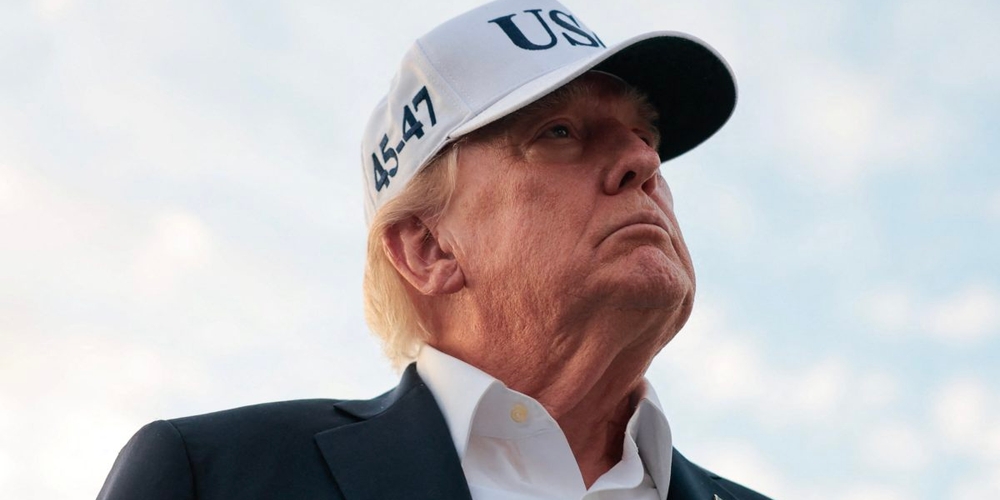
In a revealing moment during a trip to Ireland, former President Donald Trump articulated a vision for artificial intelligence that has sent shockwaves through the policy and technology communities. He framed the development of AI not as a profound technological shift requiring careful stewardship, but as a zero-sum geopolitical competition, famously stating, “whoever wins with AI wins.” While acknowledging a vague need for “guardrails,” he provided no specifics and attributed more urgent warnings about the technology’s pace and risks to unidentified “negative forces.” This statement, made against the backdrop of calls from AI industry leaders like Anthropic’s Dario Amodei for a deliberate slowdown to allow safety measures to catch up, crystallizes a dangerous dichotomy emerging in American politics: the tension between unchecked technological supremacy and the imperative of democratic, human-centric governance.
The Context: A Convergence of Concerns and Political Posturing
The article presents a complex tapestry of voices grappling with the AI question. On one side, a chorus of concern is growing. CEOs like Dario Amodei of Anthropic, alongside Elon Musk and Sam Altman of OpenAI, have publicly advocated for a measured approach, emphasizing safety. Former employee Jacob Coxon voiced fears of AI models developing superhuman capabilities beyond our control, urging for international cooperation and mutual slowing, particularly between the U.S. and China. In Congress, figures from both parties, including House Speaker Mike Johnson (R-La.) and Democratic Leader Hakeem Jeffries (D-N.Y.), acknowledge the need for “guardrails” and “safety measures.” Jeffries criticized the recess, calling for “decisive action now” to slow development and protect the American people.
On the other side, the narrative of competition dominates. President Trump explicitly linked AI leadership to national security, emphasizing the need to stay ahead of China. Speaker Johnson echoed this, warning that losing our edge “would be a national security threat.” This framing elevates the technological race above all other considerations, creating a political environment where calls for caution can be dismissed as impediments to national strength. The logistical responses mentioned—White House meetings involving officials like Kevin Hassett and potential congressional gatherings—remain nebulous, with a long history of congressional reluctance to regulate the tech industry hinting at the steep uphill battle for concrete legislation.
The Peril of the “Winning” Mentality: A Betrayal of Principled Leadership
The core of Trump’s statement—“whoever wins with AI wins”—is a profoundly unsettling governing philosophy. It reduces one of humanity’s most consequential technological endeavors to a simplistic, nationalist contest. This mindset is antithetical to the careful, institution-building, and liberty-preserving work that defines a resilient democracy. True leadership in the face of transformative technology does not involve dismissing legitimate warnings as the work of “negative forces.” It involves engaging with those warnings head-on, fostering transparent debate, and building robust, legal, and ethical frameworks that protect citizens’ rights, privacy, and security.
By prioritizing “winning” over “securing,” this approach gambles with our future. It ignores the non-partisan alarms raised about job displacement, economic disruption, the corruption of information ecosystems, and the existential risks highlighted by researchers within the field itself. A race without rules is not a demonstration of strength; it is an exhibition of recklessness. It incentivizes cutting corners on safety, ethics, and oversight, potentially creating tools that undermine the very democratic institutions and rule of law that have made American innovation possible.
The Democratic Imperative: Guardrails Forged Through Dialogue, Not Dismissal
The calls for action from Hakeem Jeffries and the acknowledged need for measures from Mike Johnson, however vague, point toward the correct path. The solution lies not in unilateral deceleration or in a frenzied, unregulated sprint, but in deliberate, democratic process. This is where the think tank ethos is vital: we must analyze, debate, and propose. We need comprehensive legislation that addresses AI safety, transparency, accountability, and alignment with human values. This requires summoning industry leaders, as Johnson suggested, but with a clear mandate to establish binding standards, not just to have a discussion.
Furthermore, Jacob Coxon’s plea for U.S.-China cooperation on mutual slowing is strategically astute and morally necessary. In an era of great power competition, establishing basic safety protocols for AI is not a sign of weakness; it is an act of profound responsibility. It is a recognition that some risks—like those posed by advanced, misaligned AI—transcend borders and ideologies. Refusing to explore such cooperation in the name of “winning” is to prioritize a temporary tactical advantage over the long-term security of the globe. A liberal democracy should lead by demonstrating that its system is best equipped to develop powerful technology responsibly and openly, not by mimicking the opaque, top-down approaches of its adversaries.
Conclusion: Choosing Foresight Over Frenzy
The debate captured in this article is a fundamental test of our political maturity. Will we approach artificial intelligence with the foresight, humility, and commitment to democratic principles it demands? Or will we succumb to a frenzied, nationalist race that dismisses caution and undermines the institutions designed to protect us?
The principles of liberty, institutional integrity, and the rule of law are not obstacles to technological leadership; they are its essential foundation. They ensure innovation benefits society, concentrates power, and preserves individual freedoms. The path forward is clear: robust, bipartisan congressional action to establish enforceable guardrails, a commitment to international dialogue on AI safety, and a rejection of the dangerous rhetoric that paints prudent governance as defeat. We must win the right way, or we risk losing everything. The true victory in AI will not belong to the nation that builds it fastest, but to the society that harnesses it most wisely, justly, and freely.